
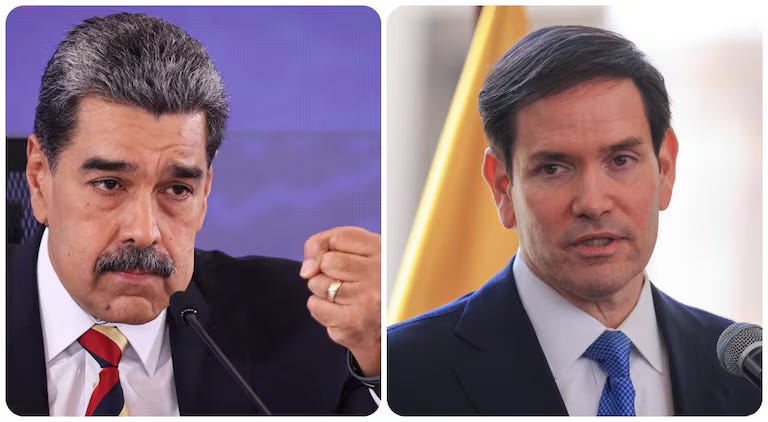
On the surface, the US special military operation to kidnap Venezuelan President Nicolás Maduro went off without a visible hitch. Surprise was total; the CIA and Delta Force moved like a single machine. The script though was rather unoriginal--a redux of the Osama bin Laden raid, but with a different finale: bring the target back alive for a show trial in New York.
Those slow-flying Chinook helicopters should have been juicy targets, lumbering low over Caracas. Yet the sky stayed quiet--remarkably few (if any) air defense missiles rose to meet them. US drones and jets had already taken out Venezuela’s Russian-made Buk and maybe an S-300 system, but that still leaves all those infantrymen with their shoulder-fired missiles. They could have made easy work of the airborne behemoths. Instead, the only real fight came from Maduro’s Cuban security detail, who were cut down by the dozens. So it begs the question: were the commanders bought off with suitcases of CIA cash, or were they just that spectacularly incompetent? Why not equal portions of both?
Tragedy or Farce?
When it comes to what happens next--the post-decapitation fate of Venezuela--the first rule of Trump World is to never believe a word he says. The real moves reveal themselves later, in the quiet after the spectacle. And there is no scenario, ever, where he won’t try to exaggerate, embellish, and inflate whatever he seems to have done--then leverage the illusion into something more.
And why wouldn’t he? His geopolitical style swaps “Go Big or Go Home” for a minimalist “Less Is More.” Any action he takes becomes collateral for the next gamble--a kind of geopolitical Ponzi scheme, creating leverage out of thin air. This raid was his twenty-first century version of Israel’s snatch of Adolf Eichmann in Argentina, but repurposed as a speculative asset.
As the first photos of a captured Maduro hit the wires, Trump wasted no time. He immediately leveraged the event, threatening Mexico, Colombia, Cuba, Greenland, and especially Iran with the same treatment if they didn’t fall in line. Eurosceptics half-hoped he’d try a similar operation on EU President Ursula von der Leyen. In Moscow and Beijing, they were likely pleased--Trump had just set a handy precedent. The new rule seemed to be: if your own courts issue an indictment, you’re now entitled to kidnap any leader, anywhere.
And as a direct consequence, you can be sure Gavin Newsom is already sketching his own version--should he win in 2028. Early plans for a humanitarian snatch-operation against Salvadoran President Nayib Bukele, to free all those tens of thousands of poor gangbangers from their harsh prisons. One can already hear the rationale. He might even repatriate batches of them to US cities--as a form of restitution, compensation for their pain and suffering.
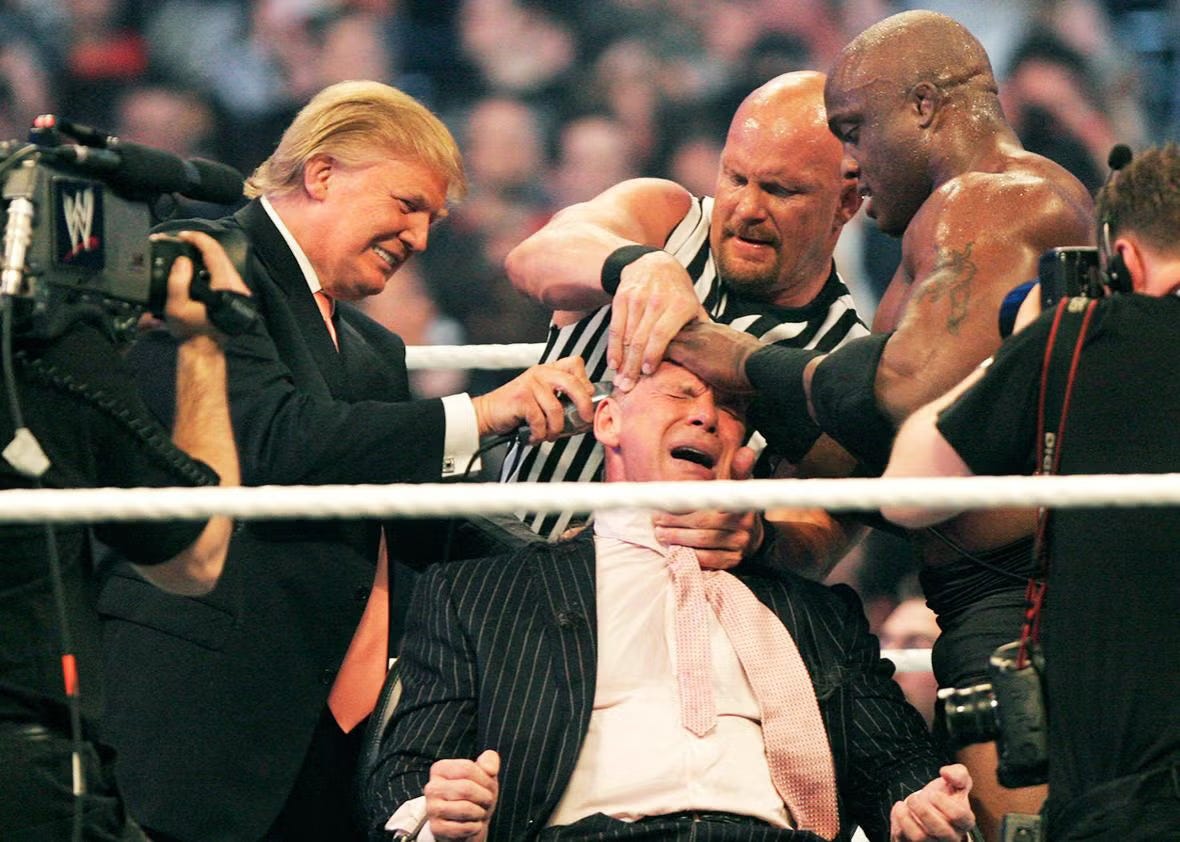
The second rule is to remember that Trump came out of professional wrestling--a world where the spectacle is everything and the finish is agreed upon backstage long before the bodies hit the mat. The jury’s still out on whether Venezuelan officials were truly paid to stand down or were just caught literally napping. But Trump, it seems, has a sharp instinct for avoiding real, unscripted conflict. The one genuine fight he stumbled into was with the Houthis, and a month later the US was dragging its tail out of that mess, quieter and wiser.
So his grandiose pronouncements about America now ruling Venezuela--until we see tanks on every corner--are better understood as pure rage-bait. They’re designed to get opponents fuming, to dominate the cycle, to make everyone seethe over the latest antics. Remember back in June ‘25, when he claimed to have totally obliterated Iran’s nuclear program? It was plainly false--his boss, Netanyahu, last week tasked the US with destroying Iran’s 400 kilograms of enriched uranium. Trump’s exuberant boasts are the media narrative force multiplier for what are rather cautious and modest geopolitical interventions.
In that same spirit, this executive decapitation is, for now, only a Potemkin regime change. They removed the villainous figurehead, Maduro, and installed the new Acting President, Delsi Rodríguez--who is, at least publicly, now denouncing Yankee imperialism. It seems a quixotic choice, making the daughter of a martyred Marxist militant the designated Quisling to hand Venezuela’s resources over to American corporations. Her father, Jorge Rodríguez Sr., was tortured to death in 1976 by security forces investigating the kidnapping of the American executive William Niehous. Now she’s meant to open the mineral vaults for the next generation of that very same imperialist world.
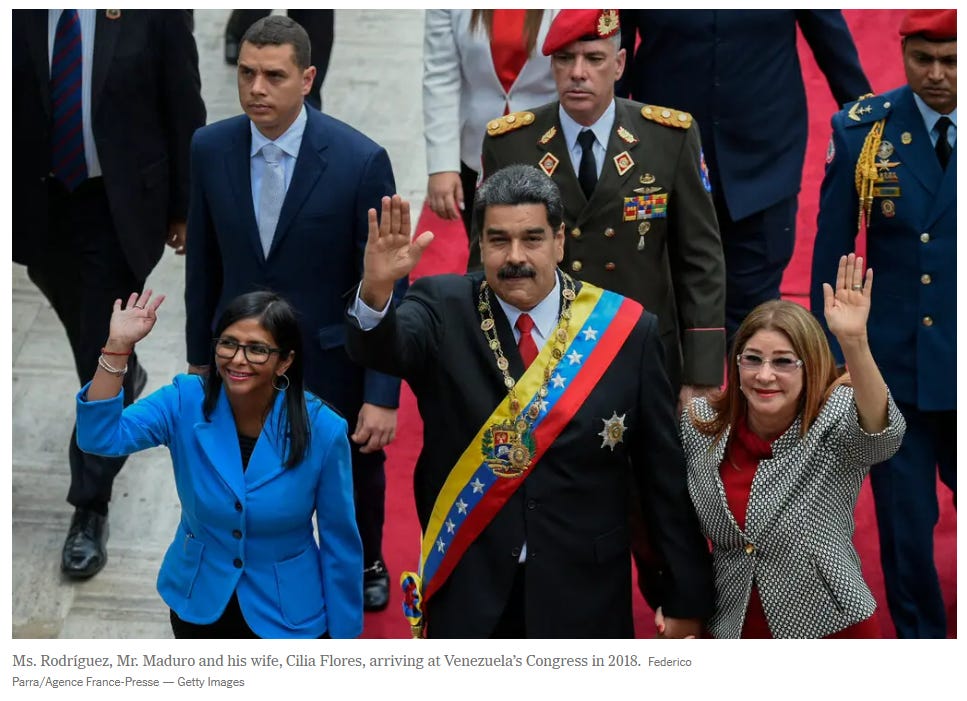
Then again, the best corporate Quislings are often those who can credibly wear the mask of the radical. Barack Obama’s largest financial supporter was Goldman Sachs. Finance capitalist Alex Soros celebrated the supposed communist Zohran Mamdani’s victory for New York Mayor. So why not the scion of a revolutionary martyr to oversee the colonial handout?
The key, though, is that none of this is certain. It is far from guaranteed that Rodríguez will play ball, that she will accept Marco Rubio as some new viceroy, or that any of this is more than an elaborate exercise in imperial wishcasting.
Naked Aggression
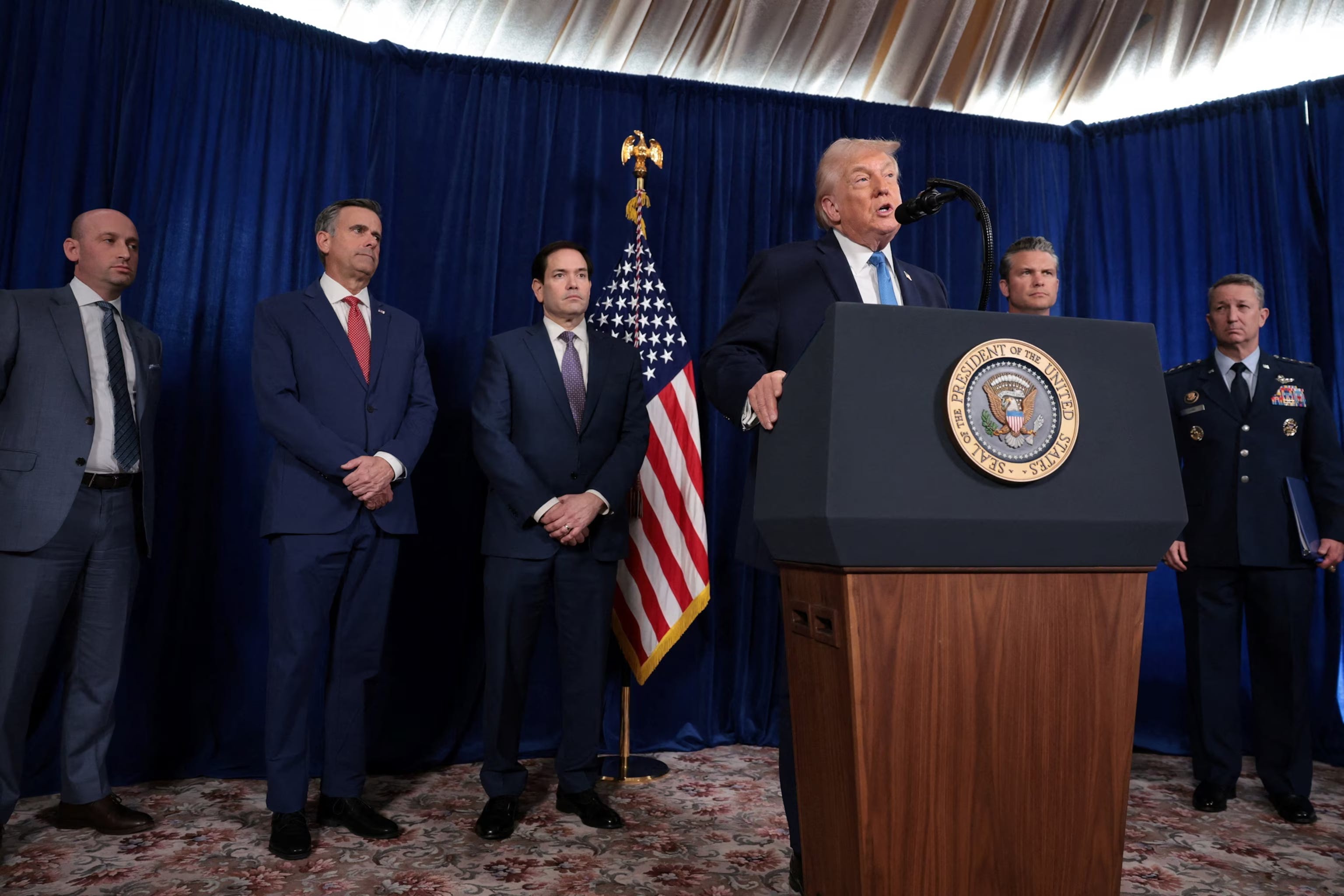
By far the most impressive part of this neo-colonial adventure was Trump’s Mission Accomplished-style press conference. With the goal of scaring the world into submission, he voiced some of the most naked truths of human depravity since the Athenian envoys told Melos that “the strong do as they will, and the weak suffer what they must.”
The Athenians, at least, had the grim consistency to follow through--they slaughtered the men of Melos and enslaved the women and children. Trump’s rhetoric now claims the same brutal prerogative. But between the boast and the reality lies the vast terrain of consequence, and it remains an open question whether he possesses the focus, the force, or even the genuine intention to wrought in Venezuela what Athens did to that small island.
Critics kept complaining that his actions breached international law--as if they still believe the liberal interventionist fairy tale that any military action can be “moral” or “just.” There were no long-winded claims of self-defense, no fig leaves of UN mandates, no talk of restoring the rules-based order. Outside some quibbling about drugs and the truly horrific allegation that the Maduro regime possessed “machine guns,” the surface justifications came down to pure power. Venezuela has plenty of oil, and the US is going to take it.
And in that, there is a weary, ancient clarity. It strips away a century’s worth of legalistic varnish to reveal the same old timber beneath--the prerogative of strength. The specific ideology changes costume, but the core melody repeats. Whether it’s a divine right, a civilising mission, or a rules-based order, it all polishes the same brutal axiom. There is nothing new under the sun, as the Biblical verse teaches us--just Trump’s refreshingly raw-dogged rhetoric for that most tired of human impulses.
Yet this reversion brings its own doubt. Marx once quipped that history repeats itself, first as tragedy, then as farce. What we witnessed felt less like the grim tragedy of past conquests and more like their garish, late-stage simulacrum. The boast lacked the chilling gravity of a true imperial project; it carried the bluster of a performance. One suspects that, under the cover of all that sound and fury, the real outcome will be far more modest: a gradual lifting of sanctions and some quiet deal for limited US investment in Venezuelan infrastructure. Modest transactions to be covered by the rhetoric of callous conquest
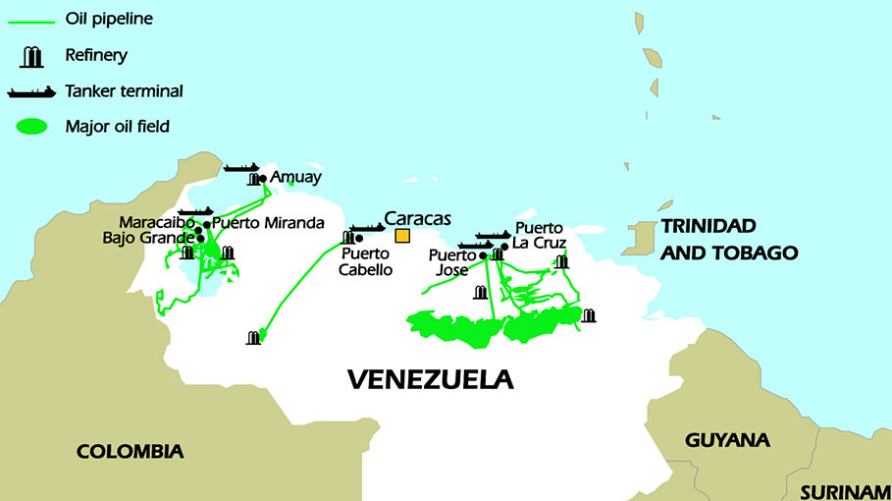
This suspicion is hardened by the facts on the ground. Given Venezuela’s sheer size, its mountainous terrain, and the notorious ruthlessness of its criminal syndicates, the place is ripe for insurgency. It is a landscape tailor-made for a long, bloody, invisible war. Any real American occupation—the kind needed to physically secure the vast, scattered oil infrastructure--would demand a massive and permanent garrison.
Worse still, the economics argue against it. Unleashing Venezuela’s full oil potential would take years and colossal investment, and the resulting flood of heavy crude would undercut higher-cost American and Canadian producers. It would be an imperial own-goal--spending blood and treasure to bankrupt your own core industry.
Seen in that cold light, Trump’s Potemkin regime change was the only pragmatic play. It grabs the headline, installs a compliant face, and sidesteps the quagmire. But most important of all, it serves as a stark warning shot for Trump and his controllers’ real priority--Iran.
You can bet your last euro that the european jackals are whispering in Trump's ear that this shows that Russia would be a pushover, don't be a chicken, come on, do it!
As an Iranian-American, I would not like anything more than an overthrow of the regime in Tehran—by hook or crook, my friend, Kevin’s views notwithstanding. 47-years of pure Hell imposed on Iran and Iranians by corrupt, ruthless and duplicitous Shiite clerics.