
As a novel stretches on, readers often lose attention and start skipping pages ahead to its climactic conclusion. The war in Ukraine increasingly invites this impatient response. If its origins are traced to the Maidan coup d'état of February 2014, the conflict has persisted for nearly twelve years, advancing in uneven, punctuated phases. Throughout much of this period, Western narratives anticipated a decisive Russian defeat. Yet as the turn, a different endgame is now crystalizing from within the war’s primordial grind: one pointing toward a decisive Russian victory.
Of course, on the ground in Ukraine, the primary concern of the Russians has never been to pace their struggle to tickle the shortened attention spans of Western audiences. But as the fifth year of high-intensity phase of the war approaches, Ukraine confronts a compounding crisis--catastrophic energy shortages, depleted manpower, a strained front, declining arms shipments, and a critical deficit of air defense capability.
Its Western sponsors are scarcely in better shape. A cash-strapped EU hesitates before the endless funding demands of a nation suffering profound demographic and economic wreckage. Meanwhile, an openly impatient United States, crusading around the world desperately trying to hold on to hegemony while rationing precious air defense missiles, pushes for peace, yet remains adamant that the conclusion arrive on American terms: a stalemate that leaves NATO securely anchored within 80% of pre-war Ukraine.
All signs suggest the proverbial light at the end of the tunnel, however distant, is finally resolving into a discernible shape--one that will not at all please Western leaders.
To consider how the war in Ukraine might end, we can look to two different historical climaxes: the negotiated, punitive settlement of the Franco-Prussian War, and the total victory and transformative reconstruction of the American Civil War. Each presents a distinct model--a carefully orchestrated armistice imposed after decisive military defeat versus chaotic total collapse.
While every war is its own story, and Ukraine may yet write a surprising final chapter, these precedents frame our imagination for the last pages of this long and painful Ukrainian drama.
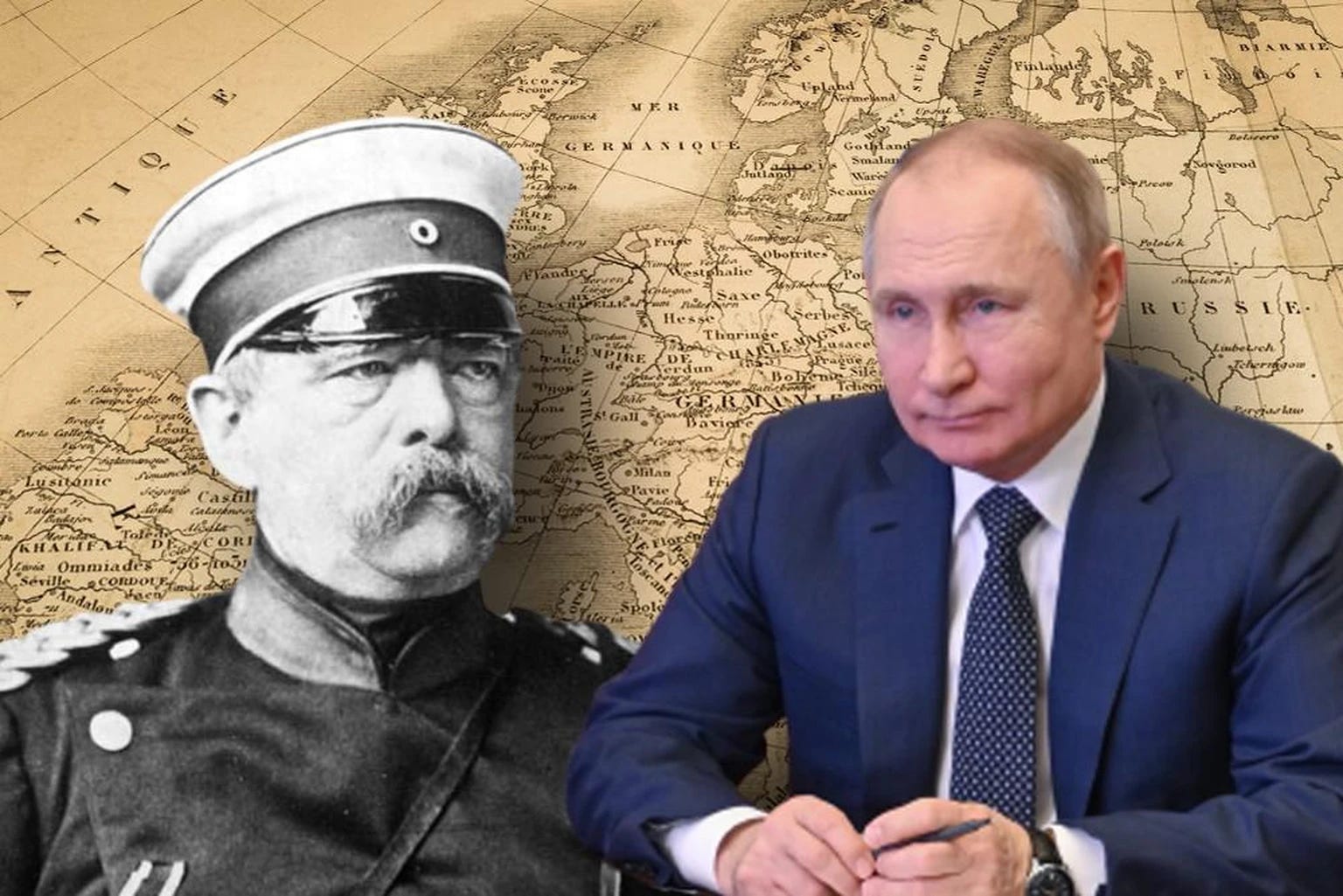
History rarely repeats, but it resonates. This occurs because the architects of the present are themselves students of the past, consciously or unconsciously reaching for old playbooks. Vladimir Putin, for instance, is often styled as a modern Bismarck, engineering statecraft through brains, blood, and iron. Many Western leaders, by contrast, seem to wield only one: the playbook of Winston Churchill, with all its language of unwavering defiance and moral certainty. As for Donald Trump, he often appears to fancy himself an earth-bound Yahweh--less a strategist than a transcendent sovereign will.
Franco-Prussian War: A Negotiated, Punitive Peace
The Franco-Prussian War provides an example in how an imposed peace can be constructed to endure. The conflict concluded through a controlled sequence in which a quick military defeat was converted into performed political submission and then formalized into a new continental order.
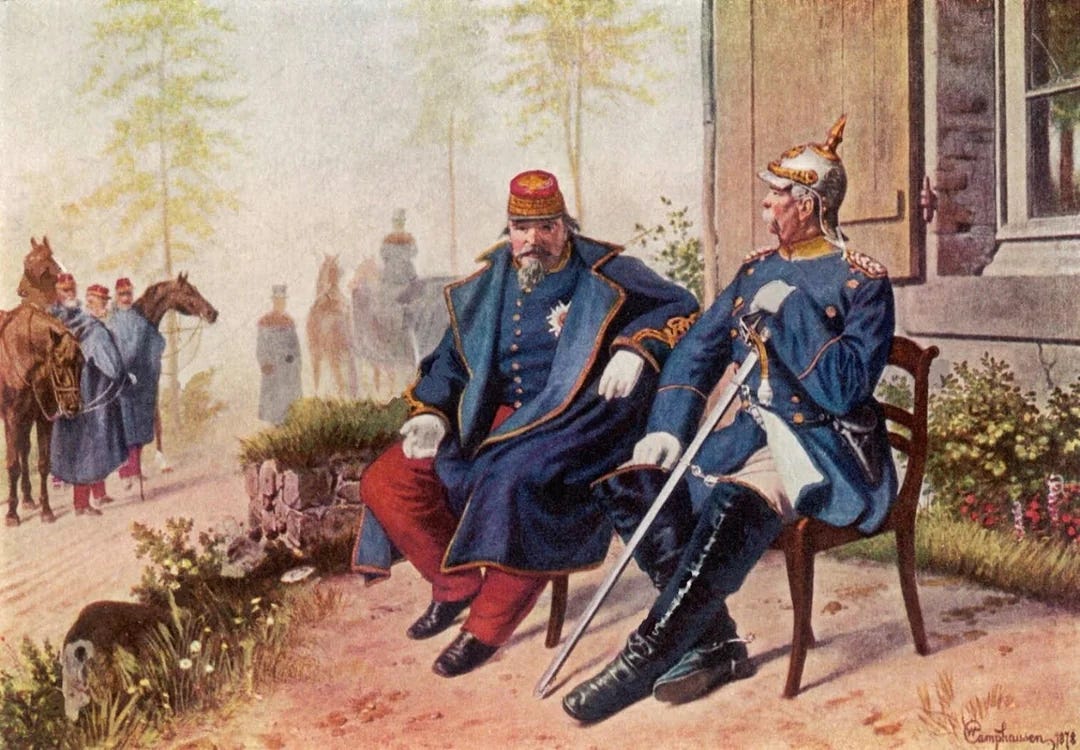
The sequence began with decisive military collapse. The encirclement and capture of Emperor Napoleon III at Sedan in September 1870 destroyed the Second Empire and shattered France’s command structure. A provisional Government of National Defense proclaimed the Third Republic and attempted to continue the war, yet the strategic balance had already turned irreversibly.
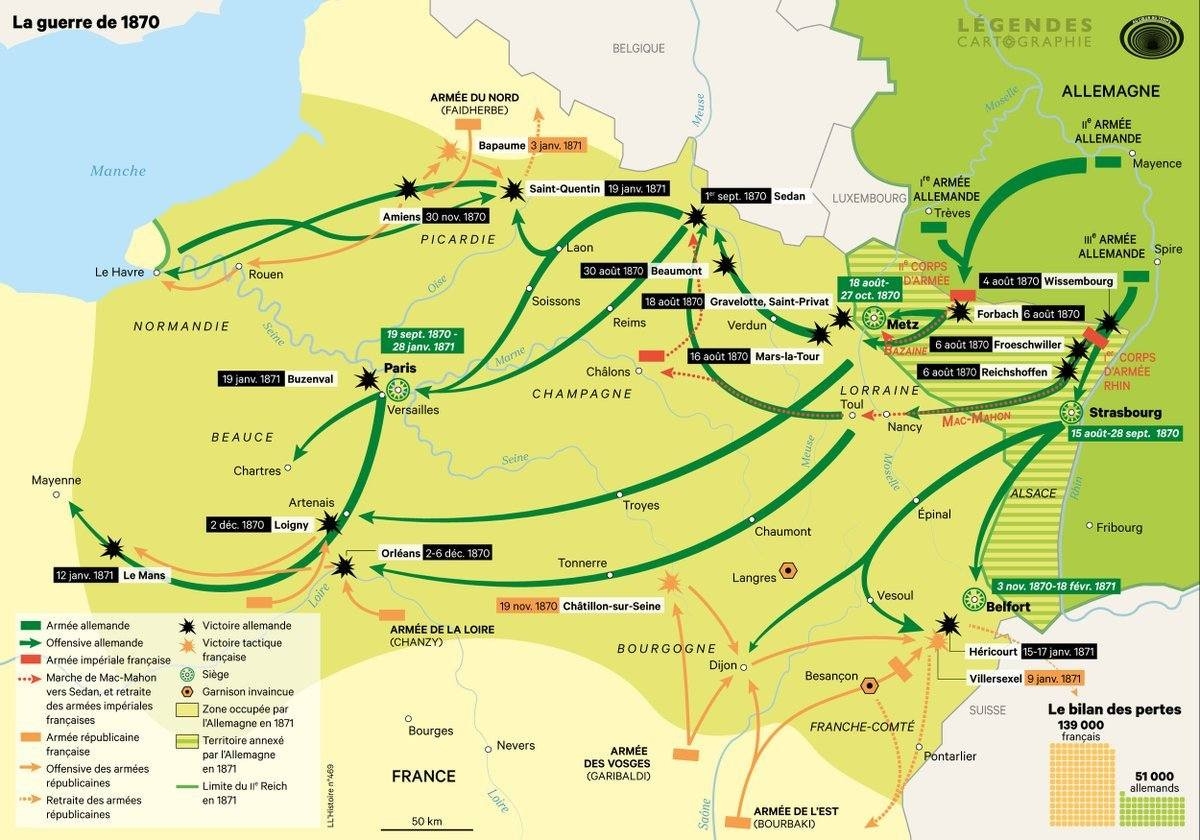
The siege of Paris forced the new government to seek an armistice in January 1871. This suspension of hostilities was strictly military in character and explicitly conditional upon France’s acceptance of a final peace settlement. Similar armistice-first sequences ended the First World War on the Western Front and the Winter War between Finland and the Soviet Union in 1940. It is this model—military defeat, provisional political authority, armistice, and dictated treaty—that Russian President Vladimir Putin has repeatedly invoked as the framework he to impose upon Ukraine.
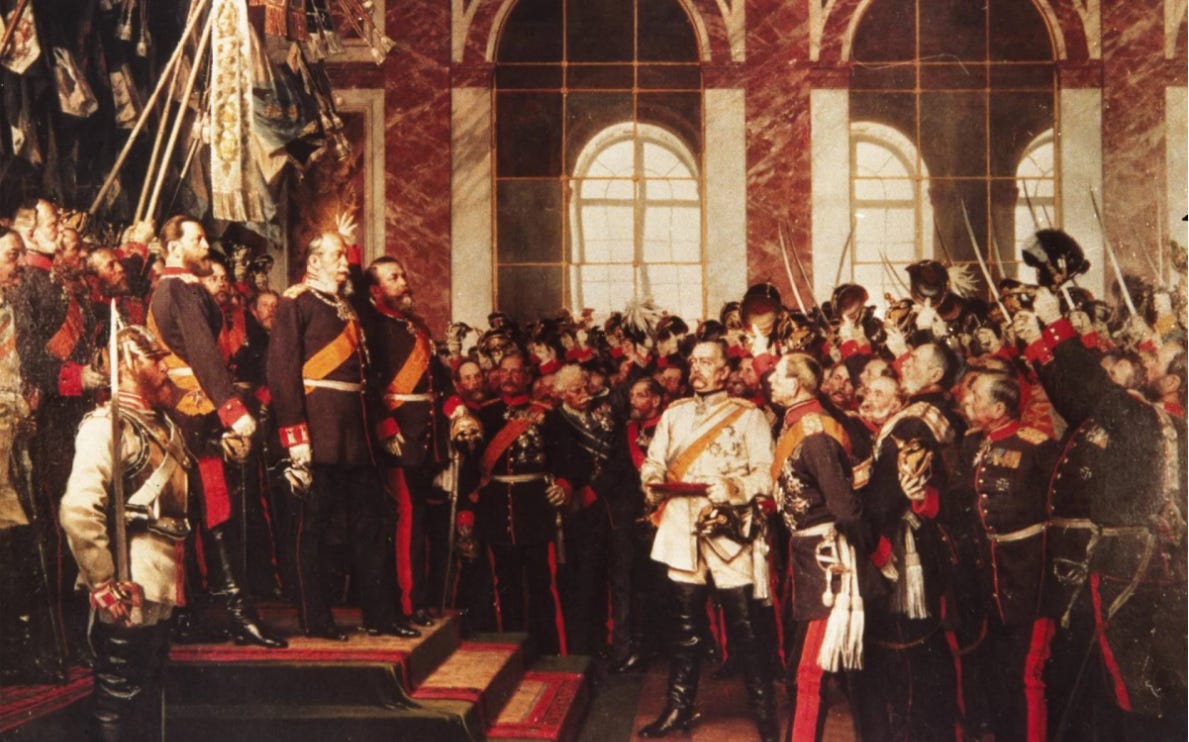
Once France admitted defeat, Bismarck demanded a public act of symbolic submission: a victory parade by Prussian troops through the heart of Paris. France was further subjected to the humiliation of witnessing the proclamation of the German Empire in the Hall of Mirrors at Versailles. A national election was then held to produce a government with the legitimacy required to sign a final peace. This newly assembled French National Assembly, after months of internal wrangling, ultimately ratified the Treaty of Frankfurt. Its terms were severe. Alsace-Lorraine was transferred to the new German Reich, and a staggering war indemnity of five billion gold francs was imposed, enforced through a continued German occupation until the debt was discharged.
Paradoxically, this punitive settlement proved politically sustainable for more than four decades. France paid the indemnity ahead of schedule, within three years, securing an early end to occupation. The Third Republic entered a period of economic recovery and cultural dynamism and, like the newly unified Germany, redirected its ambitions toward overseas empire.
On the continent, the settlement produced a stable, if tense, equilibrium. This stability rested on Bismarck’s post-war system: Germany treated France as a contained adversary, maintained strategic alignment with Russia to prevent encirclement, and avoided direct naval rivalry with Britain. His successors, however, abandoned this architecture. After Bismarck’s dismissal in 1890, Germany’s pursuit of Weltpolitik--a more aggressive quest for global power—antagonized Britain and, critically, turned Russia from an ally into a foe. The resulting strategic encirclement of Germany made the 1871 order untenable. Within this deteriorating framework, the settlement endured until the German invasion of France in July 1914. Its collapse was the direct result of discarding Bismarck’s core tenet: friendship with Russia. Had it been upheld, Alsace-Lorraine might still be German territory today.
From Paris to Kiev
The parallels to the conflict in Ukraine are evident. Russia’s stated demands follow a familiar sequence: a military armistice conditioned on Kyiv’s acceptance of the broad outlines of a final settlement; a visible act of submission, such as withdrawal from remaining positions in the Donbas; and political transformation within Ukraine itself. Moscow has consistently linked its stated objective of “denazification” to regime change, with new elections expected to produce an administration acceptable to the Kremlin. As in France after 1870, this successor government would then be tasked with formalizing defeat through signed treaties and constitutional revisions. The aim is a legally sanctioned new order, imposed by the victor and ratified under the pressure of unmistakable military coercion.
The decisive variable, however, is timing. France’s defeat was swift and unambiguous. Ukraine’s has been prolonged and incomplete. For a Bismarckian settlement to become viable, Russian forces would still need to secure a clear and irreversible battlefield victory. On present trajectories, that threshold may lie months ahead, possibly not until late 2026, when Ukraine’s capacity for sustained resistance could fracture. Until such a moment arrives, any punitive settlement remains premature.
The historical warning embedded in this model lies in what followed the Treaty of Frankfurt. In March 1871, Paris erupted in insurrection. The Paris Commune is often remembered, especially through Karl Marx’s writings, as a proto-socialist experiment. Yet its immediate energy came from nationalist and proletarian fury directed against the peace terms and the conservative government that accepted them. These “dead-enders” rejected surrender outright. Their uprising was crushed with extreme violence by the same French army that had just been defeated by Prussia. During the semaine sanglante, roughly 15,000 Communards were killed, as the Third Republic purged those unwilling to accept the new political reality. The repression was brutal, but it also consolidated the post-war order by bring to heal its most intransigent opponents.
A comparable dynamic could follow any negotiated settlement in Ukraine, particularly one involving territorial concessions. Such a deal might provoke violent resistance from committed nationalist formations such as the Azov Brigade for whom compromise is intolerable. The possibility of a “Maidan 2,” driven by these dead-enders and potentially encouraged by foreign intelligence services unwilling to accept the war’s conclusion, cannot be dismissed.
The central question, then, is whether a post-settlement Ukrainian state would respond as the French Third Republic did: using its own security forces to crush internal revolt in order to preserve the externally imposed peace.
US Civil War: The Template of Total Defeat
The American Civil War offers a second, more realist template for how the war in Ukraine may conclude: a conflict resolved through total military defeat. In this analogy, Ukraine resembles the Confederacy—a smaller, ideologically fervent force, tactically capable and sustained by an intense will to fight for its vision of sovereignty. Its commanders were often more resourceful and imaginative than their Union counterparts, yet they could not overcome the North’s overwhelming economic and demographic advantages.

Russia assumes the role of the Union: a demographic and industrial colossus, prosecuting the war with grinding patience, driven less by crusading ideology than by strategic necessity and a sense of historical entitlement. Moscow does not see this as a foreign war of conquest, but as a tragic struggle within a fractured civilizational space—a reluctant war against a “brother nation.” Ukrainians may beg to differ.
Imperial dynamics shaped both conflicts. The American South had never fully integrated economically or psychologically into the federal project, making the Civil War, in part, a war of colonial conquest cloaked in the moral imperative of ending slavery. In a comparable way, Russia’s campaign can be read as an effort to stop NATO’s unquenchable desire for eastern expansion by reincorporating Ukraine into a revived sphere of Greater Russian influence.
Yet there are obvious critical differences between the two conflicts. The Confederacy fought largely in isolation, receiving limited diplomatic recognition and modest material assistance from Europe. Ukraine, by contrast, is sustained by a vast external coalition. NATO operates as a thirty-two-nation industrial, intelligence, and logistical rear echelon. Direct Western involvement is often obscured through “volunteers,” contractors, and unprecedented real-time battlefield integration.
The Union also faced no existential threat from foreign alliances. For Russia, a NATO-aligned Ukraine—bringing with it the potential loss of Crimea and the strategic anchor of Sevastopol—represents an intolerable challenge to core security interests and great-power status.
As the Civil War ground on year after year, proposed peace negotiations inevitably failed. The war aims of the two sides were mutually exclusive: unconditional union versus unconditional independence. With no divisible territory to exchange for a lasting settlement, the conflict admitted only one resolution—the complete military and psychological exhaustion of one side.
In Ukraine, the idea of Kiev retaining full sovereignty within its pre‑2014 borders is irreconcilable with both Russia’s stated aims and the facts on the ground. For now, a negotiated peace remains impossible. Ukraine will only seriously contemplate surrender once its now latent military exhaustion--the internal fatigue hidden within a steel beam--becomes irreversible and undeniable. Yet at that point, why would Russia negotiate across a table what it can grab outright on the battlefield?
The Union ultimately imposed that exhaustion upon the Confederacy through two complementary strategies. In the Eastern Theater, Ulysses S. Grant waged a relentless war of attrition. His campaigns exploited the Union’s overwhelming manpower and industrial advantage, grinding down Confederate armies through costly, continuous engagement—a grim precursor to the industrialized warfare of the twentieth century.
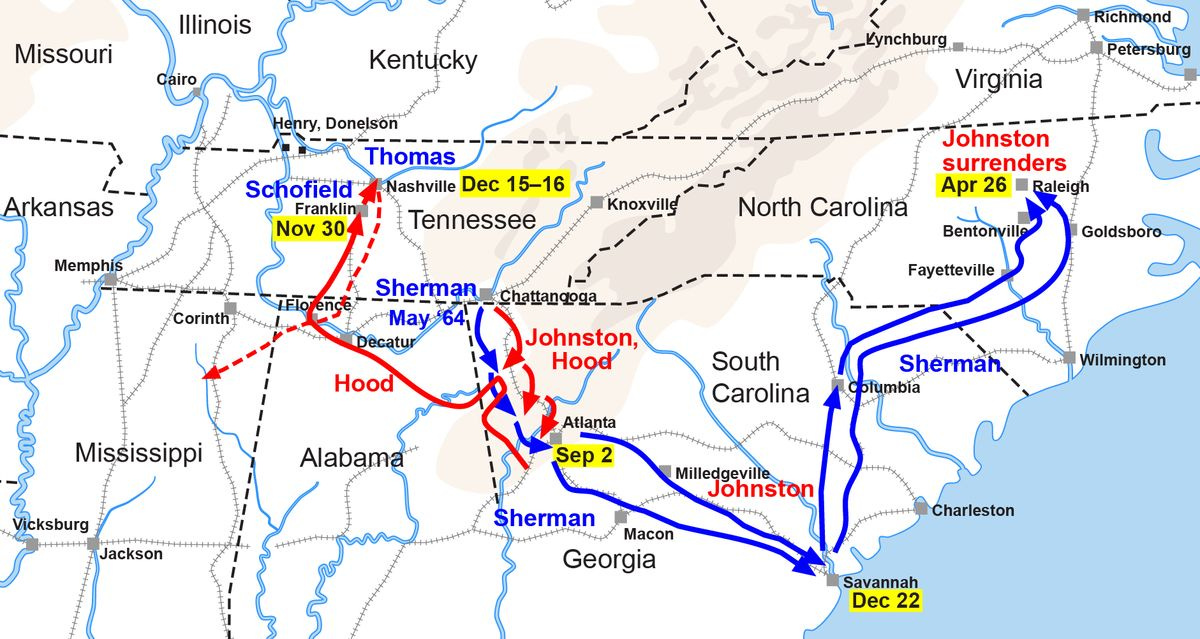
Simultaneously, William Tecumseh Sherman executed a campaign of strategic maneuver and psychological devastation. His march through Georgia and the Carolinas bypassed enemy forces to systematically destroy the economic foundations of resistance: railways, factories, and crops. Civilian suffering was deployed as a deliberate instrument of war, designed to shatter collective morale and make continued resistance unthinkable.
Parallels to these dual methods are evident in Russia’s war in Ukraine. Along a front exceeding 1,600 kilometres, Russian forces wage a war of attrition, systematically exhausting Ukrainian manpower and Western matériel. At the same time, a sustained air and missile campaign targets energy infrastructure and logistics—a drawn-out echo of Sherman’s march. Its aim is to collapse the civilian “back of house,” accelerate demographic flight, and impose long-term economic paralysis, hollowing out the state’s capacity to function.
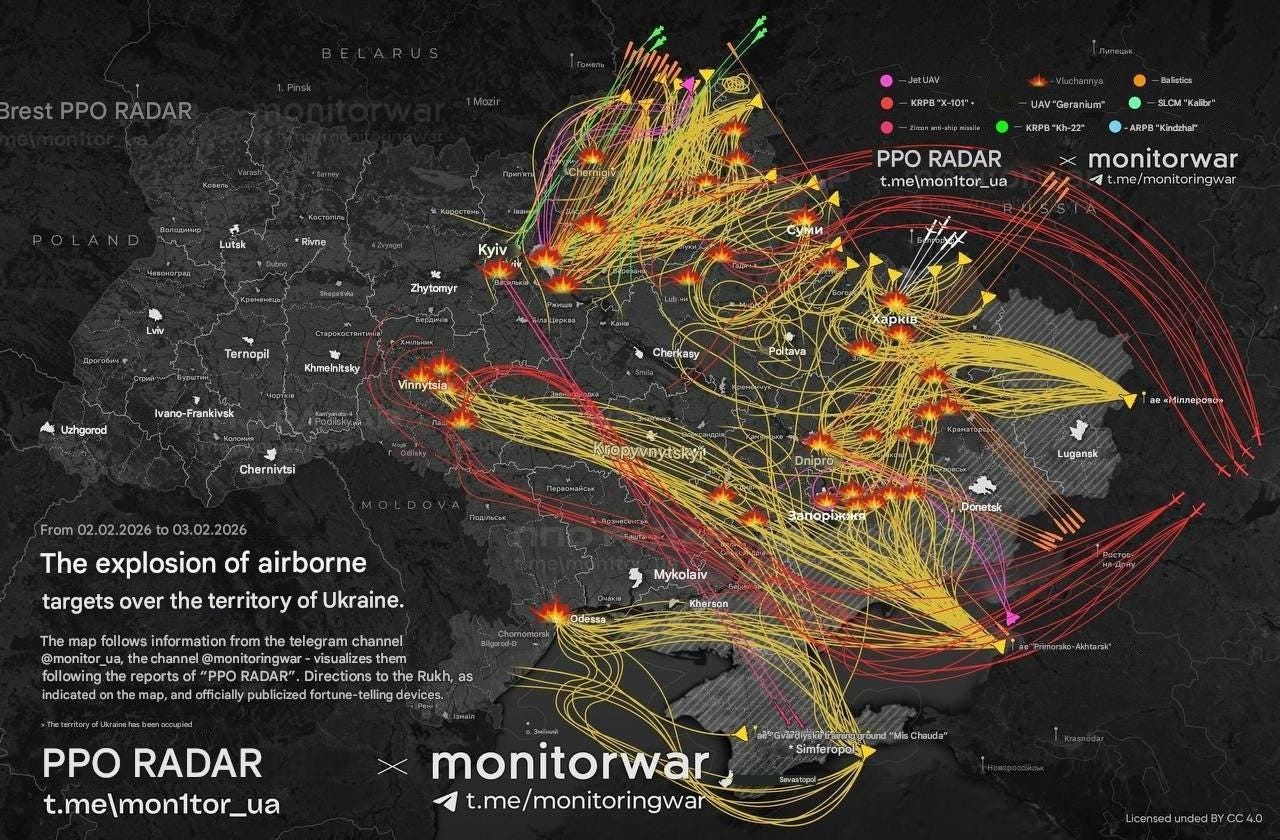
From the Western perspective, this bombardment campaign has transformed Ukraine. Where once they saw a nubile, resource-rich bride to be wooed with wealth and arms, they now confront a spent spinster—her liabilities and demands far outweighing her fading assets and promise.
As of today, the only power pushing for peace in Ukraine—and only half-heartedly—is the United States. This ambivalence stems from a strategic dilemma. Ukraine has become a black hole for quickly diminishing stocks of American air defense munitions, a critical weak link in maintaining US global reach. A similar impulse to conserve these assets drives Washington’s parallel efforts to curtail Iran’s ballistic missile program, which ties down innumerable resources in the Middle East, especially in Israel.
Yet this pragmatism clashes with an insatiable American drive to display dominance. As one hand extends a wary offer of negotiation; the other launches decapitation strikes as flocks of drones swarm toward Putin’s Valdai residence. This contradiction, combined with Ukraine’s ever-shrinking ability to endure militarily, leaves the current diplomatic dance as mere empty gestures. The conflict’s ultimate resolution will be forged, as it now appears, on the battlefield alone.
Excelente!!
We have been hearing these confident predictions of imminent collapse for four years now.
The real plan was ever always only to mousetrap the Americans into intervening. Whether that happens directly or whether the Americans have to bail their european catamites out again is of no consequence.