

Note: This essay is the first in a five-part series examining the emerging European security architecture, its geopolitical foundations, the forces reshaping it, and the question of whose interests its eventual design will serve.
"The only way Russia can secure its borders is to keep expanding them." Attributed to Catherine the Great, the statement carries much ambiguity. Born a German princess in Prussian Stettin, Catherine became one of Russia's most formidable rulers. The maxim is usually taken as an expression of Russian imperial ambition, rooted in the country's vast continental geography and its historical search for strategic depth. Yet its implications reach well beyond Russia. Political orders have frequently understood their security and vitality in terms of continued expansion. This same logic would come to shape the eastward movement of Western institutions - the EU and NATO - during the decades following the Cold War.
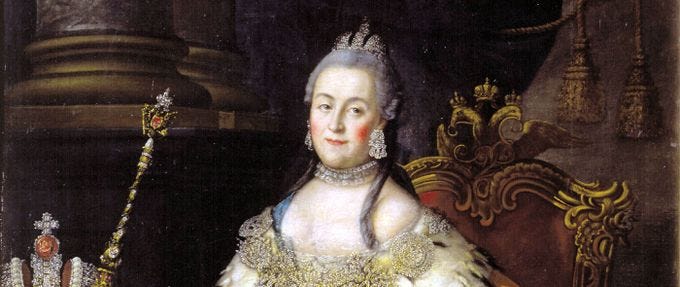
Hannah Arendt explored this relationship between power and expansion in On Violence, drawing on a Russian saying from Catherine’s entourage: “That which stops growing begins to rot.” Political power, she observed, had come to be understood through the language of organic life, where growth signified health and contraction suggested decay. The capacity to expand became a measure of political vitality; the acceptance of limits could be interpreted as evidence of decline.
Expansion and contraction are two sides of the same historical double movement. The nineteenth-century description of the Ottoman Empire as the “Sick Man of Europe” captures this relationship. As Ottoman authority receded from the Balkans and its European territories, rival powers and emerging national movements occupied the void its contraction opened. Imperial decline in one capital created opportunities for expansion elsewhere.
The Western Tide
As Soviet power dissolved and Russia contracted, the West moved eastward, extending NATO and the European Union into the space left behind. The post-Cold War settlement confirmed the logic of expansion: a receding power left a vacuum, and a then-vibrant one desired to occupy it. Across Central and Eastern Europe, governments sought security, economic integration and political recognition within the Atlantic world, accelerating a transformation of the European security map.
NATO and the European Union were the principal institutional vehicles of this movement, extending military guarantees, markets, legal frameworks and political integration. Alongside them operated a wider network of “democracy-promotion” programmes, NGOs, political foundations, independent media and civil-society organisations. Some maintained overt relationships with Western governments, while others had less transparent funding, personnel or operational links, including connections to Western intelligence agencies. The boundaries between public diplomacy, private political influence and covert activity could be porous.
The Colour Revolutions in Georgia, Ukraine and Kyrgyzstan demonstrated the capacity of popular movements to displace entrenched political regimes, with Western assistance providing organisational, financial and diplomatic support. Accession incentives and the threat of sanctions provided the West with further instruments of leverage.
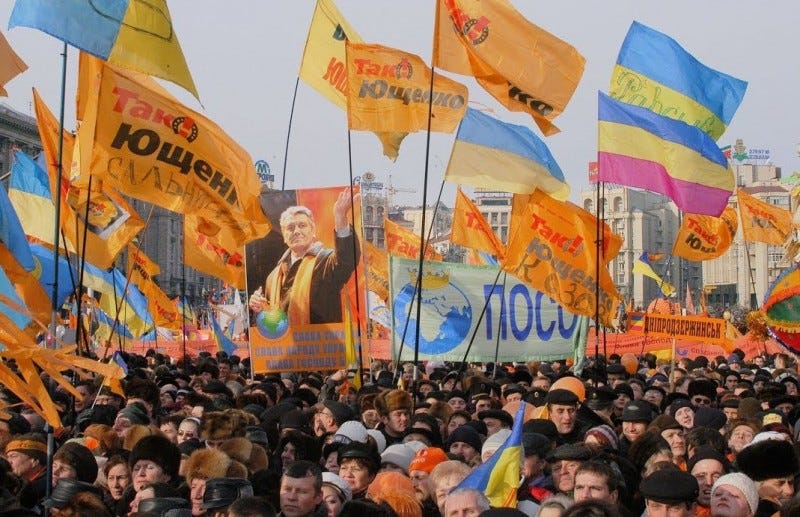
From the Western perspective, this represented the extension of democracy, markets and collective security into countries freed from Soviet domination, many of which actively sought integration. From Moscow’s perspective, the cumulative effect was the erosion of Russian influence, the loss of former buffer states and the westward movement of military and political structures towards its borders.
Each side interpreted the other's position through a different strategic lens: the West saw an expanding zone of stability, while Russia increasingly perceived the erosion of its security be means of a the tightening circle of strategic encirclement. The expansion of the Western order thus contained the beginnings of a new rivalry, even as it appeared to consolidate a settled European peace.
The Soviet Ebb
By the 1970s, the Soviet Union had constructed an extensive sphere across Eastern Europe, consolidated its position in Central Asia and extended its reach into parts of Africa, the Middle East and Asia. It appeared a genuine global competitor to the United States, supported by a network of allies, client states and military commitments.
The Helsinki Final Act of 1975 codified key principles of the post-war European settlement, including sovereign equality, territorial integrity and non-interference. It also advanced the principle of indivisible security: the idea that the security of each state is inseparable from that of the others. These principles would later underpin Russia's competing conception of European security.
Several Eastern European economies borrowed heavily from Western banks during the 1970s. By the early 1980s, Poland was struggling to service its obligations, while falling oil prices weakened Moscow’s own foreign-exchange position. The invasion of Afghanistan in December 1979 added another burden: intended to preserve a friendly government, the intervention developed into a prolonged war that exposed the limits of Soviet power. The withdrawal in February 1989 coincided with the accelerating disintegration of the wider Soviet sphere.
Under Mikhail Gorbachev, the leadership came to accept that the costs of maintaining its European empire had become unsustainable. There was also a profound change in the conception of imperial authority. Catherine the Great had argued in her Instruction that only sovereign authority concentrated in a single person could exercise power with sufficient vigour across an empire of Russia’s immense extent. Two centuries later, Gorbachev was moving towards a radically different position. The abandonment of the Brezhnev Doctrine relinquished Moscow’s claim to enforce political conformity across Eastern Europe through military intervention. The fall of the Berlin Wall in November 1989 became the defining image of this reversal.
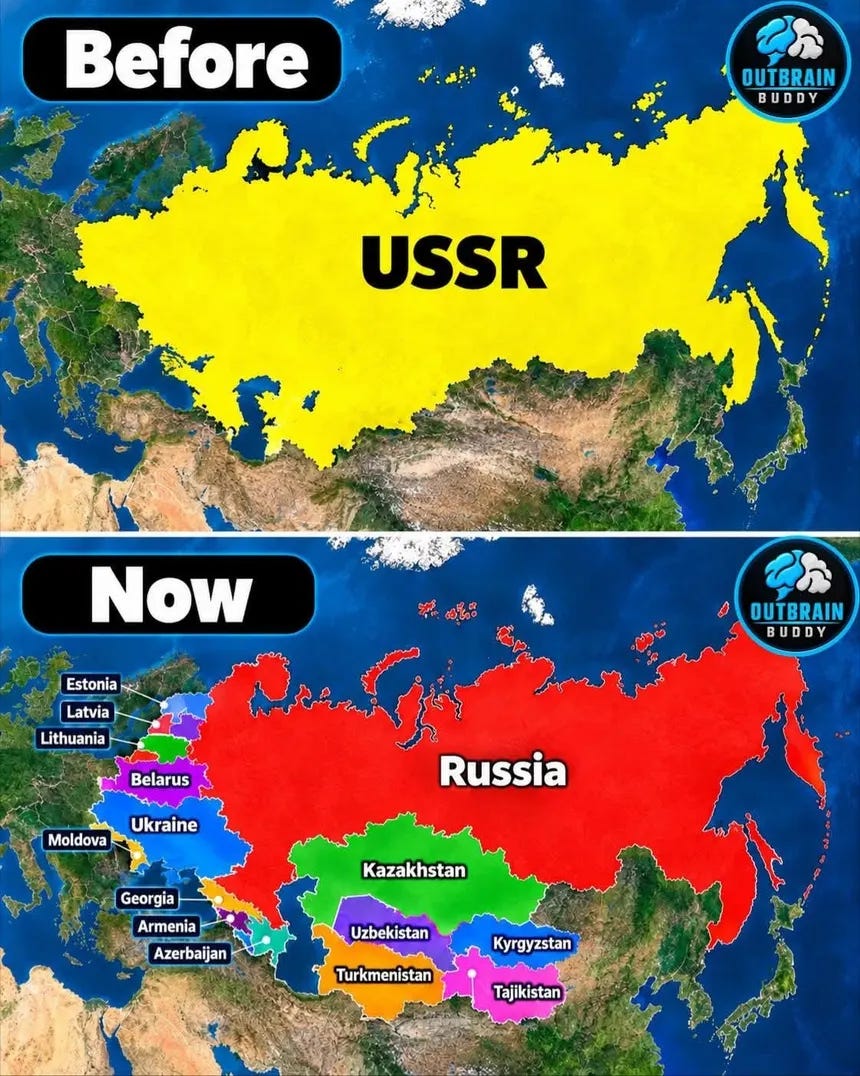
Within two years, the Warsaw Pact had dissolved and the Soviet Union itself had ceased to exist. The Russian Federation inherited a diminished state, weakened institutions and an economy entering a period of extraordinary upheaval. The shock therapy reforms, shaped by Russian reformers and Western economic advisers, including those known as the Harvard Boys, sought to transform the country rapidly into a market economy. Public assets passed into private hands, output collapsed, savings were destroyed by inflation, and a small circle of oligarchs accumulated immense wealth and political influence. The Russia of the Nineties experienced a profound loss of economic sovereignty alongside the disintegration of its former geopolitical power.
Vladimir Putin’s rise to the presidency in 1999–2000 marked the beginning of a reversal. The new administration set about rebuilding central authority, bringing oligarchs to heel, reclaiming control over strategic industries and restoring the power of the state. Russia’s imperial retreat had been followed by the disintegration of the state itself; the ensuing effort to recover political authority would shape its ambitions for decades to come.
Ukraine: The Geopolitical Movement Joint
“Ukraine, a new and important space on the Eurasian chessboard, is a geopolitical pivot because its very existence as an independent country helps to transform Russia. Without Ukraine, Russia ceases to be a Eurasian empire.”
— Zbigniew Brzeziński, The Grand Chessboard (1997)
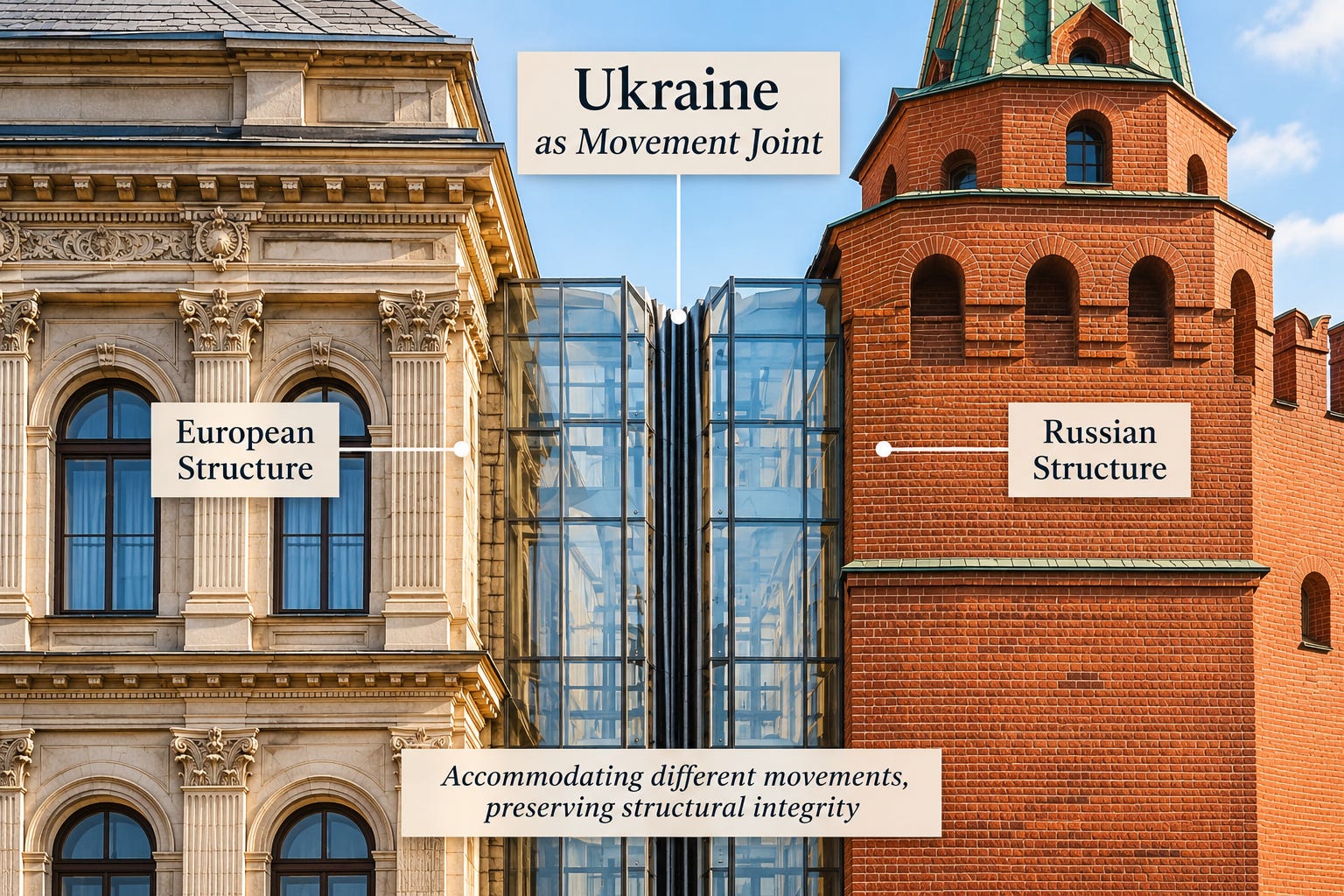
Brzeziński described Ukraine as a geopolitical pivot. Its position can also be understood through an architectural analogy: a movement joint between two adjoining structures, each with its own foundations, loads and patterns of movement. Such a joint accommodates the differential movement of the structures while preserving their integrity. Ukraine occupies a comparable position between the European and Russian spaces. Its connections extend in both directions, while the movements of the larger powers place growing pressure on the interface between them.
Samuel Huntington described Ukraine as a cleft country, divided by a civilisational fault line between its western and eastern regions. The division has deep historical roots. During the Nazi invasion of the Soviet Union in 1941, Hitler’s plans for the east assigned Ukraine a central role as a source of agricultural produce, industrial resources and Lebensraum. The Hunger Plan envisaged the extraction of food on a scale that would leave millions to starve. After the war, the CIA cultivated relationships with Ukrainian nationalist émigrés and supported anti-Soviet networks, seeking to weaken Moscow’s hold over the republic.
The dissolution of the Soviet Union reopened the question of Ukraine’s geopolitical orientation. Its territory connected the Russian heartland to the Black Sea, contained important agricultural and industrial resources, and provided strategic depth along Russia’s southwestern approaches.
Crimea carried particular importance because it contained Sevastopol, the principal base of the Soviet Black Sea Fleet and a prized ice-free, deep-water naval port, giving Russia access to the Black Sea and, through the Turkish Straits, the Mediterranean. The future of the fleet and its basing rights became an immediate source of friction between Moscow and Kyiv, eventually resolved through agreements that allowed Russia to lease the Sevastopol facilities from Ukraine.
The 1990 Declaration of State Sovereignty expressed an intention to pursue permanent neutrality and remain outside military blocs, while successive governments pursued varying combinations of relations with Moscow and the West. The upheavals of 2004 and 2014, followed by Russia’s annexation of Crimea and the war in Donbas, progressively shifted the rest of the country towards Western institutions.
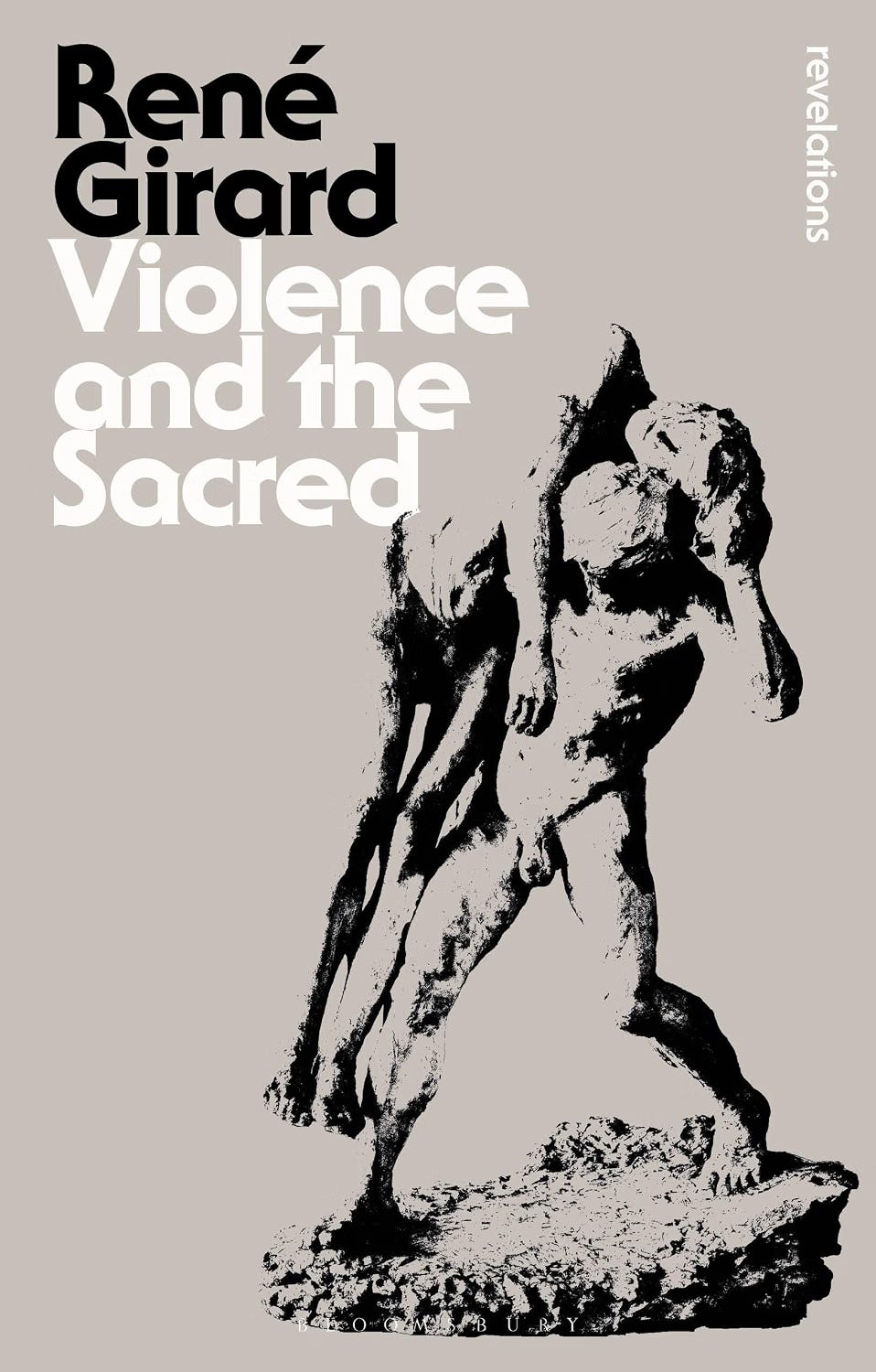
René Girard developed a theory of desire in which individuals and groups acquire their objects of desire through imitation. The model becomes both the source of desire and an obstacle to its fulfilment. His double imperative can be expressed as an invitation to imitate the model, which simultaneously resists the imitator’s claim to equal standing. The relationship between Russia and the West offers a striking illustration. Having watched Western institutions expand into its former sphere, Russia sought the same freedom to shape the environment around its borders. The West resisted Russia’s claim to equivalent prerogatives, while Moscow asserted its right to determine the conditions along its borders even as it denied Ukraine the right to determine its own orientation. The resulting rivalry exposed the unequal claims to strategic freedom made by all three parties.
The rivalry itself placed growing pressure on Ukraine’s position between the two systems. Its geography, resources and history gave it importance in their own right, while each side’s determination to prevent its incorporation into the rival’s sphere intensified the other’s interest. Ukraine retained its own political aspirations, yet its capacity to accommodate the competing pressures was progressively eroded. The movement joint was under growing strain.
Russia’s invasion in February 2022 transformed this accumulated tension into open war. The opposing trajectories that had shaped the post-Cold War period had finally met, and their rivalry had become violently reciprocal.
The West’s Culminating Point
Clausewitz’s concept of the culminating point of victory offers a way of understanding the limits of geopolitical expansion. He was writing about military offensives, in which an advancing force gradually exhausts the resources and momentum that sustain its progress. Every advance consumes resources, extends lines of communication and increases the burden of holding newly acquired positions. Eventually, the relationship between available strength and political objectives reaches a point beyond which further gains become harder to sustain. The offensive has reached its culminating point. Applied to the longer movement of empires, the same principle suggests that expansion carries within it the conditions of its own eventual limits.
In retrospect, 2022 marked the high point of Western strategic opportunity. Russia’s invasion had provoked a remarkable degree of Western unity, its international position had deteriorated, and its military setbacks seemed to expose the limits of its power. Finland and Sweden’s subsequent accession to NATO extended the alliance’s northern position, while Western support for Ukraine appeared to place Russia under mounting pressure. For a time, the prospect of a decisive Western victory seemed within reach.
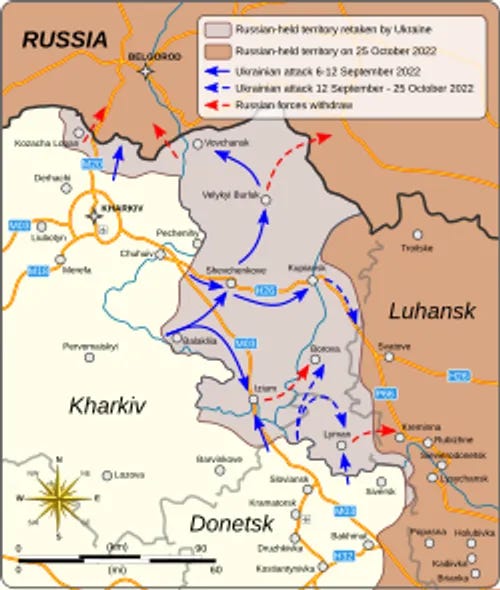
Yet Ukraine’s 2023 counteroffensive failed to achieve a decisive breakthrough, and the character of the war began to change. The anticipated war of manoeuvre gave way to a grinding contest of attrition, in which industrial capacity, ammunition stocks and the ability to replace men and equipment became decisive. The conflict pitted the Western military-industrial complex against Russia’s rapidly mobilised defence industry. The question became one of mobilisation: which side could move towards a garrison state most rapidly, reorganising its economy and political priorities around the demands of prolonged war?
On this measure, Russia gained a clear advantage. In June 2025, NATO Secretary General Mark Rutte acknowledged that Russia was producing in three months what the entire NATO alliance produced in a year in ammunition — despite NATO’s combined economy being roughly twenty-five times larger. Air-defence interceptors became another critical measure of industrial capacity, exposing the difficulty of sustaining high rates of expenditure and replenishing sophisticated missile stocks. Rutte himself called for a 400 per cent increase in NATO’s air and missile defence capabilities. The industrial balance that had seemed overwhelmingly favourable to the West was proving considerably more complicated in practice.
The Western advance thus reached its culminating point in 2022. The limits of geopolitical expansion were becoming visible in the material capacity required to sustain it. The search for a new European security architecture would emerge from this predicament - provoked by Russia’s new élan.
Abu Dhabi — The Search for a New Architecture
The Abu Dhabi negotiations have brought European security architecture back to the centre of international politics. Russia has sought to place its longstanding demands concerning NATO enlargement, military deployments and Ukraine’s status within a broader settlement of the war. These demands recall the unresolved disputes surrounding the post-Cold War settlement and the draft treaties presented to the United States and NATO in December 2021.
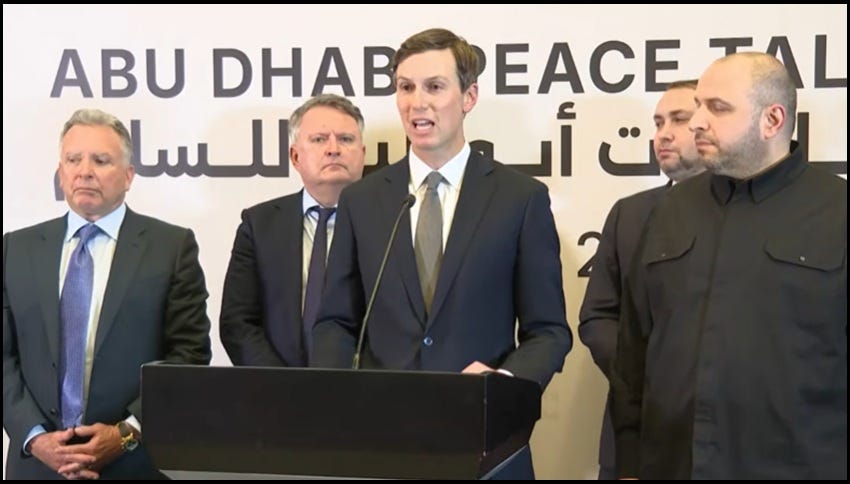
The circumstances have also changed. Ukraine’s war has become a heavier burden on European economies and military resources, while Washington’s attention has been drawn towards its confrontation with Iran. Russian attacks and maritime disruption have severely constrained Ukraine’s Black Sea trade. The United States has consequently become more interested in securing an agreement, bringing the parties together in Abu Dhabi.
The negotiations exposed Europe’s diminished influence. Although European governments would bear much of the cost and live with the consequences of any settlement, they remained outside the central trilateral negotiating room between Washington, Moscow and Kyiv, despite participating in separate consultations. The message was uncomfortable: proxies and dependent allies rarely get invited to sit at the adults’ table. Europe’s subsequent efforts to secure a place in the process revealed the gap between its formal standing and its ability to shape the decisions affecting its own continent.
The Abu Dhabi negotiations may therefore mark the beginning of a new European security architecture, one that seeks to formalise the limits of Western expansion through an accommodation between the great powers. Its foundations would have to rest on reciprocal restraint, clearly defined boundaries and a distribution of security responsibilities that the parties are prepared to respect.
The Limits of Expansion
Catherine’s maxim declares a logic that has shaped both Russia and the West: expansion as a condition of security and vitality, contraction as weakness and loss. Arendt captured the underlying imperative, Clausewitz its limits, and Girard the mimetic rivalry that sustains it.
Russia and the West have become entangled in a relationship of imitation and reciprocal hostility, each demanding strategic freedoms it resists granting to the other. The war in Ukraine has brought this dynamic to its most violent expression. The negotiations in Abu Dhabi now raise the possibility of a settlement that could contain the rivalry, or one that secures accommodation between the principal powers at the expense of those caught between them.
The war has established that the Western advance has limits. The question that follows is what Russia proposes to put in its place. What kind of European order is Moscow attempting to establish? Will it be an inclusive framework, built around reciprocal security and the coexistence of states across the continent, or an exclusive arrangement organised through spheres of influence, privileged alliances and differentiated degrees of sovereignty? The answer will shape the architecture of European security for a generation.
As a German, I see some important change: Our population will not loger tolerate war-mongering and economic decline through sanctions, we will disconnect from NATO and EU (or turn them into weak institutions) and seek cooperation with Russia, just because we need energy and raw materials and markets for our products.
This will dissolve "The West". Europe (not EU) as single souvereingn states will be a part of Eurasia, and the Amis, a we call them here, will go back to their big Island. Timeframe: 3-10 Years.
Ami go home! Case closed.
There will be no security architecture, because the Russian leadership is too weak, dithering and indecisive to force the issue.