
Note: This essay is the second in a five-part series examining the emerging European security architecture, its geopolitical foundations, the forces reshaping it, and the question of whose interests its eventual design will serve.
Towards a New Security Architecture - Part I
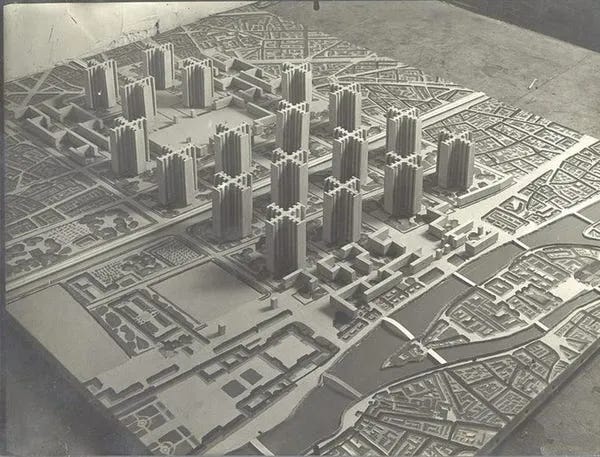
In 1925, Swiss architect Le Corbusier presented the Plan Voisin, one of the most disturbing proposals in the history of modernist urbanism. It called for the eradication of approximately 240 hectares of central Paris, replacing historic neighbourhoods with eighteen cruciform skyscrapers, each rising sixty storeys, arranged within an ordered geometric grid.
Its axiom was that the complexity of urban life could be mastered through rational planning, imposing a new order upon the tangled remnants of the past. The proposal would obliterate neighbourhoods whose streets, property lines and patterns of daily life had evolved organically over centuries, tearing apart the intricate web of habitation, memory and exchange that held the city together. Le Corbusier insisted on wiping the slate clean—a tabula rasa. Contemporary Gaza offers a tragic parallel.
Two decades later, the devastation of the Second World War had laid waste to much of Europe, leaving many of its cities and geopolitical order in ruins. The continent had been reduced to a tabula rasa. The Concert of Europe, the balance of power and the diplomatic arrangements that had governed relations between the great powers lay in the wreckage, leaving a political and strategic vacuum stretching from the White Cliffs of Dover to the snowfields of Russia.
Modernist planning sought to impose a new order on the ruins, reorganising urban life according to the principles of functional zoning and standardised form. NATO’s creation in 1949 reflected a comparable ambition at the geopolitical scale: the construction of a security order from above. The United States became its central tower, around which Western Europe could organise its defence, while NATO provided the institutional framework binding the alliance together.
Yet, as the post-war decades passed, confidence in the certainties of modernist planning began to give way to a more critical understanding of how cities and communities develop. By the 1970s, Christopher Alexander had emerged as an influential voice in this reassessment, advancing a more organic conception of architecture. His work at UC Berkeley, developed in The Timeless Way of Building and A Pattern Language, explored how coherent environments emerge through recurring patterns of human activity, social organisation and incremental adaptation.
According to Alexander, order develops through the interaction of constituent parts within a particular milieu, shaped in turn by the people who inhabit it and the conditions of place. The resulting form is cumulative and responsive, its coherence emerging through processes of mutual adaptation that unfold over time.

The same question of how order emerges through the interaction of constituent parts applies at the geopolitical scale. The Helsinki Final Act - 1975 expressed something of this philosophy at the continental scale. Its principles of sovereign equality, territorial integrity, non-intervention and peaceful coexistence sought to establish a shared European security space across the political and military divisions of the Cold War. Its underlying conception anticipated the later principle of indivisible security: the recognition that the security of each state is bound up with that of its neighbours, and that the stability of the whole depends upon the security of its constituent parts.
Helsinki offered a framework for organising coexistence through shared principles, negotiated among states, in which their respective security interests were understood as interdependent and applicable across the continent.
Hybrid Order
The philosopher and social theorist Manuel DeLanda offers a useful way of understanding the relationship between these approaches. In his account of urban development, cities emerge through two broad processes: centralised planning, in which an overall form is deliberately imposed through a governing grid, and decentralised development, in which patterns arise through the interaction of local decisions and circumstances, gradually producing an organic order across the urban fabric.
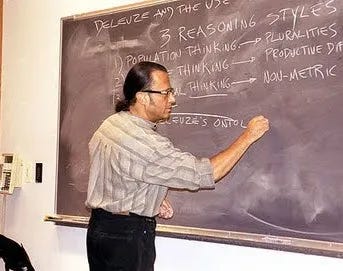
The decisive distinction concerns the processes through which order is produced; physical appearance alone reveals little about them. Most cities combine both, and their interaction is often central to how they function.
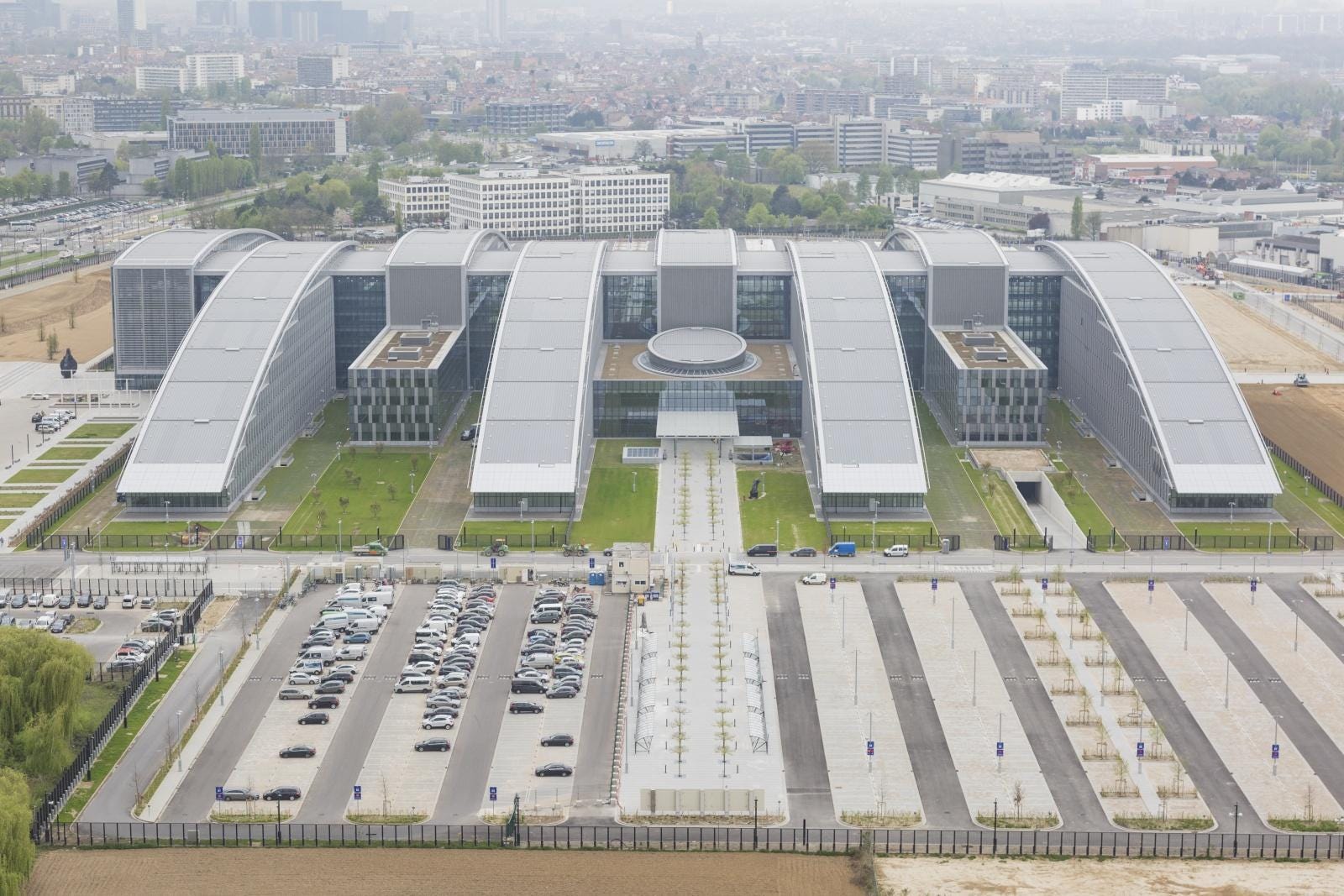
NATO itself has evolved into something of a hybrid urban landscape: a US hundred-storey central tower surrounded by a handful of twenty-storey blocks - Britain, France and Germany - and a sprawling collection of smaller structures, descending eventually to the modest cottages that are Estonia and Latvia. The alliance’s constituent elements vary enormously in scale, weight and influence, their accumulated mass reflecting successive phases of expansion. The resulting NATO increasingly resembles urban sprawl, spreading across the surrounding landscape with little regard for the neighbours whose territory it encroaches upon.
A security architecture is the framework of alliances, treaties, military arrangements and political principles through which states organise their security and regulate their relations with one another. Its institutional elements establish the commitments and obligations that bind states together, distribute responsibilities and define their respective positions within the larger structure. Like any architecture, it reflects the vicissitudes of power and the historical circumstances in which it was built.
Potemkin Parity: NATO – Russia Founding Act - 1997
By 1997, Russia was at rock bottom. Its economy had collapsed, its state institutions were weakened, its armed forces were in disarray and its influence across Central and Eastern Europe had largely evaporated. The United States, by contrast, stood at the height of its post-Cold War power. NATO was preparing to admit Poland, Hungary and the Czech Republic, while Moscow’s objections carried diminishing weight. The vast disparity in power between the two sides shaped the agreement that followed.
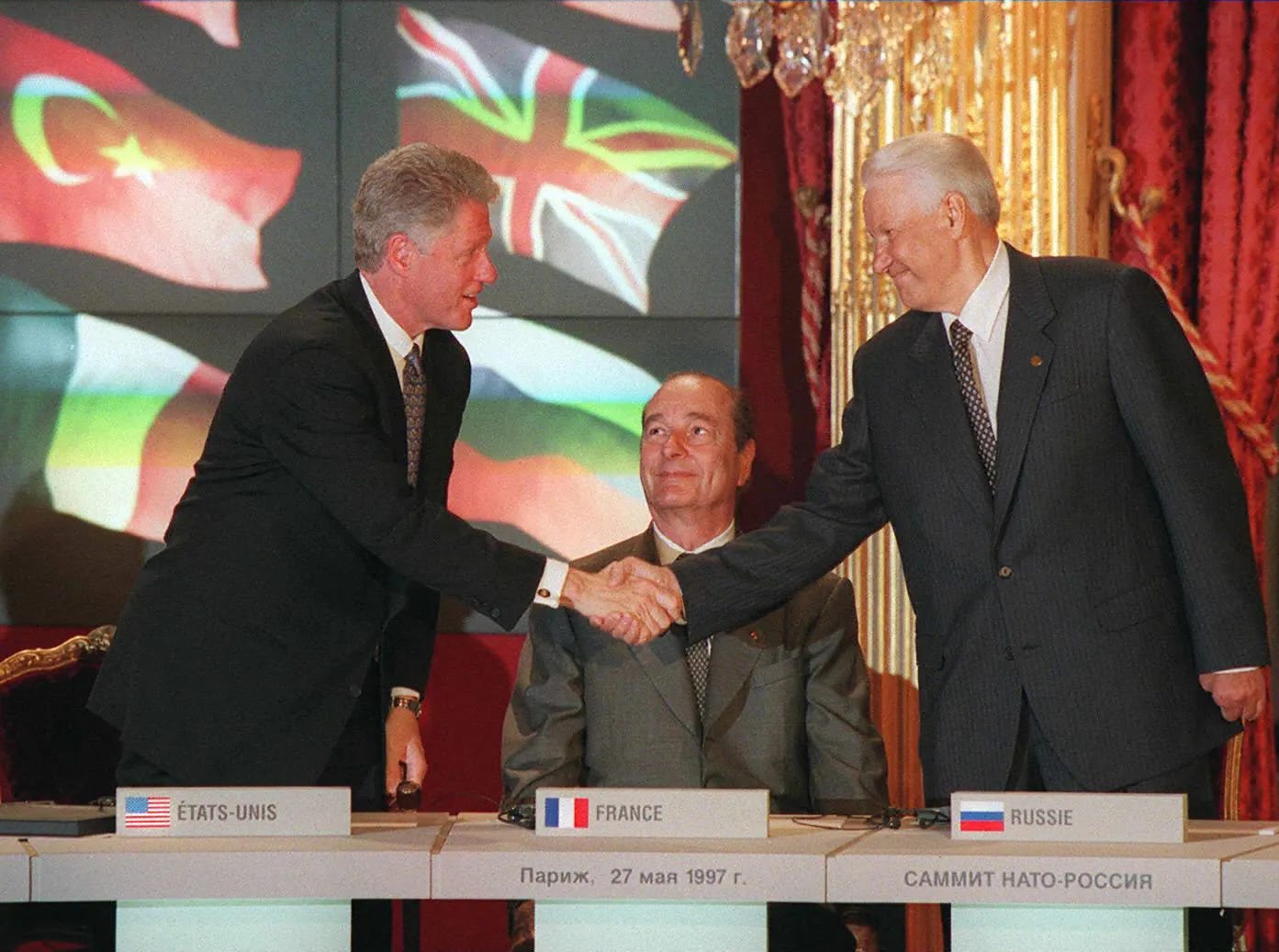
The NATO–Russia Founding Act - 1997, signed in Paris in May, was presented as a new framework of partnership and reciprocal restraint. Yeltsin had initially sought legally binding guarantees against NATO’s deployment of nuclear weapons, foreign forces and permanent military infrastructure in new member states. At the Helsinki summit in March, he weakly accepted a political declaration and a Permanent Joint Council for consultation. NATO offered empty assurances that it would avoid the additional permanent stationing of substantial combat forces in the new members, while retaining full freedom to enlarge and organise its military posture.
The language was lofty, almost grandiose. Both sides affirmed sovereignty, territorial integrity and indivisible security, and declared their intention to build a common European security space without dividing lines or spheres of influence. Under American unipolarity, however, the entire globe had become Washington’s sphere of influence; the very idea of competing great powers was rank heresy.
The Act thinly disguised itself in Christopher Alexander's organic clothes but carried Le Corbusier's top-down geometry. The arrangement reflected the prevailing balance of power. NATO continued its eastward expansion, to which Russia meekly acquiesced, receiving hollow political assurances and a consultative forum with no authority over alliance decisions.
The Founding Act thus acquired something of a Potemkin quality: a diplomatic façade of partnership and reciprocal restraint, concealing the asymmetry beneath it, further documenting Russia's decade of humiliation.
Dawn of Great Power Politics
In late 2021, as Russian forces massed along Ukraine’s borders and Ukrainian militias lobbed artillery shells into breakaway Donbas cities, Moscow published two draft agreements on 17 December 2021, proposing a fundamental redesign of European security. Russia demanded an end to further NATO enlargement, the exclusion of former Soviet republics from the alliance and a return to the military deployment baseline of May 1997.
The proposals were maximalist, and their timing premature. Russia was attempting to negotiate a new balance of power while the United States and NATO still enjoyed overwhelming military and institutional advantages. True, Washington had just suffered a humiliating withdrawal from Afghanistan, yet its global military reach, technological edge, intelligence capabilities and logistical capacity remained formidable. Moscow sought to exploit the perception of Western vulnerability, while its own ability to enforce such a settlement remained uncertain. The proposals were effectively dead on arrival, yet they anticipated the return of great-power bargaining as an organising principle of international security.
Redrawing the Geography
The Russian proposals sought to redraw the map of Europe around the NATO membership boundary of 27 May 1997 - an arrangement that would have created, in effect, a two-tier alliance. Moscow was prepared to leave countries admitted since that date formally within the alliance while imposing a reduced military status upon them.
Established members would have retained their existing military posture, while newer members would have faced restrictions on the stationing of additional foreign forces and weapons, the deployment of missiles and the conduct of military exercises. Any exceptional deployments would have required the consent of all parties. In architectural terms, Moscow sought to preserve the alliance's outer boundaries while altering the distribution of military weight within it.
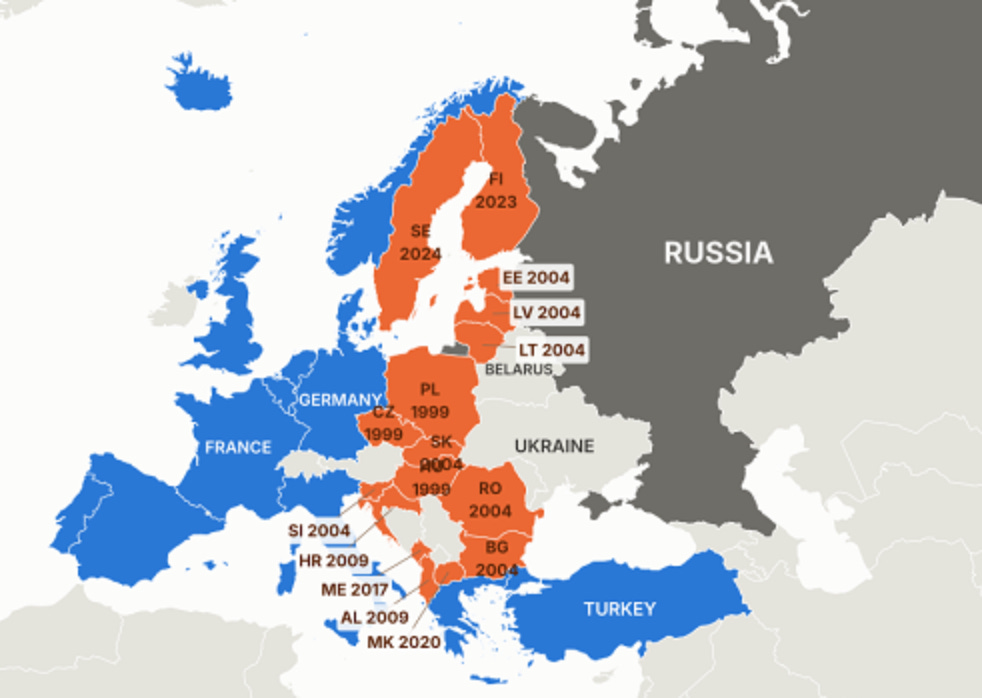
The restrictions extend well beyond NATO’s eastern members. The drafts prohibit further enlargement, curtail military activity by NATO states across Ukraine, Eastern Europe, the South Caucasus and Central Asia, and impose severe constraints on Western military cooperation with former Soviet republics outside the alliance. In effect, Moscow seeks a broad security perimeter across much of the former Soviet space, limiting Western military access and restoring strategic depth through a belt of neighbouring states.
The Collision of Principles
The December 2021 drafts brought into conflict two principles embedded in the Helsinki framework: the sovereign equality of states and the indivisibility of security. The first affirmed each state’s right to choose its own security arrangements; the second recognised that the security of each was connected to that of its neighbours. The central problem was how these principles could be reconciled when their practical consequences collided.
NATO upheld Ukraine’s right to determine its own affiliations. Russia argued that enlargement and Western military cooperation threatened its security, demanding restrictions on the choices available to neighbouring states. Each side invoked universal principles while advancing claims that constrained the other. The dispute was therefore also about who had the authority to draw Europe’s security map.
Rene Girard’s account of mimetic desire illuminates this double imperative. Each side treats the other as both model and obstacle. The West asserts its freedom to organise collective security; Russia demands an equivalent freedom to shape its regional environment. The refrain is familiar: imitate me, aspire to what I possess, while accepting that I alone am entitled to define the limits of your ambition.
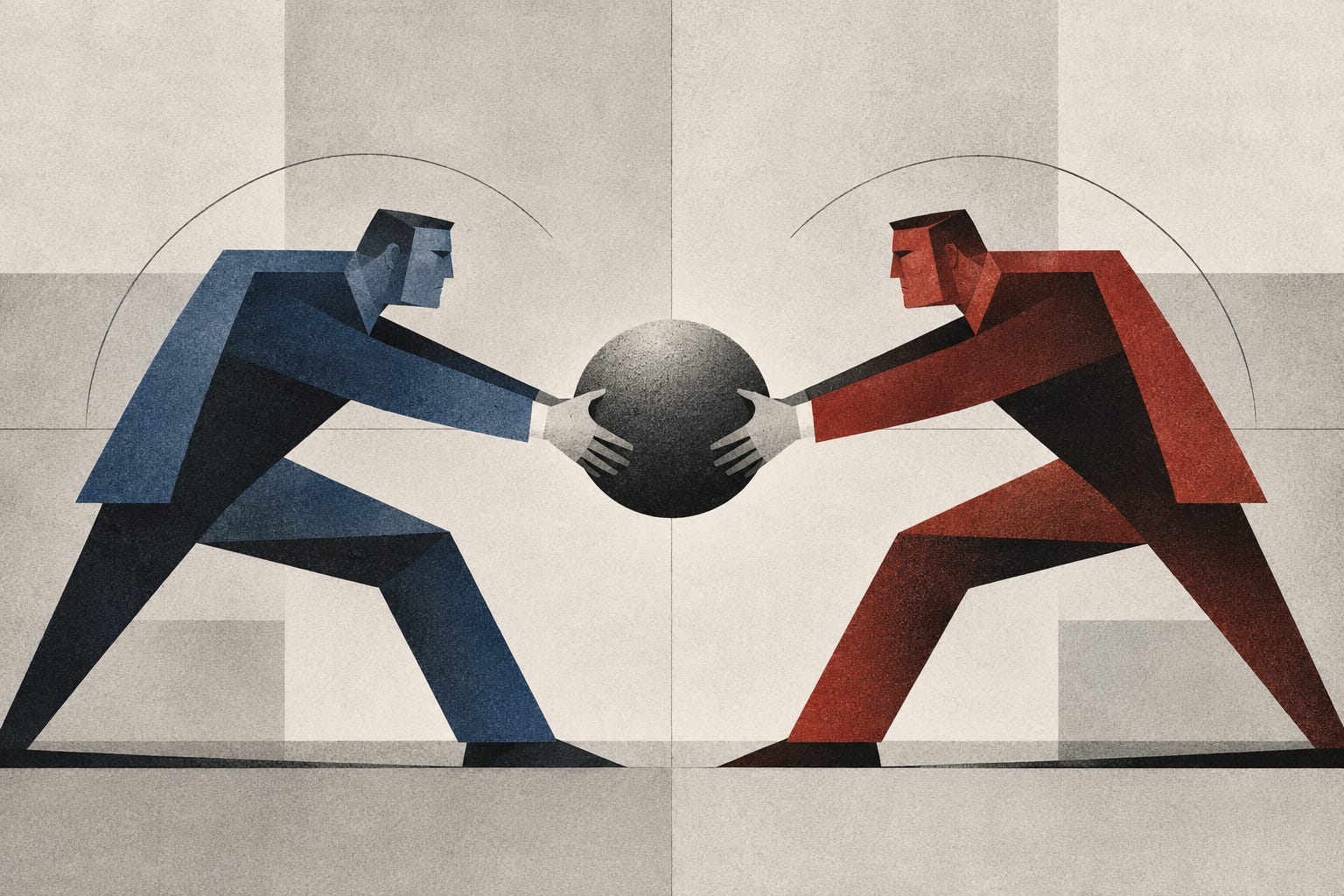
A Hegelian reading takes the conflict a step further. Each power presents its particular interests as expressions of a universal European principle. NATO invokes sovereign choice and collective defence; Russia invokes indivisible security and mutual restraint. The deeper architectural question is whether Europe’s order can emerge through negotiated accommodation among sovereign states, or whether its geometry will be imposed from above by the powers with the greatest capacity to shape it. The conflict exposes the structural tension within the existing design: the liberty of each state to choose its affiliations exists alongside the security claims of the powers around it.
The Return of Great Power Politics
At the Abu Dhabi talks on 10–11 November, negotiations over ending the war in Ukraine became increasingly entangled with the wider question of Europe's security architecture. Moscow returned to the arguments set out in its December 2021 proposals, presenting NATO enlargement and the absence of a shared security order based on indivisible security as the root causes of the confrontation. The EU was left on the sidelines. Beyond a few face-saving consultations, both Washington and Moscow appeared to regard it as too marginal to deserve a place at the negotiating table.
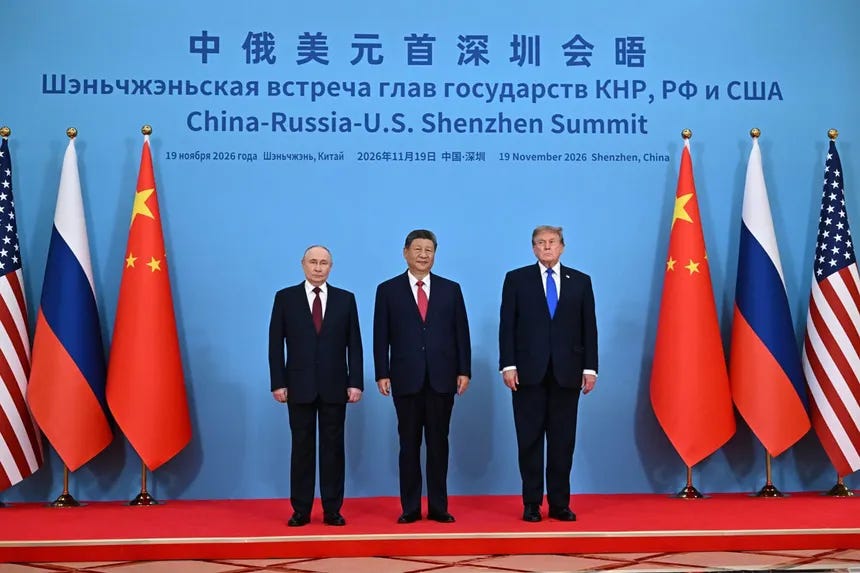
The return of great-power politics found its most striking expression a week later in Shenzhen, where Xi Jinping, Vladimir Putin and Donald Trump met for an unprecedented trilateral summit. The substance of their discussions was limited; the symbolism considerable.
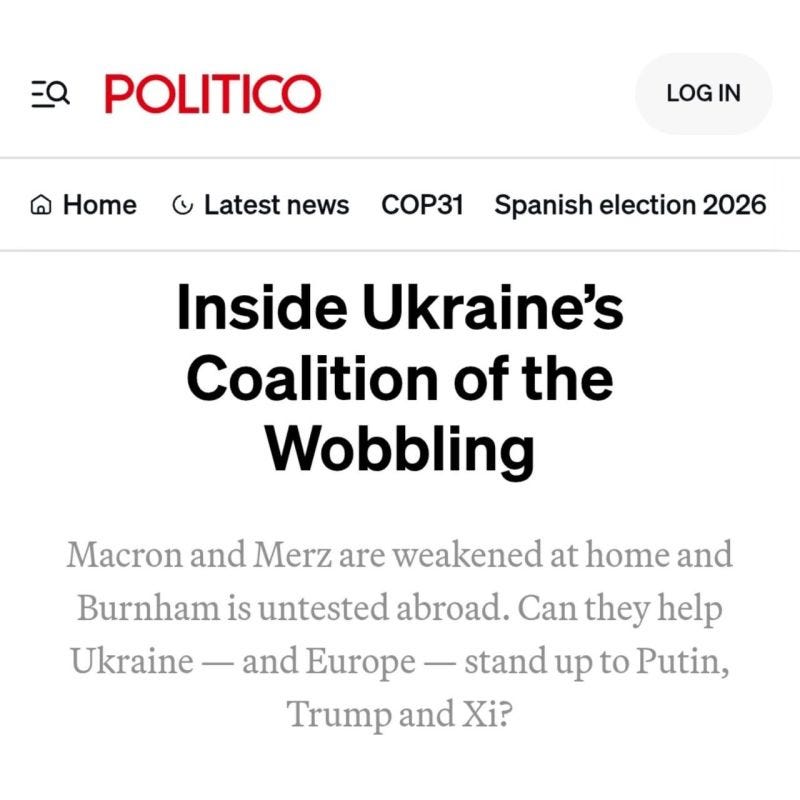
On the same day, European leaders gathered in Berlin for another meeting of the Coalition of the Willing, deliberately timed to draw attention away from the tripartite summit. They issued yet another set of declarations of solidarity with Ukraine, whose political weight seemed increasingly tenuous. Even Politico dubbed it the “Coalition of the Wobbling”.
Three decades have reordered the hierarchy of international power. In 1997, the United States stood at the height of its unipolar power, while Russia languished at the post-Soviet nadir and China remained some distance from great-power parity. By 2026, that hierarchy has been fundamentally reordered. China has risen to near parity with the United States, Russia has re-established itself among the leading military and geopolitical powers, and Washington has moved from unchallenged primacy into a more crowded top tier of international power. The European Union, meanwhile, has slipped into a lower echelon altogether, increasingly peripheral to the strategic decisions shaping the international order, with further decline on the horizon.
Europe's decade of humiliation has been shaped by three self-sabotaging policy choices: opening its doors to mass migration, dismantling much of its nuclear generating capacity, and sacrificing access to cheap Russian energy through its wholehearted alignment with Washington's war in Ukraine. In the process, Europe has surrendered much of its independence, suffered deindustrialisation, demilitarisation and internal strife, and assumed the role of a dependent proxy.
The great powers are once again at the drawing board, sketching a new security architecture for Europe. Will the states that inhabit this new domain have any meaningful say in its design?