
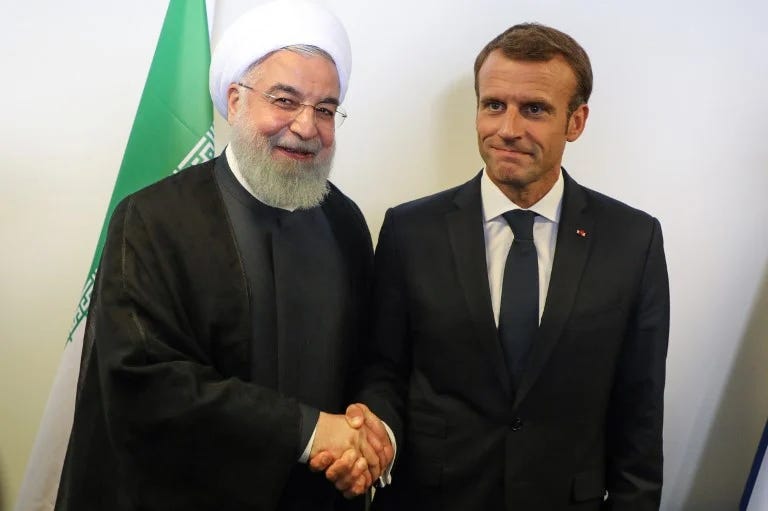
Why did the anticipated US airstrikes on Iran fail to materialize? The explanations seem as convoluted as the crisis itself: a reported Israeli request for delay; refusals from regional allies to permit overflight; Russia’s ominous presence in the background; and President Trump’s own implication that a grim bargain was struck to spare captured agitators. Trump cancelled the attacks only after Iran supposedly agreed to spare 800 potential CIA / Mossad assets from the gallows.
The very next day, the drama shifted towards the frigid Arctic region, as Danish and Greenlandic foreign ministers stood firm in the White House against escalating US demands to cede the vast Greenlandic wastelands.
These two events, unfolding in parallel, point to a deeper structural rupture: the post-1945 international order is no longer being reliably upheld by the power that created it. The United States, long the system’s chief enforcer, now treats its own rules as contingent instruments, to be applied, suspended, or discarded according to circumstance. The result is a growing sense that the order itself has become provisional, dependent on domestic struggles within Washington rather than shared expectations among states.
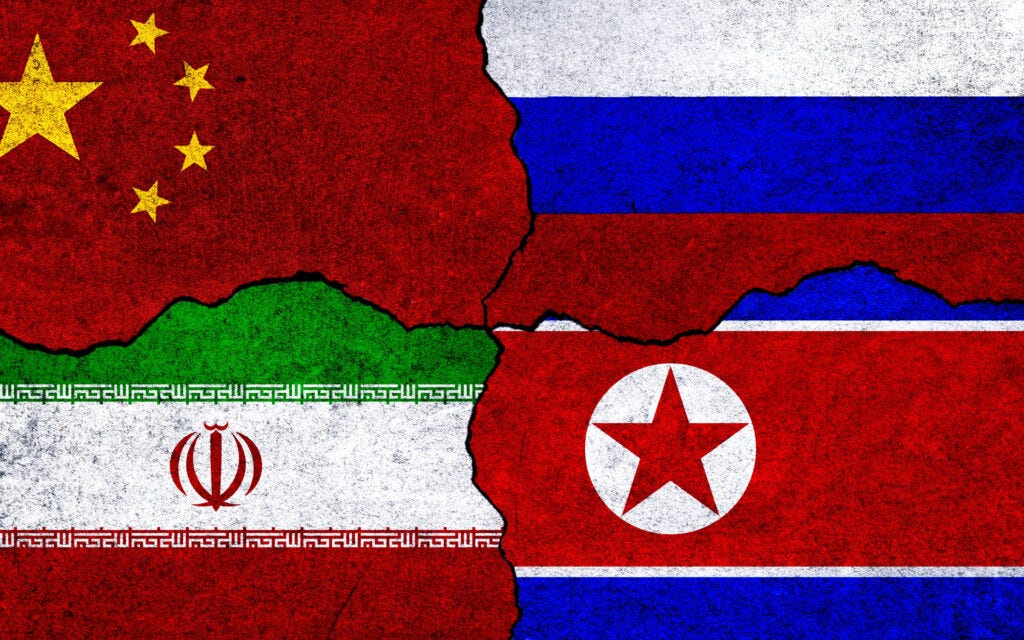
In this environment, states long described by the West as disruptors—Russia, China, Iran, and North Korea—have begun to converge around a different set of preferences. Their interests increasingly align around stability, predictability, and the formalization of limits on unilateral power. For China, whose economic model depends on large-scale exports and long planning horizons, clear trade rules and respected sovereignty remain essential. Russia and Iran, operating under constant coercive pressure, likewise benefit from an international environment where escalation is bounded and power is negotiated rather than exercised arbitrarily. The emerging dynamic is therefore less a defense of the old order than an attempt to replace its eroding unipolar core with a more rule-constrained multipolar equilibrium.
In a recent example of this strange new world, Canada, a paradigm of status quo sobriety, this week hailed a “new strategic partnership” with China, following trade dispute with the US.
In response to years of geopolitical and economic decline, US seems to be hesitating between two policy choices: retrench towards a Western Hemispheric bastions, which explains recent actions in Venezuela and Greenland, or continue fighting to dominate the Eurasian “world-island” as preached by Zbigniew Brzezinski in his geopolitical cookbook, The Grand Chessboard from 1997. The fact that Brzezinski was a farsighted thinker is highlighted in the following passage:
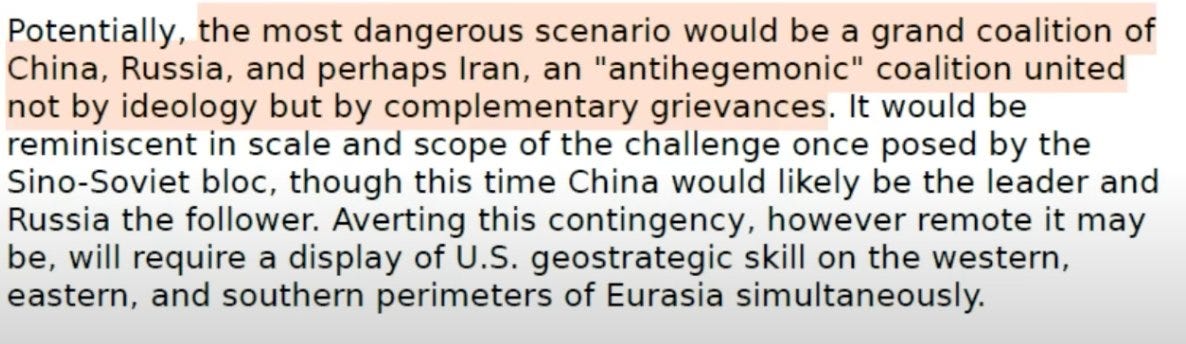
Add North Korea to the mix, not the mention the many lesser members of the BRICS alliance, and you have a recipe for trouble for continued US hegemony over the world-island. Given Canadian leader Mark Carney’s comments, it would not be such a surprise if in the coming years Canada starts exploring BRICS membership.
Moments of systemic realignment such as this are a recurring feature of the past five centuries of the modern capitalist world, marked by cyclical hegemonic rise, exhaustion, and replacement. During periods of stable and prosperous hegemonic rule, states tend to drift toward two opposite errors. Members of the status quo succumb to a utopian faith that shared norms, institutions, and legal frameworks can transcend power politics altogether, while marginalized or revisionist actors often retreat into a rigid realism that treats sovereignty and coercive force as ends in themselves.
This tension was famously diagnosed by the British historian E.H. Carr on the eve of the Second World War, as the League of Nations collapsed under the weight of its moral aspirations and its refusal to confront the realities of power. Writing in The Twenty Years’ Crisis in 1939, Carr argued that international stability depends on the disciplined synthesis of idealism and realism. Periods of hegemonic retreat and institutional breakdown, he warned, are precisely those in which the pathologies of utopian delusion and realist rigidity become most visible. The present moment, marked by the unravelling of the post-Cold War “rules-based order,” bears an uncomfortable resemblance to the crumbling world Carr sought to understand, as he stood on the precipice of the abyss.
Syrian Sequel
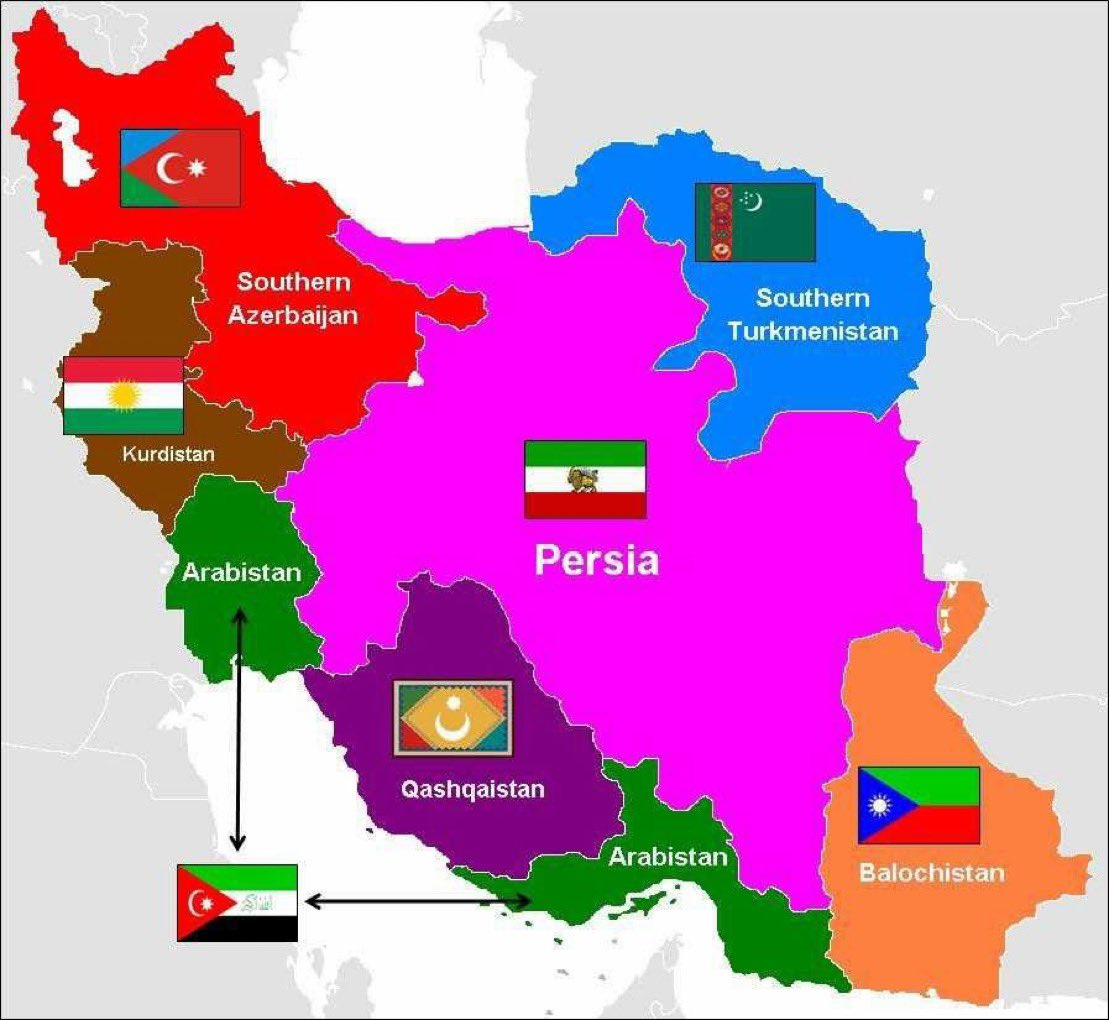
The most coherent explanation for the recent destabilization campaign against Iran comes from sources within Tehran itself. They perceive the ultimate US/Israeli objective not necessarily as direct regime change toward a friendly, prosperous state, but as the ignition of a Syrian-style civil war designed to shatter the diverse and oil-rich nation. However dysfunctional and oppressive the current Islamic Republic may be, one must remain clear-eyed: the West’s strategic goal is certainly not a gleaming, powerful Shiite counterpart to the UAE. Few regional actors, including many of Iran’s neighbours and rivals, have any interest in a strong, unified Persia resurgent.
A more accurate guide to the intended outcome is the logic of Israel’s old Yinon Plan—a strategic vision, first articulated in the 1980s, that advocates for the perpetual fragmentation of surrounding states into smaller, weaker, ethnically or sectarian-based entities that can be more easily managed or dominated. This is a formula for controlled Balkanized chaos. Look at the current states of Syria or Libya: they are fragmented zones of perpetual conflict, warlordism, and external intervention. The desired end-state for Iran is this same kind of managed disintegration—a permanent sovereign demolition project that neutralizes Iran as a strategic rival.
But if the United States is genuinely preparing to retrench from Eurasia and consolidate behind the ramparts of a hemispheric “Fortress America,” why would it expend its dwindling resources and political capital on a costly confrontation with Iran? The answer exposes a roadblock to the retrenchment thesis: the irreducible demands of Israel and its neocon allies within the American establishment. For this potent constituency, the neutralization of Iran is the foundational sine qua non for any strategic reorientation.
However the risk for the US here is that finality always remains just out of reach, and is replaced by a self-perpetuating sequence. Iran may merely be the first and most prominent domino in a regional order perceived as inherently hostile. The Herculean task of confronting Tehran is just the first labour; its completion would not bring respite, but merely reveal the next set of stables to be cleansed. With Iran’s counterweight removed, the focus of “security imperatives” would inevitably shift to other regional powers—to an ascendant Turkey, a recalcitrant Qatar, or even a Saudi Arabia whose internal power struggle with the UAE (Israel’s sole reliable Gulf partner) could itself become a new source of “instability” for neocons to fixate upon.
Thus, for the “Fortress America” proponents, the dream of a clean retreat would become a mirage. Any withdrawal secured by promising the perpetual harassment of Iran is a pact with Sisyphus. The US would forever be rolling the boulder of Middle Eastern intervention uphill, only to watch it roll back down again as the definition of “security” expands to encompass each new villain. The homeward path vanishes behind the next immediate demand, making the grand strategic retreat an endless rear-guard action fought on an ever-shifting front.
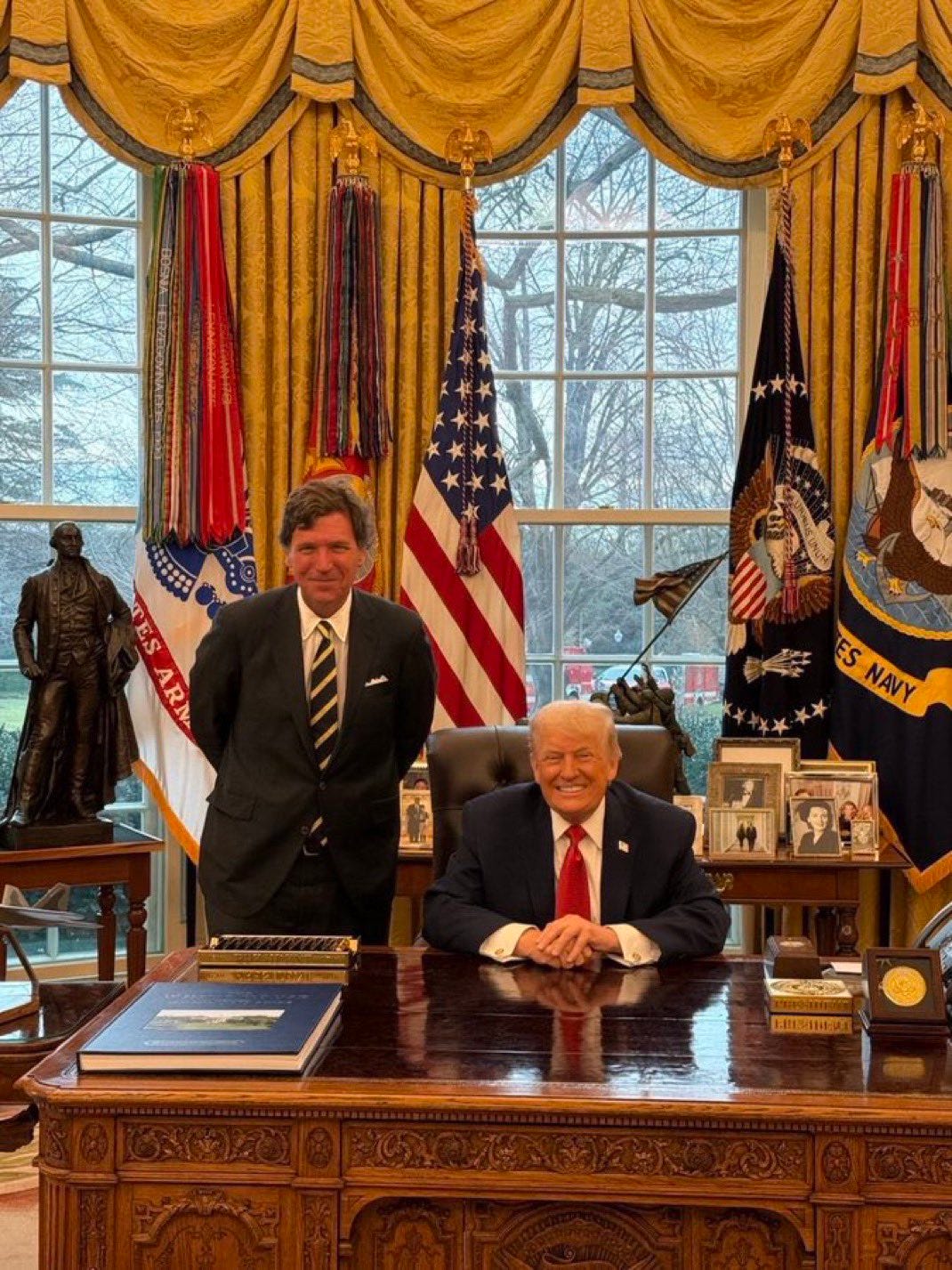
Trump’s cancellation of the Iran strikes, followed immediately by his staged bro-fest with Tucker Carlson—the bête noire of the interventionist right—demonstrates a deliberate oscillation between the two warring souls of American statecraft: the Messianic Globalist camp, committed to perpetual global intervention, and the Hemispheric Realist faction, seeking retrenchment to a Fortress America. Each swing of this pendulum destabilizes the other, leaving allies and adversaries alike guessing—and the coherence of US strategy in doubt.
What matters, however, is not which faction ultimately prevails in Washington, but what the oscillation itself produces in practice. Far from resolving overstretch through disciplined retrenchment, the United States appears to be compounding it. While remaining locked in strategic confrontation with Iran, Russia, and China at the global level, it is simultaneously escalating coercive pressure within its own hemisphere—reviving regime-change politics in Venezuela, issuing threats of blockade against Cuba, and floating unprecedented territorial demands from Denmark over Greenland. At the same time, the domestic sphere is no longer insulated from these imperial stresses, as internal security operations and mass protests signal a widening fracture at home. Rather than choosing between global empire and hemispheric consolidation, the United States is now straining to manage all three arenas at once: global dominance, regional subordination, and internal control. Far from retrenchment, the US is experiencing workload acceleration—an imperial system attempting to do more with diminishing coherence, and thereby hastening the very crisis it seeks to avoid.
Greenlandic Gambit
Trump’s acquisitive demands for Greenland carry a disturbing resonance, reminiscent of an aging predator circling a vulnerable teen on an island paradise. Or, more prosaically, it can be seen a single move designed to kill two strategic birds with one stone. Securing Greenland provides the United States a dominant Arctic foothold, creating a platform to monitor, harass, or even choke off future Russian and Chinese maritime traffic through the thawing polar routes. Simultaneously, it delivers a mortal blow to the NATO alliance, as European members are forced to choose between defending an ally’s sovereignty and appeasing a rapacious patron.
It is a marvel of modern statecraft to observe which historical lessons are enshrined and which are hastily archived. The war party, echoed faithfully by its European vassals, still operates from a dog-eared playbook: any hesitation to fund a foreign war is branded “appeasement,” a cowardly rerun of Munich. Peace with Russia is impossible since once they achieve victory in Ukraine, the domino theory is instantly invoked, after Kiev, Moscow will surely march through the Baltics, Warsaw and then Berlin.
But now Europeans are struggling to find ways to appease Trump. The critical question is one of precedent and appetite. Would Trump be satisfied with Greenland alone? Or does this initiate an Arctic Lebensraum, where Greenland serves as the Czechoslovakia—the initial, tolerated bite preceding a multi-course campaign? If the strategic goal is true Arctic hegemony, why stop there? The domino logic extends irresistibly to Iceland, Norway’s Svalbard, and the Laplandic zones of Finland, Norway and Sweden. A full absorption of the European Arctic rim would place the US in direct territorial confrontation with Russia.
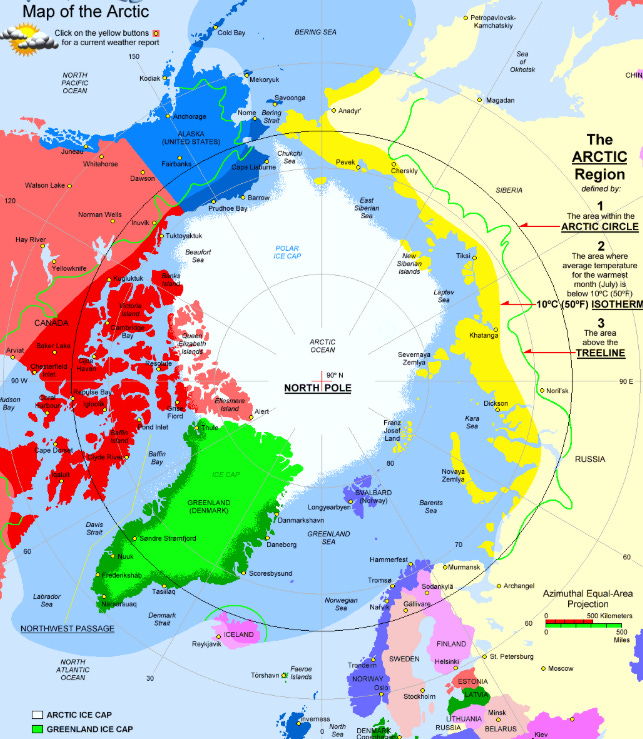
In this maximalist vision, the gambit culminates in total transformation: a US-dominated polar sphere, with a folded-in Canada, controlling the majority of the Arctic coastline. The final victim of this northward expansion would be NATO itself—rendered obsolete and buried by the very power that once founded it. The Greenland demand, from the Fortress America point of view, may be less about the narcissistic pleasure of forbidden conquest and more about overturning the entire trans-Atlantic order.
Utopian Collectivity versus Realist Sovereignty
North Korea’s hermetic autarky demonstrates that extreme sovereignty can be enforced, albeit at a staggering human and strategic cost. Iran, however, exists in a more interconnected and vulnerable geopolitical ecosystem, making the North Korean model both impractical and prohibitively destabilizing. Iran indeed maintains strategic ties, yet its pride prevents the decisive integration with the Fearsome Four that would ensure its survival.
This hesitation is illustrated in the recent crisis: street protests erupted over the collapse of the Iranian rial, a currency China could have stabilized with its reserves. The unrest was ultimately quelled by Russian electronic warfare equipment, which jammed the tens of thousands of Starlink terminals smuggled in by foreign actors. Yet, Tehran continues to balk at purchasing Chinese fighter jets and drags its feet on a formal strategic pact with Moscow.
Simply acquiring Russia’s formidable Oreshnik missile system—a weapon even France’s Macron covets—would likely deter further US or Israeli adventurism without the need to resort to nuclear status. The clearest path to a stable, prosperous Iran lies in pragmatic internal renewal under the protective umbrella of powers like Russia and China, whose interests, however impure, align with preserving Iranian territorial integrity. But neither power will tolerate or sponsor the mullah’s economic incompetence and will demand reform. For now, however, Iran’s defensive suspicion has hardened into a strategic liability.
Europe’s crisis, conversely, stems from the opposite extreme: a deep-seated utopianism that believed security could be permanently outsourced to a benevolent hegemon within a rules-based order. European nations allowed their capacity for realist action—military power, energy independence—to atrophy in the comfort of assumed protection. One sign of their rude awakening is Macron’s urgent call for Europe to develop its own equivalent of Russia’s Oreshnik system.
Thus, both find themselves in a mirror-image trap. Iran, fearing the erosion of its sovereignty through dependency, risks collapse through isolation. Europe, having embraced dependency as a utopian project, now faces the erosion of its sovereignty by a capricious protector. Their pathologies are opposite, but the result is the same: a profound sovereignty crisis, exacerbated by a hegemonic power that no longer feels bound by the rules it once authored.
From the Twenty Years Crisis to the 2026 Year of Crisis
These inverse positions of Brussels and Tehran on the Collective / Sovereign spectrum are profound failures to reconcile the fundamental dialectic of international life: the tension between utopianism and realism. The work of historian E.H. Carr, forged in the collapse of the idealistic League of Nations, provides the essential lens for diagnosis.
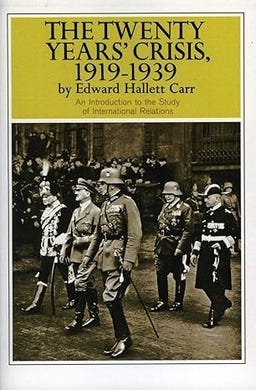
For Carr, writing in the shadow of the catastrophic failure of the post-WWI order, mature statecraft is defined by a synthesis of these two facets. Utopianism, the “immature thought” of pure purpose, builds castles of norms like the “rules-based order.” Realism, the “thought of old age,” reduces politics to a sterile analysis of immutable sovereign power. True wisdom lies in the balance: “Mature thought combines purpose with observation and analysis.” A healthy polity needs the purpose provided by utopian vision and the grounding provided by realist power assessments.
This framework reveals the mirrored pathology of Europe and Iran. Europe succumbed to a utopian intoxication, believing its normative, post-sovereign project had transcended power politics, outsourcing its realism to Washington. Iran hardened into a realist sclerosis, fetishizing sovereign purity to the point of self-isolation, rejecting the purposive trust needed for collective security. Each is trapped at a dysfunctional extreme of Carr’s spectrum, and each is now being brutally punished for it by a world that demands the synthesis they lack.
Conversely, the resilience of the Russian and Chinese core of the Fearsome Four bloc stems from their embodiment of this Carrian maturity. They champion a utopian vision of a “multipolar world order”—a purposeful and collective alternative to US sovereign hegemony—while ruthlessly building the realist foundations of military and economic power to propel this dream towards reality. Their grand strategy consciously combines idealist theory with empirical practise.
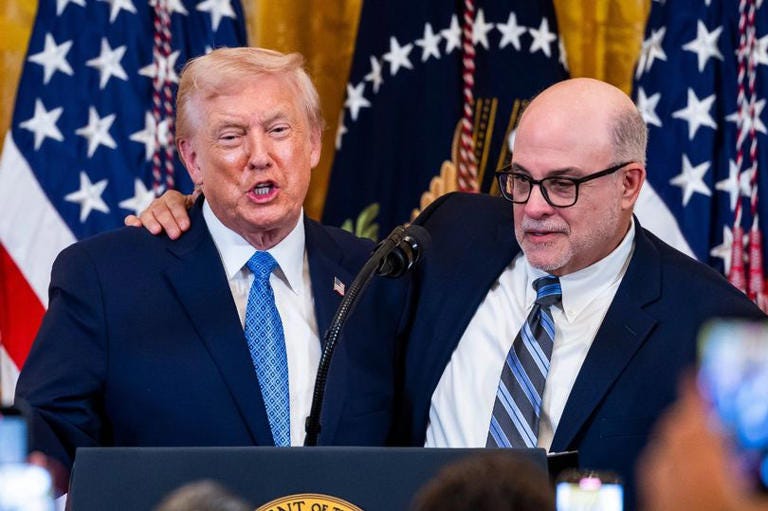
The chaotic actions of the United States, meanwhile, manifest the violent internal struggle between these two poles within the American polity. The restrained, hemisphere-focused intervention in Venezuela and the cancelled strike on Iran reflect a pragmatic realism seeking retrenchment. Yet the simultaneous, shocking threats against Greenland and the alleged attempted drone assassinations of Russian leadership expose the undiminished force of a messianic utopianism—the neocon impulse for transformative violence and hegemony. US policy is thus less a coherent strategy than a perpetual Tucker Carlson-Mark Levin wrestling match, where these irreconcilable impulses clash, leaving allies and adversaries alike in a state of paralyzing uncertainty.
The path forward for both Brussels and Tehran, therefore, is to correct course toward Carr’s synthesis—a journey that moves in opposite directions. Europe’s sovereign nations, operating through and beyond their EU superstructure, must ingest a bitter dose of realism: they must rebuild autonomous power, recognizing that normative resolve without sovereign strength is merely an invitation to predation.
Iran must swallow its sovereign pride and accept a measure of strategic utopianism. While maintaining its formidable missile arsenal, it must deepen its integration into the collective security framework of the Fearsome Four and the wider BRICS bloc, understanding that independence without deeply integrated allies is a blueprint for invasion.
Their survival depends on this mutual correction. In an era where the hegemon is at war with itself—paralyzed by its own clashing utopian and realist imperatives—the only sovereignty that will endure is that which is both willed and armed, principled and possible. Effective power in the 21st century will be forged in the disciplined synthesis of Carr’s dialectic, not found in the barren purity of either extreme.
Give it a bit. It took the neocons some 12 years of pleading, cajoling, threat inflation and lies to get the War On Iraq that they so craved, but they got what they wanted and Iraq now is a failed state, at the behest of Israel.
Great article as usual, Kevin! Comments and compliments from me:
The four are “now struggling to re-establish the status-quo”? I wouldn’t put it like that, because it’s more the threat that Bzerzinski highlights that is now materializing, so no willingness from these 4 to re-establish any status quo ; it’s the multipolar world that is struggling to be born, and which will be born, as the US tries to resist in all possible ways. My different articles have explored these points, for instance here:
https://finnandreen.substack.com/p/the-us-is-being-pulled-kicking-and?utm_source=publication-search
I do not think there is any retrenchment at all from the US side actually, the NSS doc also makes it clear; it’s necessary for the US to secure the base for the final confrontation that is coming with China. This is the embargo and the attempt to fully block China’s maritime and possible landbased commerce (BRI). See “Maritime Blockage Against China” from US Naval War College.
The Vnzla stunt was part of this plan, including for the oil to be restricted (8% of China exports). And the future Iran gambit as well : also representing 18% of China’s imports. Then if they can get Iraq, Kuwait, UAE, Oran, to stop exporting to China as well, the plan would be that Russia alone won’t be able to fill entirely the tank for China.
Yes, I agree there might be a swing of the pendulum with Trump himself, but not with the Deep State; which is normal since it is a bureaucratic being with its slow and uniform momentum in one direction. So there is no strategic retreat. Btw this mirage of a "clean retreat" that you mention, is probably valid, in my opinion, to Ukraine as well. Even though Washington wants to hand over this hot Kiev potato to Europe, it won't be possible to escape blame - it's just too big.
Brilliant references to the labors of Hercules, that's so true; US strategy for domination has an infantile quality because it's so typically American in its short term notion of time (as per your previous fantastic essay). And funny that we both called the US a “predator” against it own "allies", as I also did independently from you, since I was referring to Todd’s recent work.
Regarding a “multi-course campaign” for “lebensraum”, I would think it more natural for the US to take Canada, not the rest; historically US almost got it in the War of 1812, it is geographical natural once (or if) Greenland is in the bag, and culturally it will also be a nice fit. Trump has even mentioned Canada as 51st state...
Finally, that's really original comparison using Carr's work for Europe vs Iran. Just an addition: when you say “Europe must ingest a bitter dose of realism”, yes but that realism is also the nation state. The European utopian dilemma is that it cannot be just Bruxelles ; these are nation states. So this means: please do not amalgamate Europe and the EU ; these are different things. The EU will never really replace the millennial nations in Europe in terms also of "national" interests. This is also part of that Bruxelles led utopianism.