
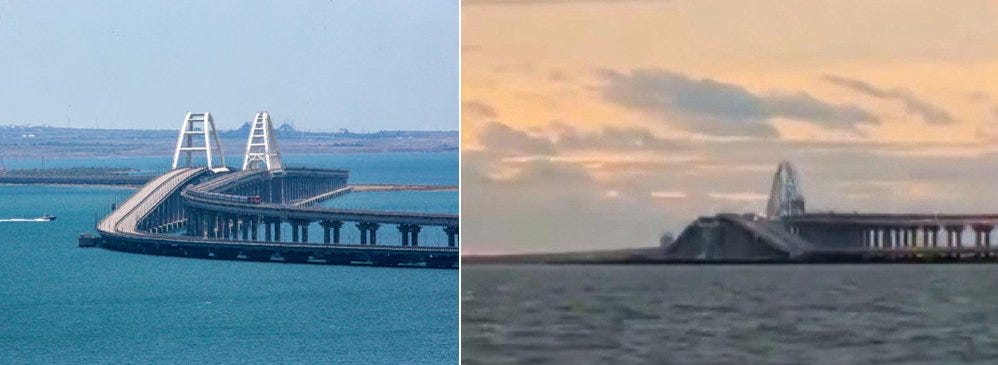
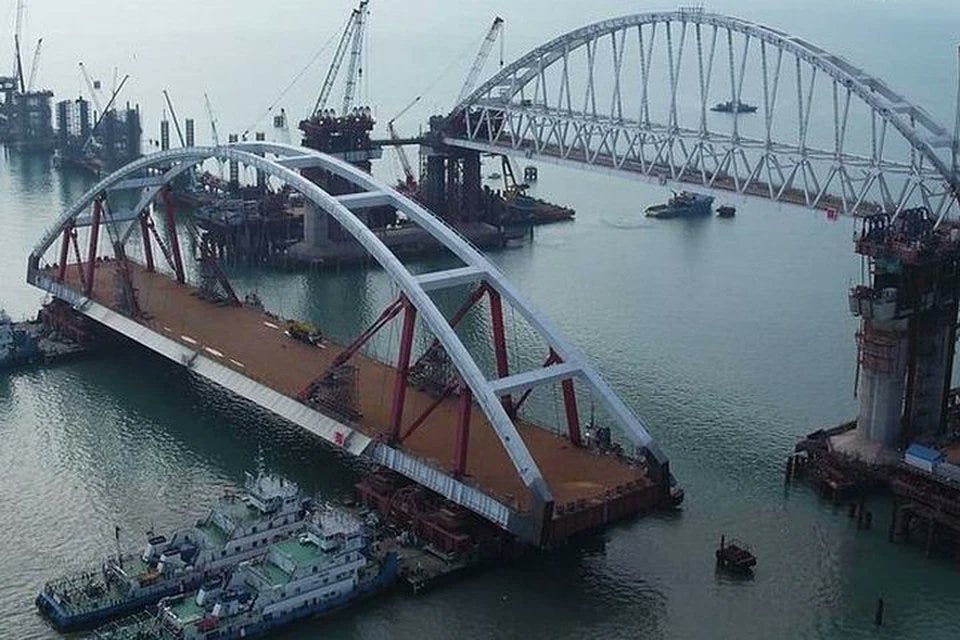
A 227-metre steel arch of the Crimean Bridge plunged into the Kerch Strait on the morning of 17 November, taking a section of the road carriageway with it. The collapse followed two consecutive days of NATO / Ukrainian attacks on the crossing. The previous day’s strike had badly deformed the arch; the overnight barrage finished the mission, sending the massive structure crashing into the water beneath the bridge. For one of the most heavily defended and politically sensitive pieces of infrastructure in the Black Sea region, the images are extraordinary.
The immediate logistical consequences for Moscow should remain manageable. The bridge consists of separate road and railway structures, and the collapse of the road arch has effectively put that crossing out of action for the remainder of the war. The crucial question concerns the railway link. Images suggest that the adjacent railway arch may also have been damaged, although the full extent of the damage will take days to establish. Rail traffic have been suspended pending assessment.
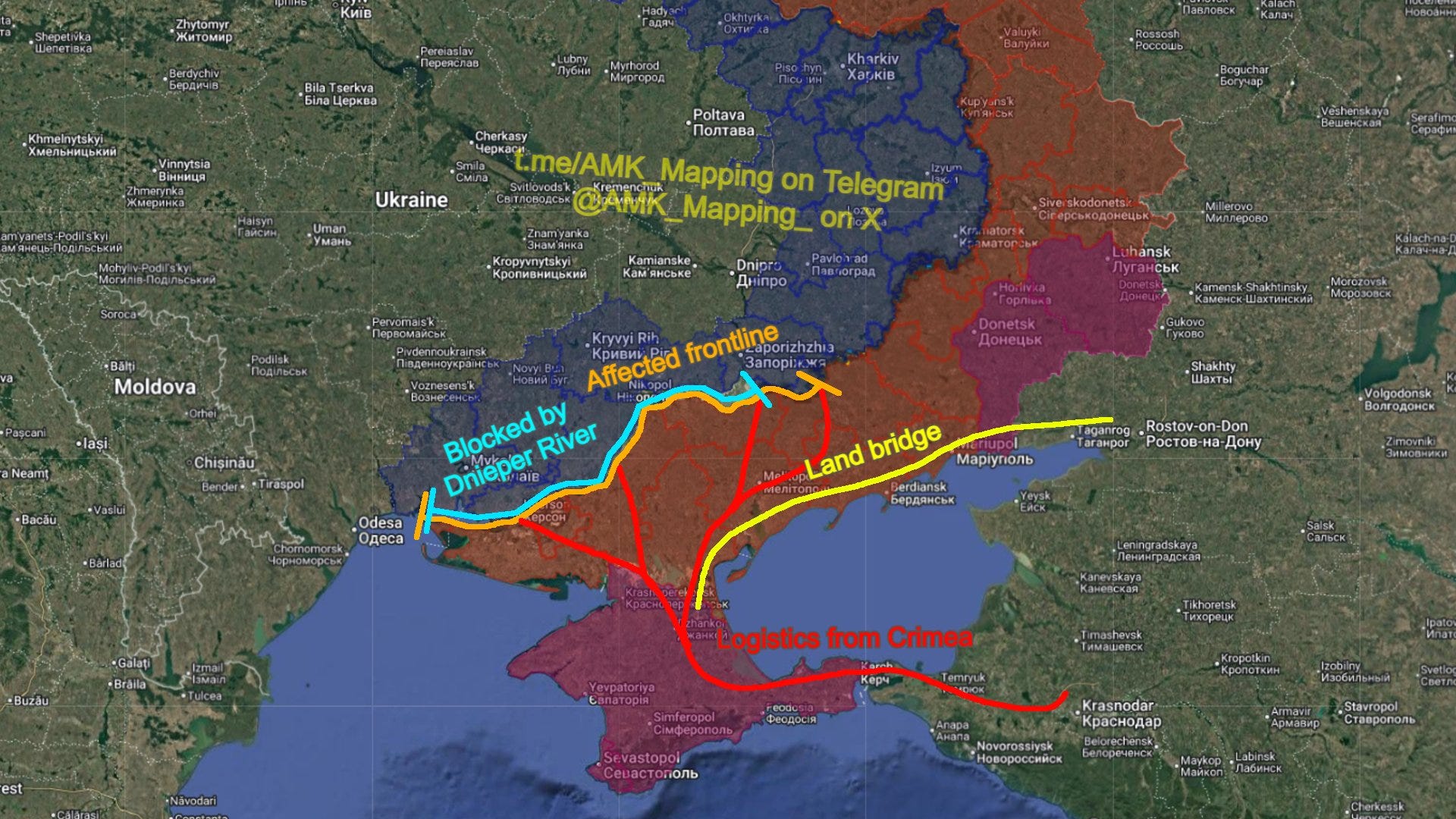
The road crossing had already been subject to restrictions on heavier freight following the 2022 attack, with much of Russia's military supply traffic redirected through the land corridor across occupied southern Ukraine. The loss of the road span therefore does add a layer of friction and reduces flexibility, while leaving Russia with its principal overland alternative along the north shore of the Sea of Azov. Ferries provide another option, although their capacity and vulnerability to Ukrainian attack impose limits on the traffic they can absorb.
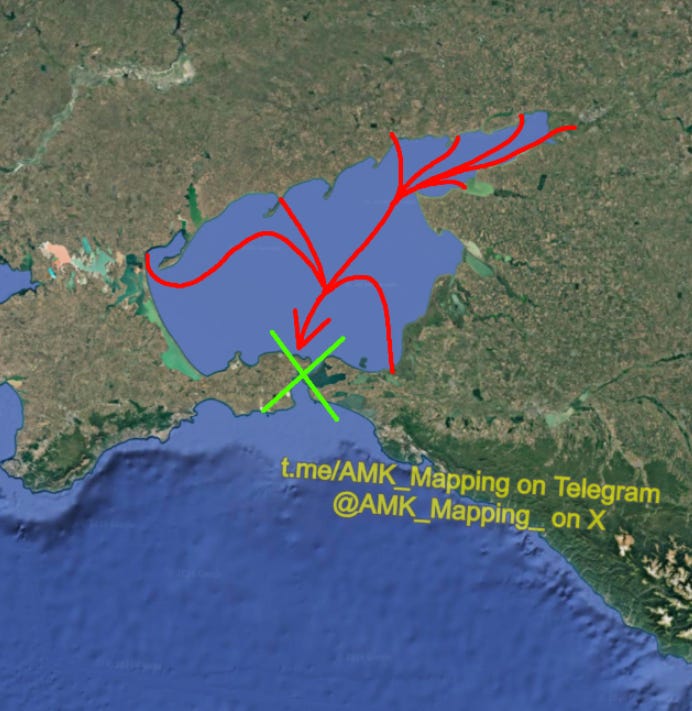
The more consequential damage may lie in the water below. Debris from the collapsed arch and carriageway appears to obstruct the main navigable channel through the strait, potentially disrupting maritime traffic between the Black Sea and the Sea of Azov. The passage has already experienced severe disruption from Ukrainian drone and naval operations, and the latest damage could extend that pressure considerably. The duration of any shipping closure will depend on the location of the debris, the condition of the channel and the engineering work required to restore safe passage. The economic consequences could reach well beyond the bridge itself, affecting ports and commercial traffic around the Sea of Azov.
The symbolic damage is considerably harder to repair. Putin personally inaugurated the bridge in May 2018, presenting the physical connection between Russia and Crimea as an expression of reunification following the 2014 annexation. It became one of his signature infrastructure projects, a concrete demonstration of Russian sovereignty over the peninsula. Its repeated vulnerability, culminating in the collapse of its great steel road arch, exposes the limits of the elaborate security arrangements built around it. The political humiliation is substantial.
Kiev’s North and South Bridges
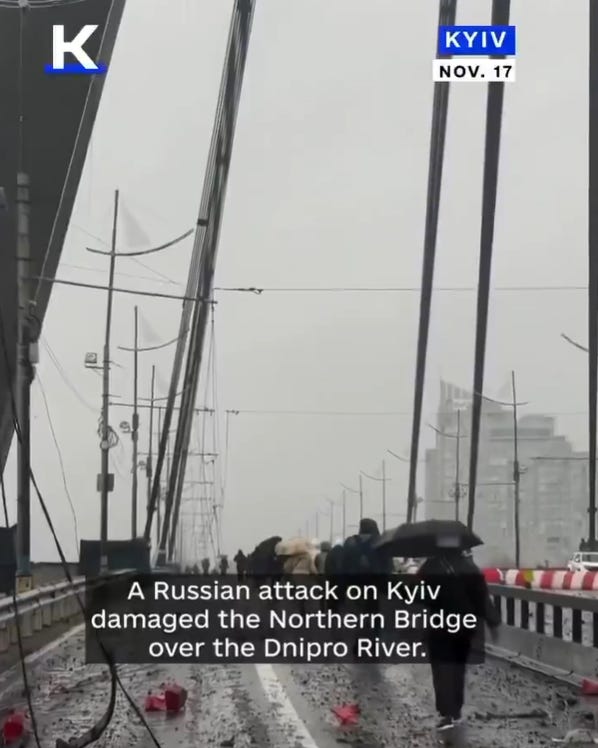
As the attacks on the Crimean Bridge were unfolding, Russia launched a large missile and drone assault on Kiev, striking, among other targets, the capital's North and South Bridges across the Dnieper. These are substantial pieces of late-Soviet infrastructure: the North Bridge opened in 1976, the South in 1990, both built around long cable-stayed spans and massive supporting structures. They carry road traffic between the two banks and form an important part of the capital's wider transport network.
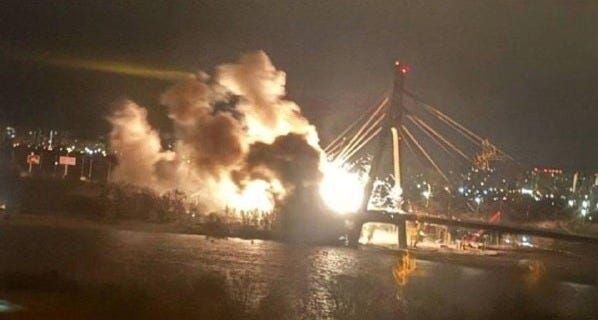
The strikes caused widespread disruption. Both bridges were closed pending structural inspections, while damage to other critical infrastructure added to the city's problems with electricity, heating, water and public transport. The extent of the bridge damage will take time to assess. Early images suggest that the North Bridge remains standing, although a proper assessment of its load-bearing components will take time. Their temporary closure places additional pressure on the remaining crossings and complicates the movement of people, goods and emergency services across the city.
The significance of these attacks becomes clearer when considered alongside Russia’s sustained campaign against Ukrainian energy infrastructure. Kiev, a city of more than three million people and the country’s administrative and economic centre, is increasingly exposed to the cumulative effects of power cuts, heating failures, water shortages and transport disruption. In October, Mayor Vitali Klitschko urged residents with relatives or friends elsewhere in Ukraine to consider temporarily leaving the capital, describing the situation as a matter of survival. By November, the Washington Post was reporting a substantial rise in rental listings, suggesting that some residents were already relocating westwards. The Ukrainian government has also begun preparing logistical contingencies for the capital and other vulnerable cities.
A sustained campaign against energy supplies and transport infrastructure could make large parts of Kiev increasingly difficult to inhabit and operate. Businesses would relocate or close, public services would struggle to function, workers would disperse and the capital’s contribution to the national economy would diminish. A prolonged breakdown of essential services could eventually force a much larger evacuation, effectively hollowing out Ukraine’s principal urban and administrative centre. The economic and psychological consequences would be significant, even if the city remained physically under Ukrainian control.
There is a second, wider military dimension. The Dnieper is a major logistical barrier for Ukraine. Western military aid enters principally through the country’s western borders, moving east by road and rail before crossing the river towards the front. Railways carry much of the heavy freight: ammunition, fuel, armoured vehicles and other equipment required to sustain military operations. The crossings around Kiev are especially important because routes from the west converge around the capital before branching towards the eastern and north-eastern fronts.
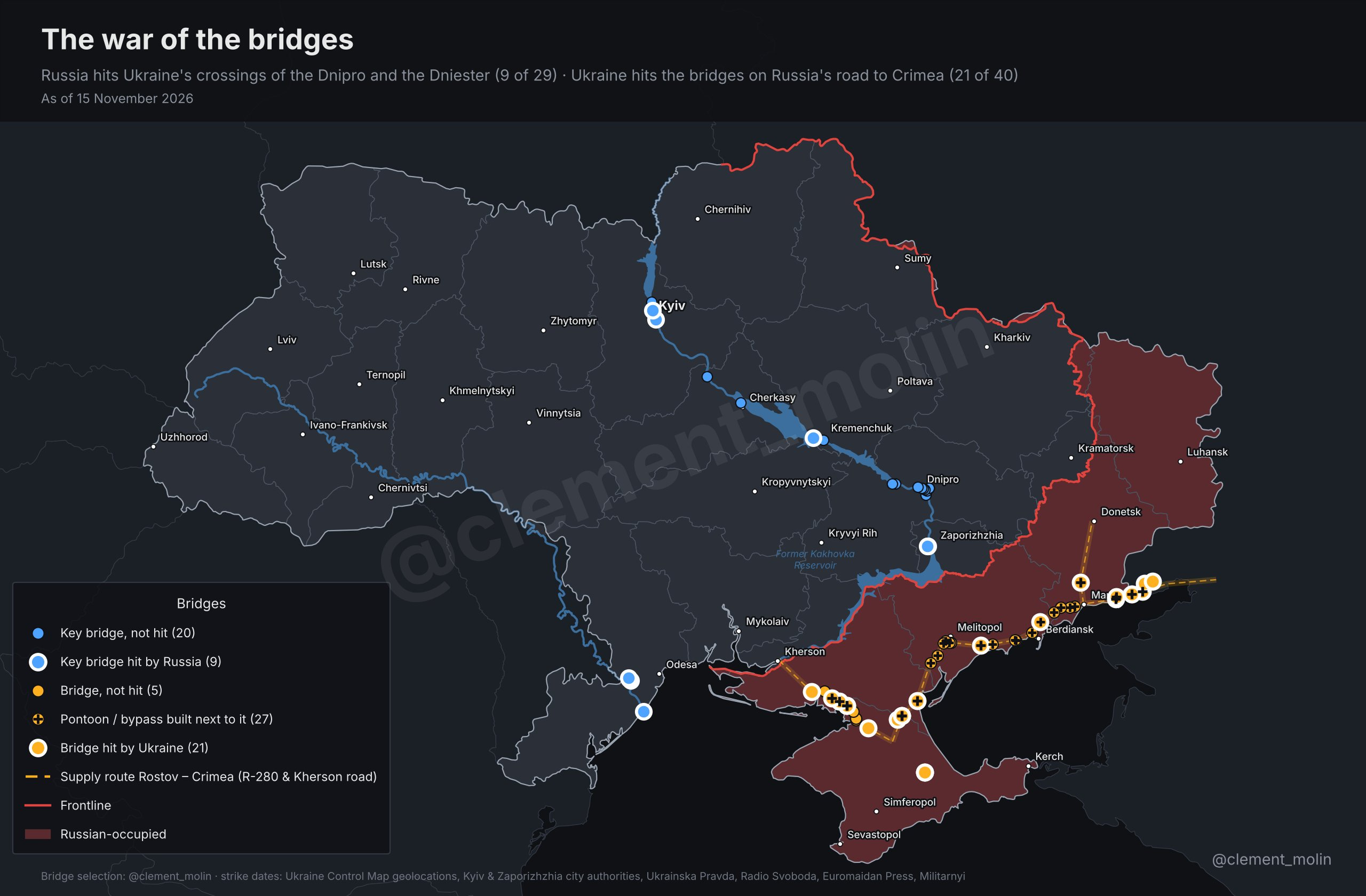
A sustained campaign against the major road and railway crossings could progressively restrict Ukraine’s ability to reinforce and supply its forces east of the river. If enough crossings were disabled simultaneously, the eastern bank could become a logistical cul-de-sac, with ammunition, fuel, replacement equipment and reinforcements increasingly difficult to move across. In the extreme scenario, maintaining a substantial Ukrainian military presence east of the Dnieper could become unsustainable. Such an outcome would require a systematic campaign against the wider network, including the crossings at Kaniv, Kremenchuk and Dnipro, as well as the approaches and railway infrastructure feeding them. Ukraine can draw on alternative routes, emergency repairs and pontoon bridges, although these offer substantially less capacity than permanent road and rail structures.
The pattern recalls the earlier Wildberries and Sea of Azov episodes, in which Ukrainian tactical successes produced consequences that proved deeply damaging to Ukraine itself. The attacks on the Azov Sea shipping routes provoked a Russian reaction that culminated in an effective blockade of Ukraine’s Black Sea and Danube ports, while the Wildberries operation was followed by Russian strikes that inflicted extensive damage on Ukraine’s civilian distribution infrastructure. In both cases, the immediate satisfaction of a successful operation gave way to a much more costly strategic outcome. Moscow now has an additional incentive to target the infrastructure that sustains movement across the country.
The downing of the Crimean Bridge may bring into play the Oreshnik intermediate-range ballistic missile, one of the heavier weapons available to Russia, although its effectiveness against major bridge structures remains uncertain. Its limited combat record makes firm conclusions about accuracy difficult. A June 2026 investigation by The Insider, supposedly based on leaked Russian industrial correspondence, alleged problems with an obsolete gyroscope in its guidance system. Those allegations remain contested and should be treated with caution although it is true that the system has not been used in many months.
The larger question is whether Moscow will move from spectacular, episodic drone and missile strikes to a sustained campaign with heavier hypersonic weapons against the infrastructure of Ukrainian logistical infrastructure.
Whodunnit
A pro-Russian military commentator writing under the name Victor victop55 has made a striking allegation about the attack on the Crimean Bridge: that the Trump administration knew of the operation in advance and may have planned it itself. He claims that an American officer programmed the missile, US satellite intelligence supplied the coordinates and Washington made the political decision to proceed. In his interpretation, the attack formed part of the diplomatic process in Abu Dhabi: having failed to extract concessions from Moscow at the negotiating table, Washington applied military pressure before returning to diplomacy.
The operational sequence he describes is equally provocative. Several hundred conventional drones allegedly exhausted Russian air defences before precision strikes followed within minutes, using Storm Shadow / SCALP missiles and possibly Flamingo munitions. He attributes the coordination to NATO reconnaissance, signals intelligence and communications. These details remain unverified, as does his allegation of direct American control.
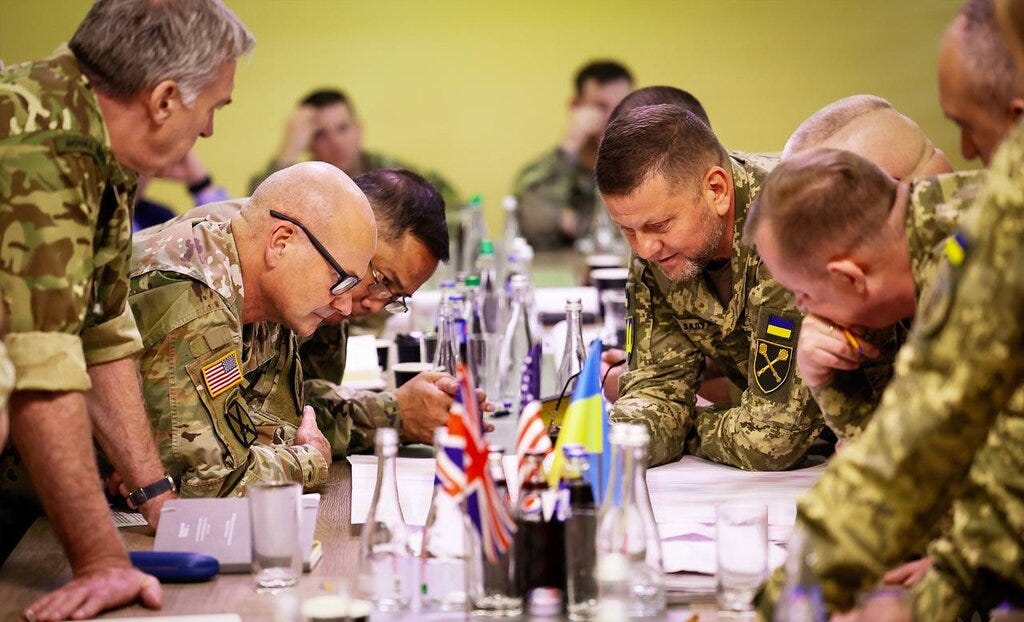
There is, however, a substantial history behind the broader question. In its March 2025 investigation, The New York Times described the close operational relationship between American and Ukrainian officers at Wiesbaden, where they fused intelligence, established target priorities and helped calculate coordinates and missile trajectories. Most significantly, the investigation revealed that the Biden administration had authorised work with Ukraine and Britain on a plan to destroy the Kerch Bridge itself. The proposed operation involved ATACMS strikes against vulnerable sections and maritime drones attacking its supports. Washington eventually withdrew its backing after Kiev proposed proceeding with the missile strikes alone. The bridge had therefore already been the subject of detailed Western operational planning.
The extent of Western assistance has also expanded into Ukrainian long-range strikes against Russian energy infrastructure. Reporting by the Financial Times and Reuters in 2025 described American intelligence support for attacks on refineries and other targets deep inside Russia. The established record gives considerable weight to the question of how deeply Washington was involved in planning and executing the latest operation, even as the distinction between intelligence support, target selection, weapon programming and direct political authorisation remains crucial.
The timing adds another dimension. The attack coincided with renewed diplomatic efforts involving Trump’s personal envoys, Steve Witkoff and Jared Kushner. The commentator compares this sequence with Trump’s approach to Iran, where negotiations mediated by Oman continued while military preparations were already under way. An Axios reconstruction subsequently described close US-Israeli coordination ahead of the strikes. The parallel raises an uncomfortable possibility for Moscow: military coercion and diplomatic engagement may be operating as complementary instruments.
This would hardly be the first such episode. In late December 2025, Russian media reported a remarkable sequence surrounding the alleged Ukrainian drone attack on Putin’s Valdai residence. Trump and Putin had spoken by telephone, after which Trump reportedly said he had to leave but asked Putin to remain where he was, promising to call back shortly. The attack, involving a claimed 91 Ukrainian drones, then took place during the intervening period. Trump never made the promised return call that evening. When the alleged attack became public, it was presented by the Kremlin as an assassination attempt and a serious complication for the peace negotiations. Kiev denied the allegation, and subsequent American intelligence assessments disputed that Putin’s residence had been targeted.
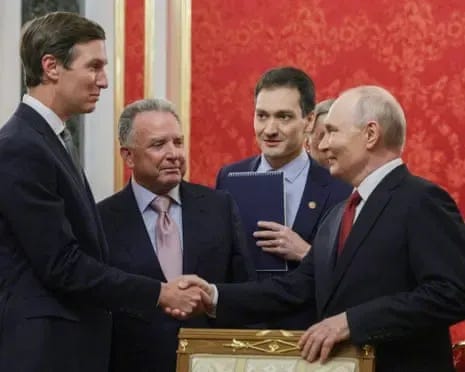
As a result, there is considerable unease in Russia over Putin’s repeated meetings with Witkoff and Kushner. One Russian commentator has dismissed the pair as little more than petty merchants and hucksters, reflecting a broader frustration with their backgrounds in property development and business dealings, and with the transactional character of their diplomacy. Their discussions of prospective commercial arrangements with Russia have sharpened suspicions that Moscow is being drawn into negotiations conducted by dealmakers whose promises may carry little strategic weight. Putin continues to describe the contacts as constructive. If the Crimean Bridge operation involved American participation, the implications for those negotiations would be considerable.
As of this writing, Trump has yet to comment publicly on the bridge attack. Given his well-established inclination to claim credit for successful military and diplomatic outcomes, any subsequent boast about American involvement would be revealing. The documented history of Western operational assistance, the bridge’s previous place in American military planning and the timing of the latest attack provide ample grounds for asking how much of the operation was coordinated beyond Ukraine.
Ukraine has brought down a structure of enormous symbolic value to Russia, a spectacular blow with obvious propaganda value. The humiliation is already Moscow’s to absorb. The question is whether its response will extend the exchange to a campaign against the Dnieper crossings, potentially placing the movement and supply of the entire Ukrainian army at risk. In chess terms, trading the Crimean Bridge for the destruction of the Dnieper crossings would be like exchanging a bishop for a queen. The tactical capture of the lesser piece may grab some short-term headlines, but the mid-term strategic balance may once again prove devastating.
Putin is a coward and very weak leader who will never win this war.. he is too slow, too much concentraded in the promises from the West, while they work against him.. he is not using his better weapons and prefers to beg for peace.. he must know all these details in all the articles here (and he must one much more) and he still accepts all attacks created from the West and also made with support and weapons from the West and he still does nearly nothing but continuum his slow and stupid war..5 years and still far away from Dnjepr, Odessa and Transnistria - either a weak loser or a traitor..?
Stop kidding yourselves. Since the beginning of this war, it has been known that the Crimean Bridge was a target.
Russian air defense fucked up. Again.
The idea that Russia needed a pretext to do what should have been done on thr first day of the war is a laugh.