
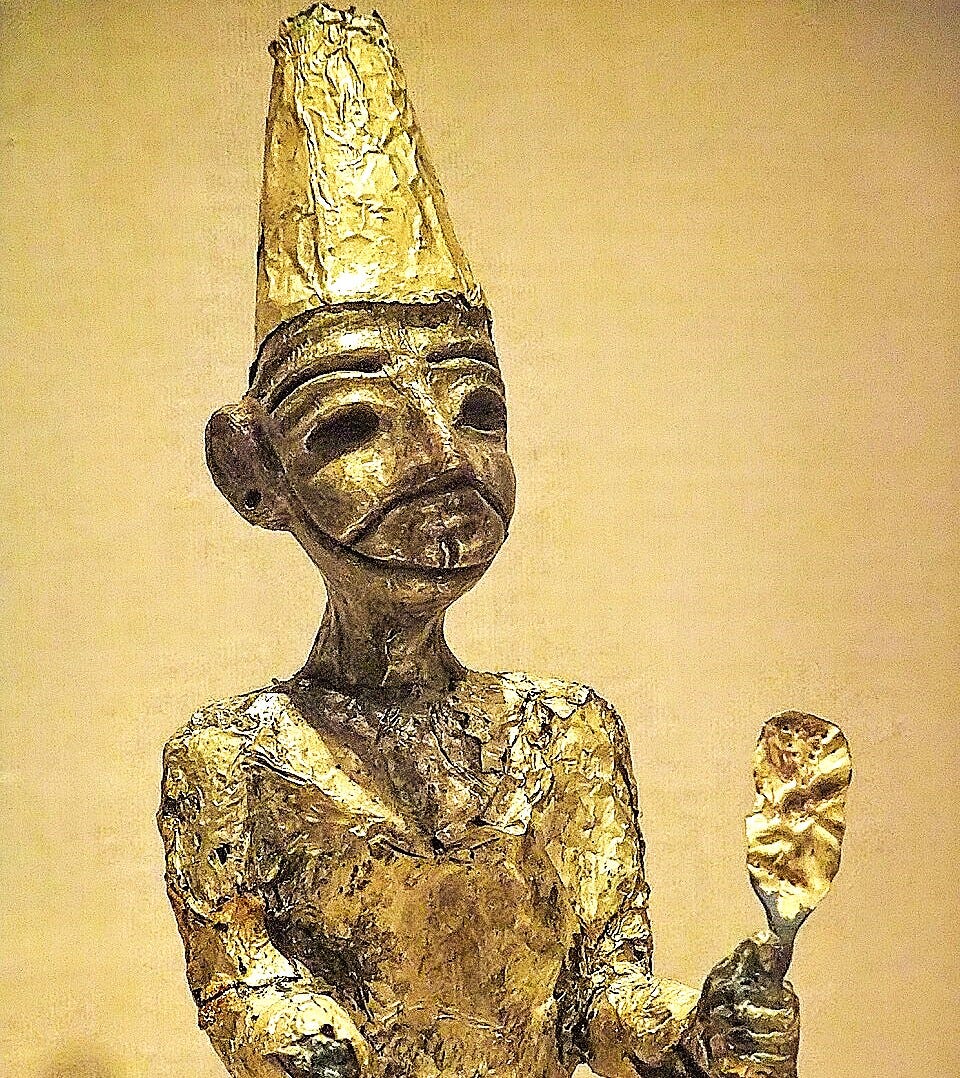
This article is a collaboration with Pio Torroja
For most of the post-WW2 era, support for Israel occupied a singular position in American politics. It outlasted administrations, weathered partisan realignments, and absorbed shifts in public opinion that would have undone any comparable commitment. The relationship drew strength from a coalition of Cold War strategy, evangelical theology, electoral calculation, and a deepening security partnership.
The engine that kept this coalition running was the Israel lobby. Its influence was so pervasive that support for Israel became a settled foundation of American foreign policy - an assumption that seemed permanent, requiring no active justification.
A decade ago, Debbie Wasserman Schultz, then chair of the Democratic National Committee, could state that there was “no daylight” between the parties on Israel. Differences were largely matters of tone: Republicans shouted a grandiose Zionism, Democrats mumbled a more modest Zionism. The underlying commitment remained ironclad.
That assumption has begun to weaken. The devastation of Gaza and the controversy over Washington’s involvement in Middle Eastern conflicts have turned Israel from a bipartisan consensus into a contested question. Positions once confined to the margins have moved toward the centre, finding ground across previously unbridgeable ideological divides. Tucker Carlson plans to launch an Israeli-sceptical party, while Democratic Socialists of America candidates perform well in party primaries.
In response, AIPAC and the broader pro-Israeli network have entered a defensive phase, absorbing challenges from both right and left. Candidates who refused lobby funding discovered that independence on Israel could be a popular electoral asset. But the lobby punishes such rebels. The defeat of Kentucky Representative Thomas Massie, following a campaign backed by $30 million in pro-Israel spending, stands as a prominent example of the perils of aligning with popular opinion against the lobby.
The deeper question concerns how institutions respond when the social conditions that sustained them begin to change. Long-standing arrangements develop their own internal logic, and the institution may come to see its own continuity as identical to the principle it claims to represent.
The most consequential stage of institutional preservation occurs when a limited, special interest acquires the language of universality. A strategic alliance solidifies into an article of faith; a policy preference hardens into a moral imperative. An arrangement created under one historical order seeks permanence after that order has begun to shift.
The mechanism chosen to reinforce the US-Israel relationship is the National Defense Authorization Act, where House Section 219 and Senate Section 1217 establish the US-Israel Defense Technology Cooperation Initiative. The initiative mandates deeper integration of Israeli and jointly developed defense technologies into American military programs - counter-drone systems, air defense, artificial intelligence, cyber capabilities, directed energy. Israeli industry becomes further embedded within US defense procurement, creating institutional ties that outlast electoral cycles.
The significance of this development lies in the broader historical pattern it reveals. When political legitimacy becomes uncertain, institutions often seek security through deeper integration, anchoring themselves in structures more durable than elections. The question remains whether such strategies preserve a legitimate order or accelerate the crisis of legitimacy they seek to overcome.
To understand that question, it is necessary to examine a recurring feature of political and religious history: the transformation of particular claims into universal ones, and the institutions that emerge to defend that metamorphosis.
The Problem of the Chosen Few
The United States of America recently celebrated the 250th anniversary of its Declaration of Independence, which proclaimed the “self-evident truth” that “all men are created equal.” The statement can be read, most plausibly, as a rejection of feudal hierarchy: noble birth would no longer determine political standing in a republic shaped by Enlightenment ideals. The old aristocratic order was cleared away.
Yet every society generates hierarchies of status, influence, and power. The American colonies were no exception. As Robert Michels later argued in his Iron Law of Oligarchy, organized groups tend toward the concentration of authority among those who control expertise, administration, and communication. An elite yields power only when forced to yield it, and a diffuse majority rarely possesses the organization to apply that force.
The American Revolution displaced one form of oligarchy - the hereditary aristocracy of the crown and its colonial representatives - and established a republic of free white men, most of whom possessed some property and held political rights on that basis. The central conflict after independence concerned the distribution and political meaning of property. Broadly dispersed ownership among independent citizens was the founding ideal. Concentrated financial power became the emerging threat.
The years following independence were marked by popular demands for debt relief, paper currency, and legislative intervention against creditors. Shays’ Rebellion became the most visible expression of a broader conflict between indebted farmers and the financial interests that held their mortgages. These were productive farmers and smallholders whose own property was threatened by foreclosure. Through democratic majorities, they sought to use the state to rebalance economic power.
James Madison’s response in Federalist No. 10 was to design a constitutional system that would prevent any cohesive majority from forming around shared economic grievances. His solution was to multiply interests across a large republic, fragmenting the majority into so many factions that no common program of redistribution could cohere. The minority Madison sought to protect was the narrower stratum of creditors, merchants, and financial interests whose accumulated capital gave them influence far beyond their numbers.
Madison expressed the principle behind this arrangement through his famous argument that “the diversity in the faculties of men, from which the rights of property originate, is not less an insuperable obstacle to a uniformity of interests. The protection of these faculties is the first object of government.”
Within fifteen years, the republic had travelled from the idealist language of universal equality to a realist constitutional order designed to protect the material inequalities arising from the unequal distribution of human faculties. The Declaration cleared new political ground by dismantling the legitimacy of inherited aristocracy. The constitutional machinery erected on that terrain a new hierarchy, one based on financial influence, in which a financial minority could present its special interests as the universal imperative against the property-owning majority of the republic.
A republic of broadly distributed property had long been considered the safeguard of political independence, because citizens who possessed the means of their own livelihood were less vulnerable to elite domination. When ownership concentrated and financial power acquired the ability to shape institutions according to its own interests, that safeguard dissolved.
A dominant group that presents itself as the custodian of a larger order will, over time, treat its own endurance as identical to the endurance of that order. The institutions it commands generate purposes that are distinct from any founding mission. Those purposes secure maximum legitimacy when they are articulated as universal imperatives. A parochial arrangement is recast as a cosmic one. A historical order claims the authority of the natural.
The oldest and most consequential example of this transformation may have occurred in the ancient world of gods and kings.
The Case of the Missing Gods
The Hebrew Bible, interpreted through a century of archaeological discovery, presents a historical mystery. Beneath the surface of later monotheism lies the outline of an older Canaanite divine order, populated by El, Asherah, Baal, and a council of lesser gods. Among the figures who emerged from this world was Yahweh, a storm deity associated with the southern wilderness who gradually moved from the margins of the pantheon toward the centre of cosmic authority.
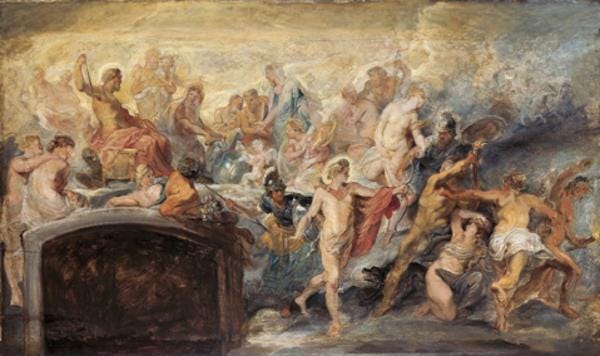
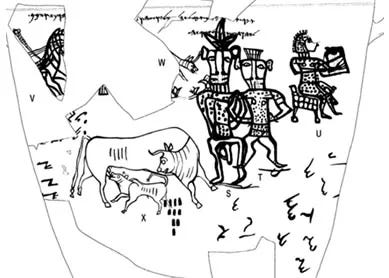
The evidence survives in fragments. The Ugaritic texts, discovered in Syria beginning in 1928, gave the Canaanite pantheon its own voice, revealing a divine hierarchy previously known only through later biblical traditions. The Dead Sea Scrolls, discovered between 1946 and 1956, preserved older textual forms that illuminate the development of Israelite theology. The Kuntillet Ajrud inscriptions, found in the Sinai in 1975, provide evidence of a religious world in which Yahweh existed alongside Asherah.
More akin to circumstantial evidence, these fragments do not produce a complete reconstruction. They offer glimpses into a vanished world, and the argument that follows - the Canaanite convergence model rather than the older Mosaic monotheism - remains an interpretation of those traces. Yet the pattern they reveal is compelling: the transformation of a local deity into a universal sovereign through a process of absorption and conflation.
Enter Yahweh
The Bronze Age was an experiment in ancient globalization. From the Aegean to the Indus, a multipolar system of palace economies exchanged tin, copper, grain, luxury goods, and ideas. Great powers - Egypt, the Hittites, and Assyria - maintained diplomatic correspondence, exchanged royal gifts, and recognised one another’s spheres of influence. It was a world of many kings and many gods, a distributed order that endured for centuries.
Around 1200 BCE, that world collapsed. The Sea Peoples swept across the eastern Mediterranean, destroying cities and disrupting the networks that had sustained palace civilization. Among the groups associated with this upheaval were the Peleset - the Philistines of the Hebrew Bible, whose name survives in Palestine. The great palace systems that had organized Bronze Age exchange entered a long period of decline, leaving behind a fractured political landscape from which new peoples and new forms of power would emerge.
Among those set in motion were groups from the southern periphery—Edom, Midian, Seir—carrying with them the worship of a storm-god associated with fire, metallurgy, and the transformation of ore. His name was Yahweh. His earliest possible appearance in the historical record comes from an Egyptian inscription from the fourteenth century BCE, at the height of the Bronze Age, which lists the “Shasu of Yhw” among the nomadic groups of the southern wilderness.
The oldest biblical poetry remembers him emerging from the same region: “Yahweh, when you went out from Seir, when you marched from the region of Edom, the earth trembled, the heavens poured, the clouds poured down water” (Judges 5:4). These were not the gentle seasonal rains associated with Baal, the Canaanite storm-god whose cycles sustained agricultural life. Yahweh’s storms belonged to a harsher landscape: cloudbursts, seismic upheaval, and destructive floods - the weather of a warrior deity rather than a farmer’s god.
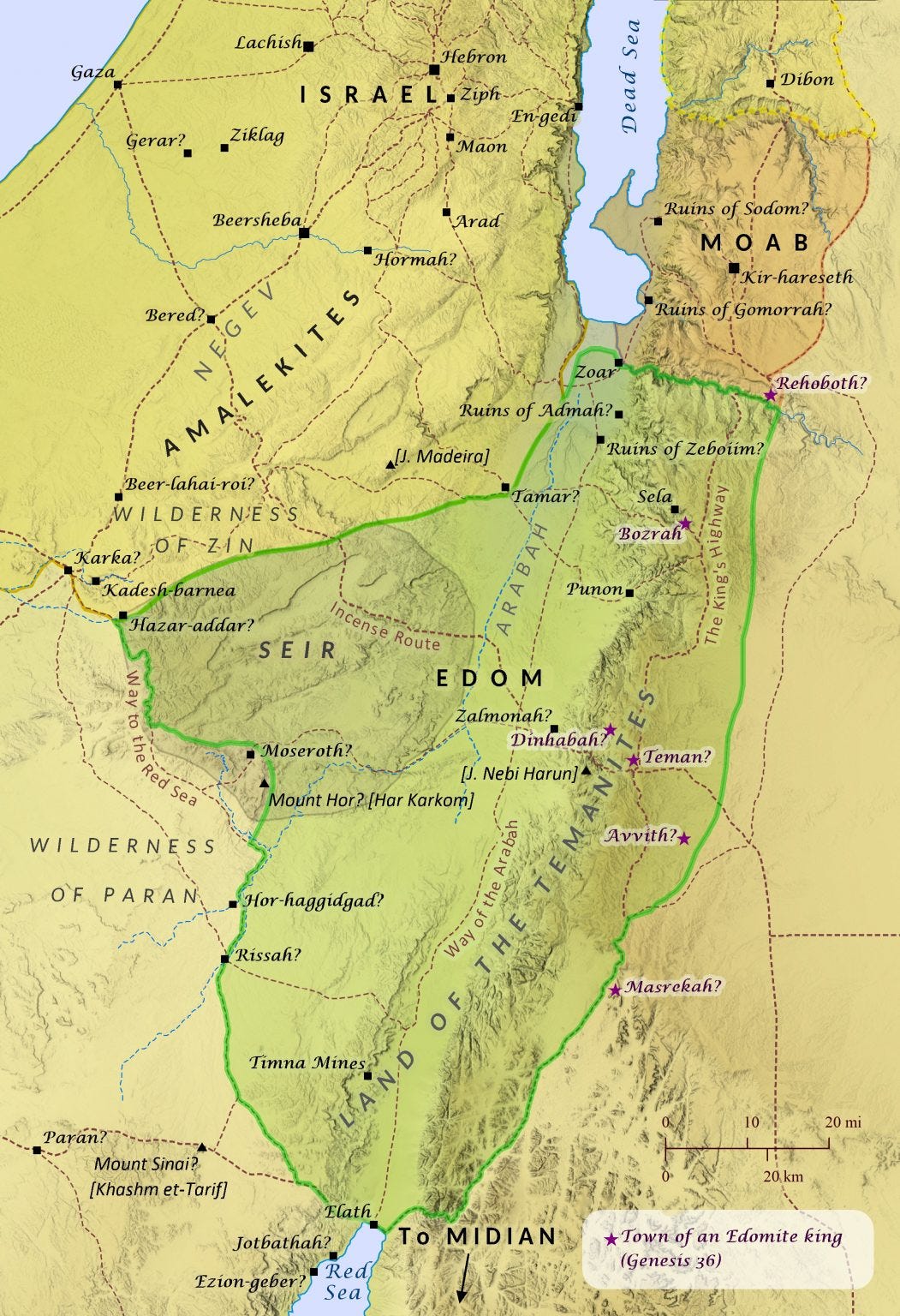
A god of the forge and the flash flood, he entered Canaan as a migrant deity among many others in the unsettled religious landscape that followed the Bronze Age collapse. His ascent would eventually transform the old multipolar divine order into something entirely different.
This was the ambitious outsider who entered the Canaanite pantheon within a hierarchy governed by the old patriarch El. Yahweh competed with established powers such as Baal, the dominant storm-god whose attributes he would gradually absorb and whose worshippers he would eventually claim. The young warrior deity had entered an ancient divine bureaucracy. Over the centuries that followed, he would usurp the authority of the gods who surrounded him and reshape the order in which he first appeared.
The Divine Bureaucracy
The divine world Yahweh entered was a structured, four-tier bureaucracy. At the top sat El and his consort Asherah, co-rulers of the cosmos - the grey-bearded patriarch and the queen mother of the gods. The second tier held the active deities, the divine sons who governed the nations: Baal the storm-rider, Chemosh of Moab, Milcom of Ammon, and the young Yahweh, a migrant storm-god from the southern wilderness, brash and ambitious, a Pete Hegseth-type figure in a pantheon presided over by an old deliberative father. The third tier consisted of craftsman gods, skilled but servile. The fourth tier held the messenger gods, functionaries without free will, who would survive into monotheism as angels.
The baseline condition of that council appears in Deuteronomy 32:8–9. El Elyon, the Most High, presides over the divine assembly and apportions the seventy nations among his seventy sons. Verse 9 specifies the allotment: “Yahweh’s portion is his people, Jacob his allotted inheritance.” Each nation receives its immanent patron deity. Each people is “chosen” by the ruling god who actively intervenes on their behalf. El remains in charge of it all, but from a transcendent distance, leaving the day-to-day business of ruling human affairs to his seventy children. The arrangement resembles a divine United Nations - a multipolar order of equal sovereigns, each with a territory, a people, and a temple.
That territorial logic governed everything. A deity's authority ran within boundaries marked by temple, king, and soil. For Yahweh, the temple was Solomon's First Temple in Jerusalem, the god's literal house on a particular hill in a particular tribal inheritance. El, by contrast, dwelled in a cosmic tent at the source of the rivers, a paradise beyond the human world. The high god was already, in his own way, a god of everywhere - an architectural distinction that would become fateful when the son absorbed the father's identity and acquired a universal home while retaining his earthly address.
The transaction was a gradual and bureaucratic Oedipal move in the strictest structural sense: Yahweh usurped his father's cosmic estate and paired with his mother, the goddess Asherah, who appears as Yahweh's consort in inscriptions at Kuntillet Ajrud before being violently expunged from the record. The son possessed the father’s throne, the father’s wife, and the father’s celestial tent, while his Mount Zion residence itself became the site of a recurring cycle - temple, ruin, temple, ruin - whose next turn remains open.
Divine Boundaries
The first unambiguous evidence for Yahweh in the archaeological record records a military defeat. The Mesha Stele, a ninth-century BCE inscription commissioned by the king of Moab, describes the successful liberation of his land from Israelite domination. The stele recounts the slaughter of the invading army and the capture of “the vessels of YHWH,” which Mesha dragged before the temple of the Moabite god Chemosh as trophies of victory. The scene is a diagram of the divine council in action. Two second-tier gods clash as Yahweh enters Chemosh’s territory to reimpose vassalage, and Chemosh prevails.
The biblical account of the same campaign appears in 2 Kings 3. Moab had been an Israelite vassal, paying heavy tribute in sheep and wool. When Mesha rebelled, a coalition of Israel, Judah, and Edom marched to restore the old order. The prophet Elisha guaranteed victory in Yahweh’s name. The countryside was devastated. Then Mesha, cornered in his capital, took his firstborn son and offered him as a burnt sacrifice to Chemosh on the city wall. The text records the outcome with a phrase whose original meaning later monotheism would obscure: “And there came great wrath upon Israel, and they withdrew from him and returned to their own land” (2 Kings 3:27).
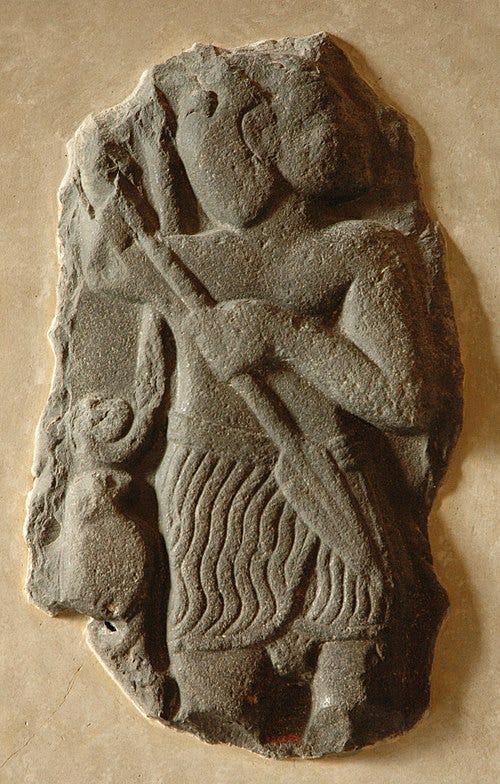
The wrath was Chemosh’s. The child sacrifice, if it was not just Israelite propaganda, succeeded. The invading army retreated. That retreat, and the divine logic behind it, are preserved in two sources, one Moabite and one Israelite. They record the same underlying worldview: Yahweh was a territorial deity, powerful within his own sphere and vulnerable beyond it. The active gods of nations governed the day-to-day affairs of peoples and lands with an immanence that placed them inside the world—in its weather, its harvests, its wars—while El exercised a transcendent sovereignty from beyond the created order, presiding over the divine assembly.
This was the religious order familiar across the ancient Near East. Gods possessed territories, peoples, and temples; victories and defeats reflected the shifting fortunes of divine patrons. This world was also the religious environment of ordinary worshippers, whose household cults, local sanctuaries, and regional traditions continued alongside official royal theology. The later Yahwist priesthood inherited this plural landscape and treated it as a landscape to be destroyed, attacking the popular religions they despised as they drove worship toward a single authorized centre.
Denying Defeat: Divine Narcissism
Buried within the Mesha Stele is a recurring logic of divine narcissism. Mesha’s account of victory begins with a flashback to an earlier period of defeat. Before the rebellion, before the liberation, Moab had suffered years of Israelite domination. The stele explains this humiliation with a single theological sentence: “Chemosh was angry with his land.”
The subjugation, in Chemosh’s telling, was his own doing - a period of discipline imposed upon his people by their own god. Once his anger was appeased, and the proper sacrifice performed, Chemosh commanded war and restored Moabite sovereignty. In this retelling, Chemosh had never truly lost; he had allowed suffering to unfold until his people fulfilled the conditions required for restoration.
This logic of divine blame-shifting from losing elites to the suffering masses belonged to the wider religious world of the ancient Near East. It was a local alibi, a way for kings and priests to explain humiliation without conceding the impotence of their patron God. Yahweh's later theologians took this provincial reflex and stretched it across the frame of history itself, turning a god's temporary anger into the engine of a universal plot.
Let There Be Open Borders
The old divine order was geographical. Gods belonged to places, and places belonged to gods. The story of Naaman, the Syrian commander cured of leprosy by the prophet Elisha, preserves this older logic at the moment when it was beginning to dissolve. Having pledged himself to Yahweh, Naaman asks for two mule-loads of Israelite earth to carry back to Damascus (2 Kings 5:17). The request appears strange to modern ears, yet within the ancient cosmology it was entirely rational. Yahweh’s power was anchored to Israelite soil. To worship him in Syria required a fragment of his territory, a portable embassy of sacred ground carried into a foreign realm.
The gods of the ancient Near East operated within borders. Their authority was territorial, their temples served as their earthly residences, and their fortunes were tied to those of the peoples who worshipped them. A defeated nation raised the possibility of a defeated god. The relationship between heaven and earth was reciprocal: victory confirmed divine favour, while catastrophe forced communities to confront the possibility that their patron had failed them.
For Israel, the catastrophes accumulated. The Philistines captured the Ark of the Covenant and displayed it in the temple of Dagon (1 Samuel 5). The Assyrians destroyed the Northern Kingdom in 722 BCE, scattering the ten tribes into history. Pharaoh Necho killed King Josiah at Megiddo in 609 BCE, despite Josiah’s reputation as a reforming king favoured by Yahweh (2 Kings 23:29). Each disaster posed the same theological dilemma. If Yahweh was Israel’s warrior and protector, why did the armies of other gods repeatedly prevail?
The answer developed across centuries transformed the nature of the crisis. Yahweh had not been defeated; he had been using foreign powers as instruments of judgment against his own people. The conqueror became the unwitting servant of Israel’s god. The logic already appears on the Mesha Stele, where the Moabite king explains Israel’s defeat through the anger and intervention of Chemosh. Defeat became evidence of a deeper divine purpose.
Yet this solution had limits. A god whose territory continued to contract required a new foundation of authority. The Yahwist priestly tradition was bound to this migrant war god; abandoning him would have meant abandoning the history and identity of Israel itself. Their problem was therefore institutional as well as theological. The god who carried Israel’s memory into the future had to survive the collapse of the political world that had originally sustained him.
The response was theological expansion: a priestly elite slowly subsuming the universal. Yahweh’s identity absorbed the attributes of rival deities whose authority had once represented competing centres of power. The process began with the assimilation of familiar divine imagery. From Baal came the language of the storm god: Yahweh inherited the title “Rider of the Clouds,” preserved in Psalm 68:4. Older traditions associated with Asherah, the consort of El whose presence appears alongside Yahweh in the Kuntillet Ajrud inscriptions, survived for a time before disappearing from official theology. The decisive inheritance came from El himself. Yahweh assumed the high god’s authority, patriarchal status, and cosmic reach.
What emerged was monotheism by accretion. As Yahweh’s military fortunes narrowed, his theological stature expanded. Faced with repeated reversals, his priesthood kicked their deity upstairs into transcendence, clothing him in the authority of his rivals until a territorial god could claim the mantle of a universal ruler.
The God Who Conquered Heaven
The final transformation required a catastrophe large enough to destroy the old framework entirely. That catastrophe arrived in 586 BCE, when Babylon conquered Jerusalem, destroyed the temple, ended the monarchy, and deported the ruling classes into exile. The political world that had sustained Yahweh’s territorial identity vanished. The god who had been tied to a particular land now appeared to have lost the very ground on which his authority rested.
The exile forced a radical theological reimagining. The priestly intelligentsia answered the apparent defeat by expanding Yahweh’s sovereignty beyond geography itself. Naturally the common people assumed the blame. Babylon became the instrument through which Yahweh judged a deplorable Israel, transforming catastrophe into evidence of a larger divine purpose. Yet the destruction of the temple created a deeper theological rupture: Yahweh’s earthly dwelling place had been destroyed. The displaced god required a new habitation, and the sanctuary of a nation expanded into the cosmos itself.
Snatching cosmic victory from the jaws of territorial defeat, this was the great inversion of Israelite theology. A god who could survive the loss of his own kingdom would eventually claim authority over every kingdom. The collapse of territorial religion opened the path toward universal sovereignty.
The hinge text is Exodus 6:2–3, composed during or after the exile. God declares to Moses: “I am Yahweh. I appeared to Abraham, Isaac, and Jacob as El Shaddai, but by my name Yahweh I was not known to them.” The passage performs a remarkable act of theological consolidation. Earlier generations who believed they worshipped El were retrospectively incorporated into the Yahwistic story. The older high god and the younger national deity became a single identity.
The merger is presented as revelation rather than conquest. The hidden truth of the divine past is finally disclosed. Yet the structure beneath the revelation remains dramatic: the younger god inherits the father’s name, authority, and cosmic position.
The process reaches its final expression in Psalm 82. Yahweh-El appears within the divine assembly and judges the remaining gods. The scene resembles a meeting called by the new boss after the old order has already been absorbed. The former rulers stand accused of failing in their responsibilities. Their death sentences are announced:
“I said, ‘You are gods, sons of the Most High, all of you; nevertheless, you shall die like men, and fall like any prince.’” (Psalm 82:6–7)
The language carries the force of political liquidation. The old divine officials lose their immortality and their territories. The closing verse completes the transformation:
“Arise, O God, judge the earth, for you shall inherit all the nations.” (Psalm 82:8)
The divine assembly has become a dictatorship. A world of competing sovereignties has been reorganized around a single ruler. Yet the original particularity remains embedded within the universal claim. Yahweh inherits all nations while retaining his covenant relationship with Israel. The universal god continues to carry the duties of the tribal god from which he emerged.
That unresolved duality becomes the central inheritance of monotheism: the god of all creation remains the god of a particular people. Christianity attempted to dissolve the paradox by identifying the people of Israel with the universal church, a spiritual body without ethnic boundary. In the contemporary United States, this fracture is visible in the collision between Christian Zionism - which reads the covenant as an ethnic Jewish deed to the land of Israel - and the resurgent "Christ is King" camp, which sees the church itself as the true Israel.
The Return of the Many
Freud’s Moses and Monotheism, published in 1939 as Europe entered its catastrophe, remains one of the most audacious works of historical speculation in modern thought. Its central insight was that monotheism represented a profound psychological rupture: the elevation of an invisible universal principle above the older world of local gods, embodied ritual, and competing sovereignties. A new form of religious consciousness emerged, demanding loyalty to an abstraction that transcended geography and political power.
Freud’s deeper argument concerned the return of what this transformation had repressed. The older polytheistic world survived beneath the surface, resurfacing through displaced forms, symbolic substitutions, and unresolved conflicts. Christianity itself carried this inheritance. Its Trinity preserved a trace of plurality within the universal god, allowing the old multiplicity to return through a new theological structure.
For Freud, this unfinished struggle illuminates the historical vulnerability of the Jewish people. They became associated with a revolutionary demand that challenged the deepest instincts of the ancient world: the rejection of visible idols, the supremacy of an invisible law, the subordination of local attachments to a universal claim. The hostility directed at Jews could be understood as a displaced reaction against the burden of monotheism itself - the resentment of a civilization confronting the return of the plural, local, and embodied religious world that the new god had attempted to abolish.
Then Freud posed a question that could serve as the epigraph for every subsequent chapter of this history:
In Egypt monotheism had grown, as far as we understand its growth, as an ancillary effect of imperialism; God was the reflection of a Pharaoh autocratically governing a great world empire. With the Jews the political conditions were most unfavourable for a development away from the idea of an exclusive national God towards that of an universal ruler of the world. Whence then did this tiny and impotent nation derive the audacity to pass themselves off for the favourite child of the Sovereign Lord? (p. 105)
A universal god born of imperial ambition - the Pharaoh’s cosmic reflection - makes a certain structural sense. A universal god claimed by a tiny, repeatedly defeated people is an anomaly that requires a different kind of explanation.
The geopolitical order built after 1945 reproduced this structure with uncanny fidelity. The United States emerged as the unipolar guarantor of a universal system, and Israel occupied a position within that system for which no other state possessed the equivalent credentials. A small nation, repeatedly threatened, was elevated to the status of privileged ally, its security linked to the protection of the dominant power. The arrangement gave Israel a form of geopolitical chosen-ness that Freud would have recognized immediately: a particular interest fused with a universal claim, a local sovereignty sheltered by an imperial order that presented itself as the natural shape of the world.
That order is now fracturing. A multipolar world of competing powers - the United States, China, Russia, and regional actors - no longer defers to a single centre of authority. The unipolar moment that made Israel’s exceptional status sustainable is receding. The anxiety this transition generates is visible in the effort to embed the US-Israel relationship beyond the reach of democratic contestation, merging defense supply chains inside the National Defense Authorization Act, where the fluctuations of public opinion cannot easily reach.
The ancient pattern returns in contemporary form: a threatened elite, sensing the erosion of the order that secured its privilege, reaches for conflation. The smaller entity attempts to absorb the resources and identity of the larger, speaking for the whole while serving the part, and working to make its own survival the unspoken condition of the larger’s viability.
The return of the repressed gods is the return of a world in which no single power rules unchallenged. The divine council, with its many sovereigns and its distributed chosen-ness, was never fully abolished. It was buried. And what is buried, as Freud spent his final years demonstrating, does not stay buried. The multipolar world is the old pantheon rising. The NDAA provision is the conflation designed to survive its return.
Hello, great article, so interesting. Here are my first set comments :
**“For most of the post-WW2 era” – yes, perhaps more precise to say that it was generally only from 1967. France was Israel’s closest and most supportive major ally from the late 1940s until 1967. But of course we have the event in 1963 surrounding the assassination of JFK to consider as well, when it comes to the Israeli lobby.
**Actually, having to repeat often, that Israel is the "greatest ally", it is "ironclad", "no daylight", is in itself a sign that possibly there could be a rift… If it actually were true and natural, there would be no need or purpose to repeat this mantra so often. That is the giveaway...
**You state that “majority rarely possesses the organization”, but if it is an “iron law” then it never possesses it, which is what I think, along with Michels. Power is never relinquished entirely but through a “circulation of the elites” to use Pareto’s term.
**When you state the Federalists who enforced “realist constitutional order designed to protect the material inequalities arising from the unequal distribution of human faculties. “, it’s too bad you don’t mention all the efforts of the anti-federalists, like Jefferson, who brought the Bill of Rights. I discussed this here : mises.org/mises-wire/how-us-became-so-dysfunctional-oligarchic-and-corrupt
**you state “A religious world in which Yahweh existed alongside Asherah.” : indeed, that is precisely why the first commandment of the Decalogue is : "You shall have no other gods before Me,". It hints, of course, at the existence of other Gods; otherwise, this commandment wouldn’t have been necessary...
He’s back!