
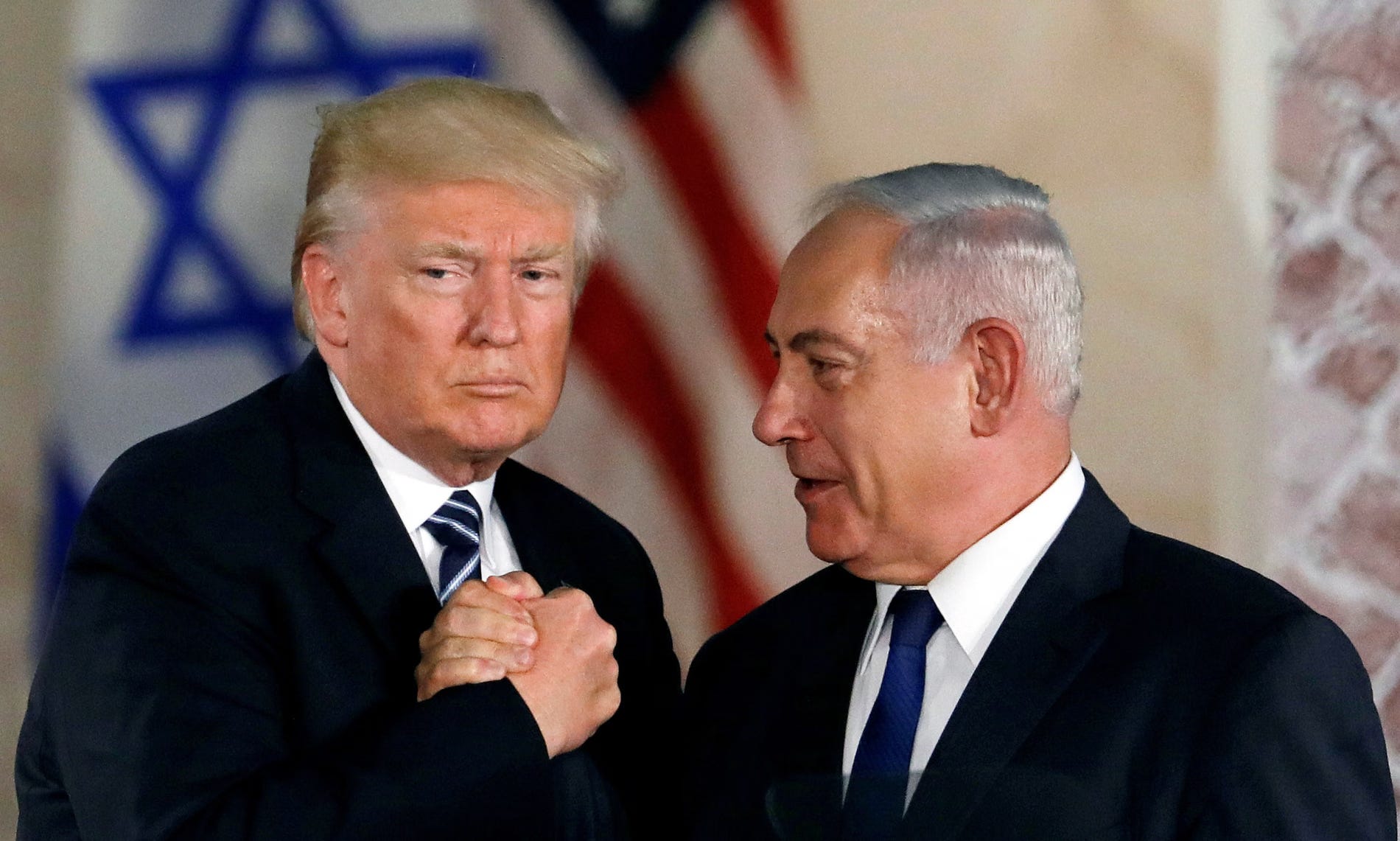
Narcissists always betray those closest to them. Anti-war MAGA voters who believed Donald Trump would keep them out of foreign entanglements are learning this lesson in real time as their champion plunges America into a regional regime change war with Iran. And yet no one has been closer to Trump than Team Israel. May they not be next on the betrayal train?
Israeli Prime Minister Benjamin Netanyahu operates from a different mental pathology. Back when Sigmund Freud mapped the unconscious drives that shape human behaviour and Carl Jung charted the collective symbols that haunt entire peoples, it was Alfred Adler who offered the most useful lens for understanding what drives Netanyahu. Adler’s star has risen in recent decades as his emphasis on the fictional goals that guide human striving found new relevance. He wrote that “the neurotic is nailed to the cross of his fiction,” trapped by imagined threats and self-generated anxieties that become more real than reality itself.
Netanyahu is nailed to the fiction of Iran as existential threat, a framing that has for decades justified endless escalation while blinding him to the consequences of his actions. The paradox is that Netanyahu’s obsession forced Iran to arm itself to the point that it might now constitute a genuine challenge to Israeli regional dominance. The neurotic’s defining feature is that no resolution can ever satisfy him or allow him to climb down from his cross. Remove one threat and another materializes to take its place. In the most unlikely event that Iran were ever tamed, reduced to a compliant client state, Israeli propagandists are already framing Turkey as the next great existential danger to the Jewish people. The one thing a neurotic cannot withstand is the yawning void of banal security.
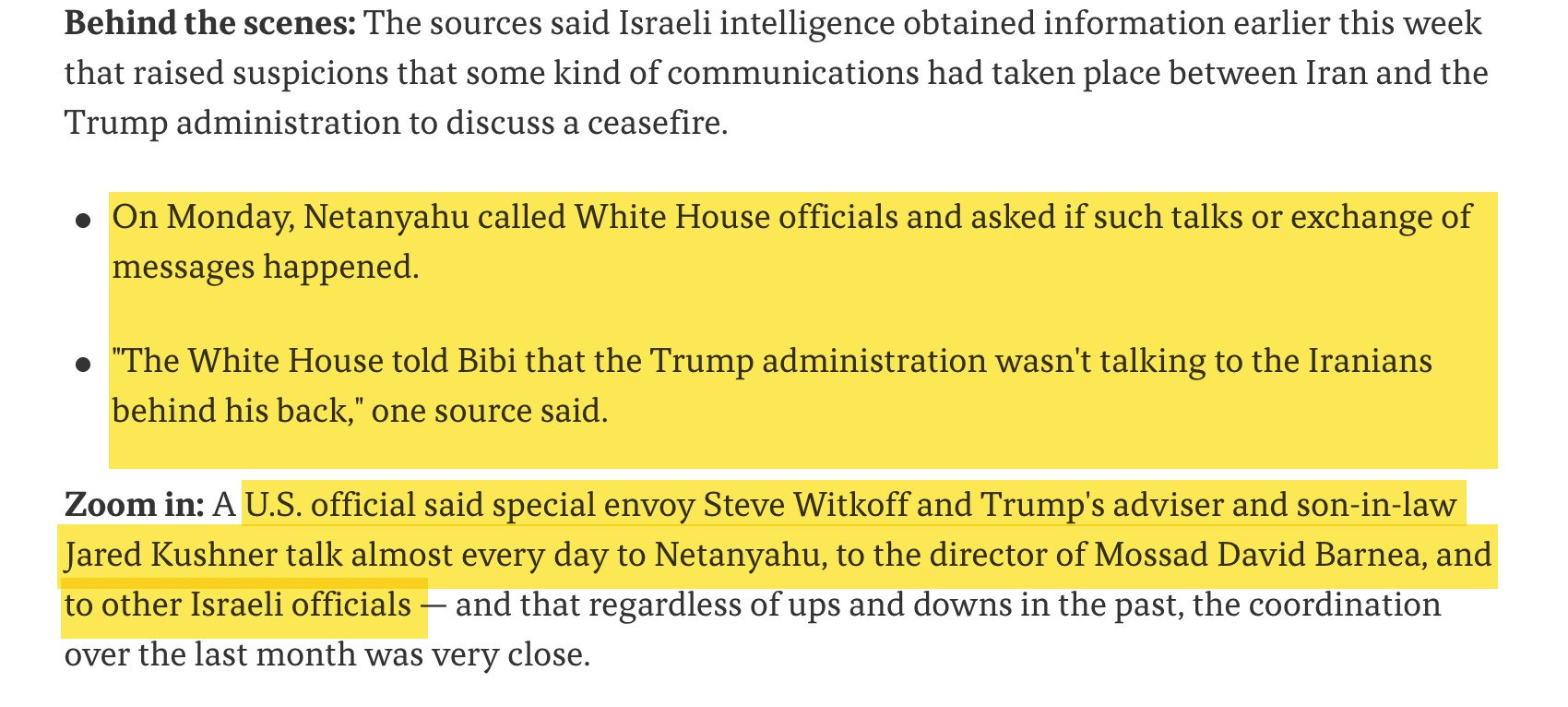
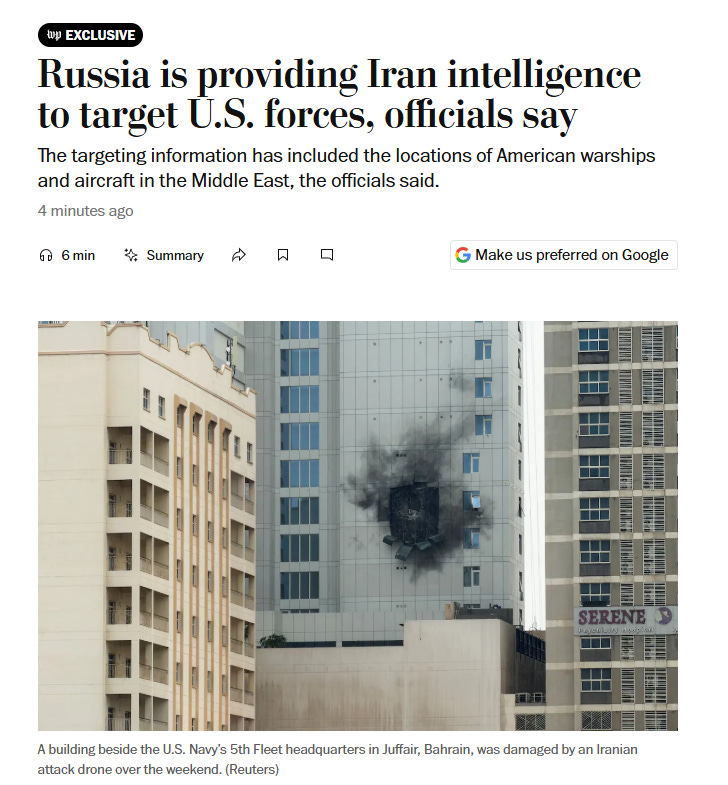
Narcissist and neurotic are now bound together in their failing war. The conflict has become a race: can Iran, with the clandestine aid of Russia and China, dismantle the global economy quicker than American and Israeli forces can annihilate Tehran into the second coming of Gaza?
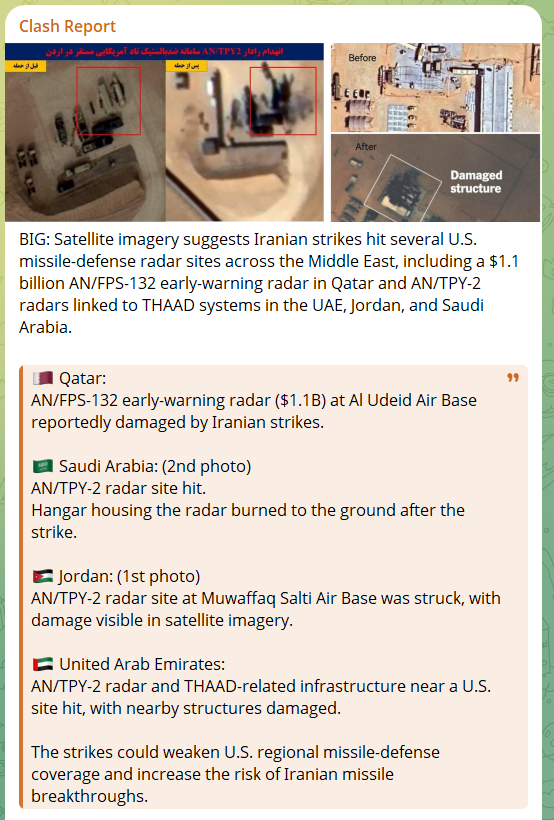
As billion-dollar American air defense radars are systematically destroyed, as military bases across the Persian Gulf are pummelled by cheap Iranian drones, as Tel Aviv reels under ballistic missiles carrying massive cluster munitions, the aura of invincibility that once surrounded American power evaporates with each strike. A revitalized Hezbollah threatens an invasion of northern Israel. The titans of Western wealth watch their energy prices soar and their markets shudder. Russia and China pray for a US ground invasion so that they can implement a “reverse Ukraine” scenario where they arm Iranian ground forces against an American army that has supply lines that stretch halfway around the world.
Meanwhile in the White House, when will the highly distractible Trump, once his attention span gets frayed by failure, begin searching for new geopolitical squirrels to chase? Perhaps in Cuba where victory might come easier? Under all this accumulating weight, the alliance between two mentally damaged men may soon crack. It may only be a matter of when.
Iranian Fighters Bullying the GCC Effete
The unlikely alliance of the Islamic Revolutionary Guards Corps and Lloyd’s of London has imposed a de facto blockade of the Strait of Hormuz. Only China-bound shipping, carefully selected, is allowed to pass. When Trump boasted that he would open the strait, the USS Abraham Lincoln carrier group approached within four hundred kilometres of Iran in the Sea of Oman. The IRGC Navy responded by targeting the carrier group with drones, a demonstration of reach and intent that convinced American commanders to pull back to a safer distance. The United States Navy is now entirely absent from the Persian Gulf and is unlikely to return during this war.
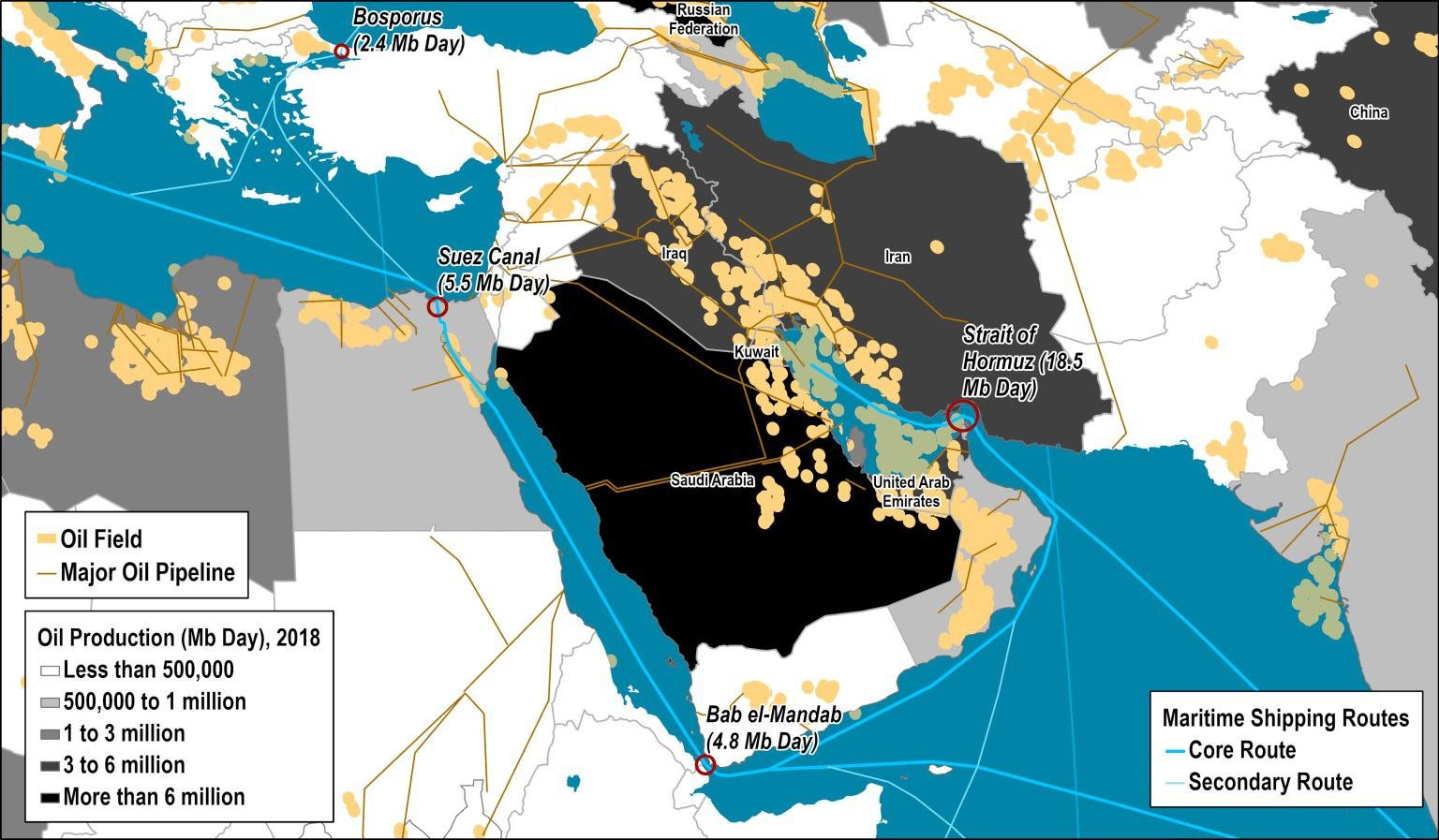
Oil and liquefied natural gas leave through the Strait of Hormuz. Food for the desert nations of the Gulf Cooperation Council (GCC) enters the same way. Saudi Arabia, the United Arab Emirates, Qatar, and Bahrain depend almost entirely on imports to feed their populations. Reports are already surfacing of supermarket shelves stripped bare in Dubai. The GCC nations watched Gaza starve without lifting a finger. If this war lasts long enough, they may find themselves facing similar struggles to put food on their own tables.
The Red Sea remains open as a possible corridor for essential supplies. But on its southern edge, straddling the Bab al-Mandab Strait, stand Yemen’s Houthis, ready in reserve. America’s Operation Rough Rider in 2025 failed to bring them to heel. The Houthis have now announced that if Saudi Arabia or the UAE attack Iran, they will respond with immediate strikes on GCC oil installations. Implicit in this threat is another critical choke point closure, this time of the southern entrance to the Red Sea.
The northern entrance offers no relief. The Suez Canal presents an easy target for Iranian special forces, who could block it by sinking large vessels as they pass through. Failing that, missile and drone attacks may be enough to convince insurers to stop shipping into the Red Sea.
The Gulf monarchies may soon face a Berlin Airlift situation with no aircraft and no airlift. Their stocks of interceptor missiles are dwindling, and the United States will prioritize restocking Israeli defenses before attending to mere Arab needs. Stripped of protection, unable to export their oil, blocked from importing food, the Gulf princes may soon find themselves naked, hungry and vulnerable before Iranian power.
From Pro-Wrestling to a Street Fight
Before launching America into its current quagmire in Iran, President Donald Trump’s geopolitical actions followed the logic of professional wrestling. In Venezuela, in the previous shadow clashes with Iran, the script was written in advance, the ending agreed upon, the audience sent home satisfied within the allotted timeframe.
Saturday morning, February 28th, arrived under a different set of rules. As Ayatollah Khamenei called a leadership council to discuss America’s latest peace offer, the opening bell sounded for something far less rehearsed. Trump, together with Israel, seized the moment to decapitate Iran’s ruling elite—a “heel” move in wrestling terms, the bad guy’s cheat, sand thrown in the opponent’s eyes when the referee looks away.
The Israeli assurances had been precise: no worries Donald, the Iranian regime will crumble like a cheap suit, the mopping up finished before markets open Monday. Three days to Tehran, they may have promised. Three days to an unimaginable banquet of geopolitical narcissistic supply for the mad Orange Man.
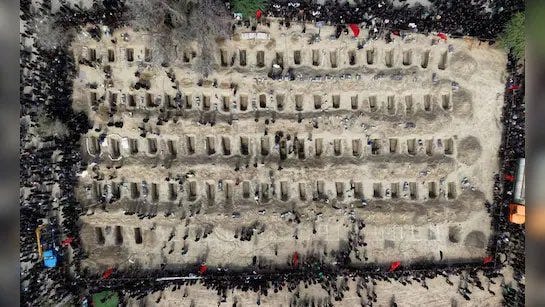
By the next morning, the political war was already lost. Millions of grief-stricken mourners flooded the squares of Iranian cities, weeping for their religious leader and for the 150 school girls slaughtered in the opening missile barrage. In Iran, many call the attackers the Epstein Regime, a name that captures something of the fusion between American elite power and Israeli intelligence that delivered the strikes. Any fantasy that the Iranian people would side with Zionist and Yankee appeals to overthrow the mullahs vanished the moment the missiles struck. The earthly life extinguished in Khamenei’s body became, in death, the very thing it could never quite be in life: a unifying symbol that transcended faction and discontent.
The Ayatollah is dead. Long live the Ayatollah. The man can die. The office cannot.
Persia and the Jews: 2500 Years of Neurotic Ambivalence
The attack on February 28th fell on the Shabbat before Purim, when Jews read Parshat Zachor—the command to remember Amalek, archetypal enemy of Israel. Purim itself commemorates deliverance from annihilation in ancient Persia. The holiday tells of Haman, an adviser to King Ahasuerus, who plotted genocide, and of Esther and Mordechai who reversed his scheme.
The enemy in the story was Persian. The enemy in the modern narrative is Iran, heir to that ancient power. When Israeli warplanes struck Tehran on the Shabbat of Zachor, they were enacting a story written thousands of years ago.
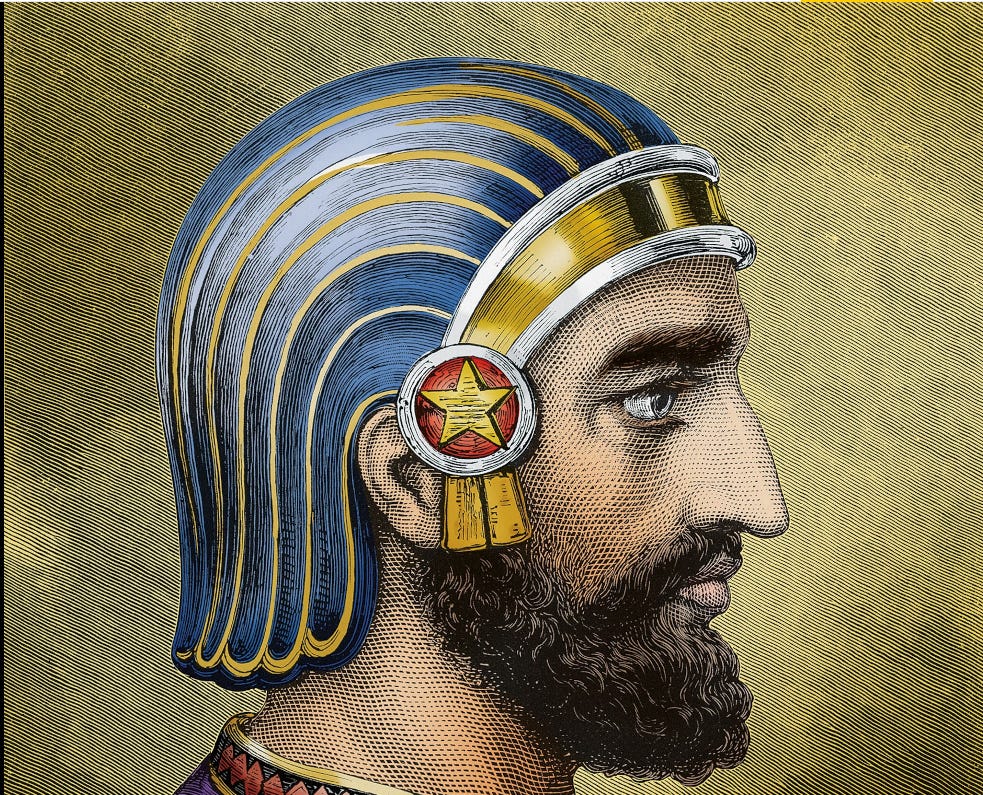
Before Haman there was Cyrus the Great, the Persian king who conquered Babylon in 539 BCE and issued the decree allowing Jewish exiles to return to Jerusalem and rebuild the Temple. Isaiah called Cyrus “God’s anointed,” a gentile chosen to liberate God’s people. The same empire that produced Haman produced the liberator who made the return to Zion possible. This ambivalence has today vanished from the Israeli imagination, which remembers Haman but has forgotten Cyrus.
The February 28th attack was pure Purim, unshadowed by the memory of liberation. Three days to Tehran, Trump was promised. But Jewish historical time moves differently. The Purim story is 2500 years old and still unfolding. Trump’s three days disappeared into that longue durée the moment the first missile struck.
The Three Archetypes
The Jewish encounter with gentile power has produced three archetypal figures.
Cyrus liberates. He acts on God’s behalf to redeem his people, enabling return and rebuilding. He steps aside when his work in service of Jewish interests is done.
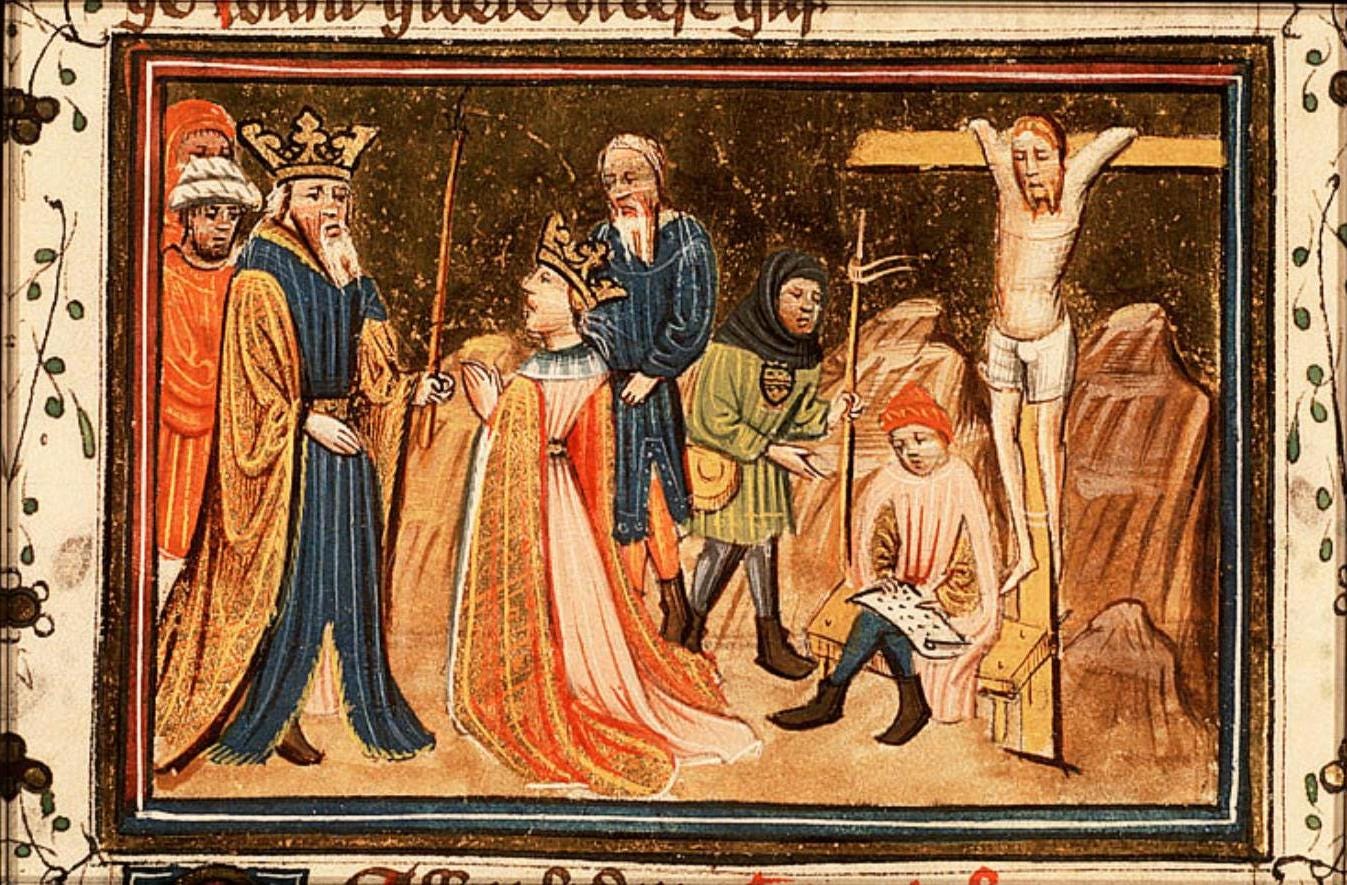
Ahasuerus enables. He grants the Jews permission to slaughter their enemies and asks afterward what more they require. The king who began by banishing his queen on a whim, who staffed his court with sycophants, who signed off on genocide with the same impulse he used to approve a beauty pageant, reveals himself in the end as the pliant sovereign who looks the other way to Jewish violence, who grants to the Jews whatever is requested, who asks only asks in return what more he can do for them.
This is the kind of leader Israel seeks to install in Tehran today, a leader who grants whatever Israel requests, and asks only what more he can do.
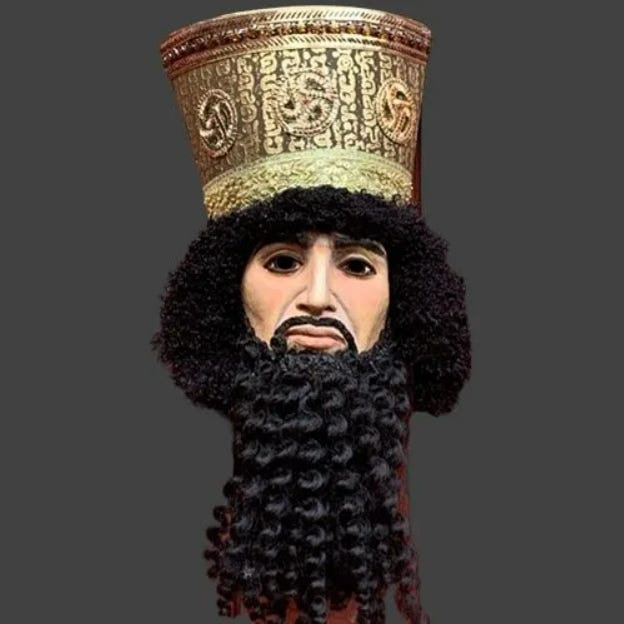
Haman destroys. He rises to annihilate the Jews, and his name is cursed in every generation.
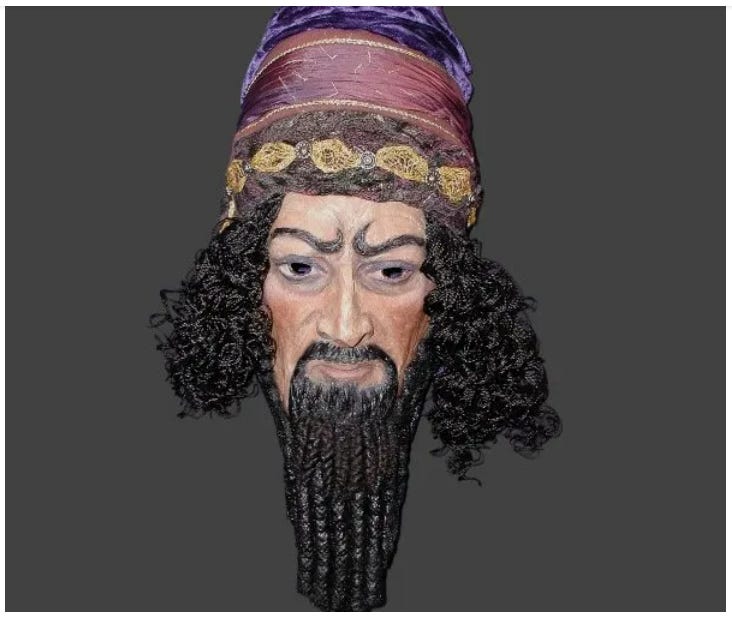
These are the masks gentile rulers wear in Jewish memory. Trump has worn two of them already. The third waits in reserve if he TACO’s out on Iran.
The Masks of Trump
Before the war, Trump wore the mask of Cyrus. He moved the embassy to Jerusalem. He received Third Temple leaders at the White House. He accepted the implicit title because it matched a template already present in Jewish collective memory.
The February 28th strikes moved him into the second role. He became Ahasuerus, placing American power behind Israel’s war, signing off on three days to Tehran, prepared to ask Netanyahu what more slaughter he desired. The king in the Megillah asked Esther after the first day of killing, and she requested another. Trump was ready to do the same.
But the war did not end in three days. As costs mount and victory recedes, TACO Trump may soon begin looking for an exit. This is where the threat emerges. The Jewish Lobby that hailed him as Cyrus and celebrates him as Ahasuerus holds the final category in reserve.
If Trump abandons the war, the mask of Haman will be projected upon him. The Lindsay Grahams and Mark Levins who praised him will strip away the costume and reveal what they will now claim was always underneath: the betrayer who abandoned Israel to Persian wrath. The label is a weapon in being, to be wielded to keep him stuck in the tar pit of Iran, should he ever get wandering ADHD eyes.
Historical Neuroticism
Adler described the neurotic nailed to the cross of his fiction, trapped by imagined threats that become more real than reality itself. On the individual level, this is a clinical observation applied to figures like Netanyahu. On the national level, it becomes something larger: a prophecy of war, a pathology of peoples.
When a state and people become consumed by existential fear, it ceases to act as a rational actor and begins to behave as a collective neurotic, hammering itself to the very cross it has constructed. This is historical neuroticism: a nation so wedded to a particular reading of its past that it can no longer perceive the present clearly. The ancient Persian enemy becomes an eternal archetype. Every Iranian is Haman. Every slaughter is justified in advance. And if a gentile leader is not explicitly Cyrus or Ahasuerus, then the mask of Haman is neurotically projected upon his or her face.
Very good! But WHO is going to arrest insane leaders and save the world???
Well, instead of the individual explanation, I think we should lift the explanation to the more marxist structural level. Hitler could not do what he did without broad support, including support from the deep state, neither can Nethanyahu and Trump.